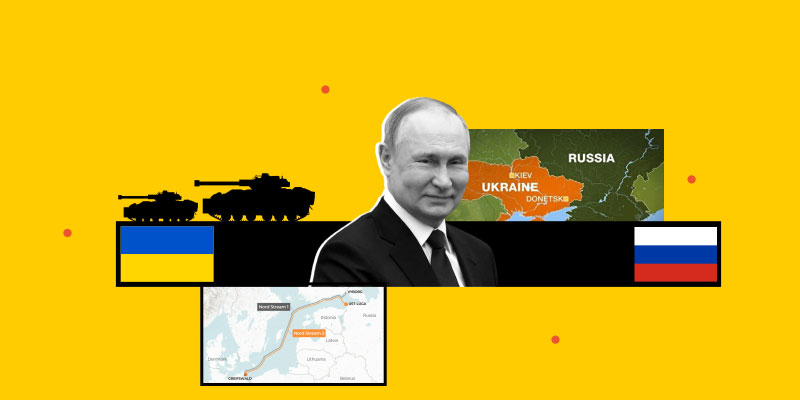
The IMF's approval of an $8.1 billion Extended Fund Facility (EFF) loan for Ukraine provides critical fiscal oxygen to Kyiv as it enters the fourth year of Russia’s full-scale invasion. The program anchors a broader $136.5 billion international assistance framework, offering immediate liquidity while tying future support to structural reforms and macroeconomic discipline.
Stabilising an Economy at War
Since February 2022, Ukraine’s economy has endured severe contraction, shrinking by nearly 29% in the first year of war before posting modest rebounds of around 5% in 2023–24. Yet reconstruction needs remain staggering—estimated at $588 billion over the coming decade by international institutions.
The new four-year EFF replaces the earlier $15.5 billion program launched in 2023. An initial $1.5 billion tranche has already been disbursed to shore up Kyiv’s budget, fund defence outlays, pensions and public sector wages, and stabilise foreign exchange reserves.
IMF Managing Director Kristalina Georgieva has underscored both the resilience of Ukraine’s macroeconomic management—such as exchange rate stabilisation and debt restructuring—and the continuing pressures of inflation, projected at 8–10% in 2026. The program mandates nine quarterly reviews and focuses on governance reforms, anti-corruption measures, public investment oversight and alignment with EU accession standards.
Closing the Financing Gap
Ukraine faces a $52 billion financing shortfall in 2026. The IMF package works in tandem with EU macro-financial assistance, G7 Extraordinary Revenue Acceleration (ERA) funds backed by frozen Russian assets, and bilateral loans.
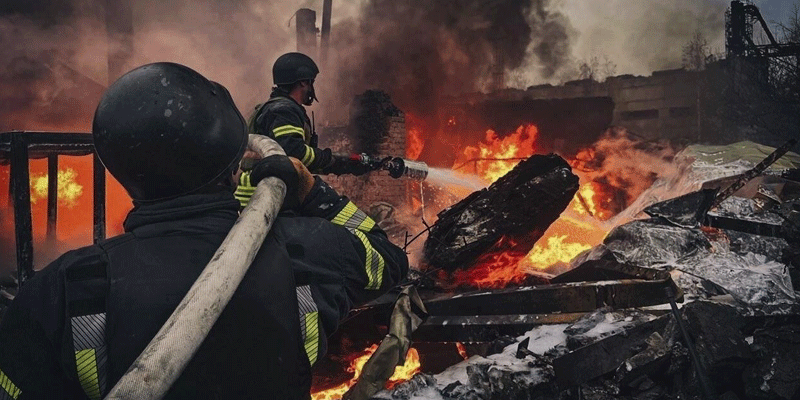
Notably, the IMF has shown flexibility by waiving certain prior tax and regulatory conditions, recognising wartime disruptions—particularly repeated energy grid attacks. Creditors have extended debt standstills, postponing major restructuring decisions until geopolitical uncertainty eases.
This layered support architecture aims to prevent default, sustain public services and anchor investor confidence in an otherwise volatile environment.
Growth Projections Beyond 2026
Looking beyond immediate stabilisation, growth prospects hinge heavily on war dynamics and reform execution.
Baseline Scenario (IMF-supported stability):
IMF projections suggest real GDP growth could reach 4.5% in 2026 and rise to approximately 4.8% in 2027 if reforms remain on track and external financing flows steadily. Stabilised inflation and stronger reserves could support gradual recovery in domestic demand and private investment.
War-Continues Scenario:
Institutions like the EBRD forecast more conservative growth—around 2–3%—if hostilities persist without major territorial escalation. Labour shortages, infrastructure damage and energy constraints would limit upside potential.
Peace or Ceasefire Scenario:
A durable truce could unleash reconstruction-driven expansion. With $588 billion in rebuilding needs, growth could accelerate to 5–7% annually by 2028–2030, fuelled by foreign direct investment, EU-aligned reforms and revived export sectors such as agriculture and critical minerals.
However, risks remain substantial. Renewed escalation could widen fiscal gaps beyond $100 billion annually, push debt ratios above 140% of GDP and stall reform momentum. IMF conditionality serves as both safeguard and pressure mechanism, ensuring governance reforms proceed even under duress.
Stabilisation Today, Uncertainty Tomorrow
The IMF’s $8.1 billion facility does not end Ukraine’s economic vulnerability—but it buys time. By anchoring international aid, reinforcing macroeconomic stability and incentivising structural reform, the program lays the groundwork for recovery beyond 2026.
Yet Ukraine’s long-term growth trajectory will ultimately depend less on financial engineering and more on geopolitical reality. If peace enables reconstruction at scale, the economy could transform rapidly. If war grinds on, growth will remain fragile, tethered to external lifelines. For now, the IMF has strengthened Kyiv’s financial defences—but sustainable prosperity still rests on the battlefield as much as the balance sheet.
(With agency inputs)