A Strategic Boost to India’s Nuclear Ambitions
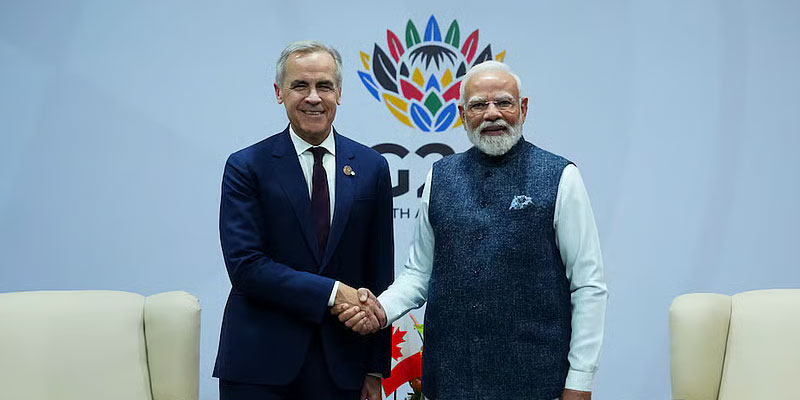
India and Canada are on the verge of sealing a long-term uranium supply agreement valued at nearly $3 billion, marking a significant step in New Delhi’s push to scale up nuclear energy. The proposed 10-year deal, expected to be formalised during Canadian Prime Minister Mark Carney’s visit to India in March 2026, will see Canada supply uranium sourced from Saskatchewan’s high-grade Cigar Lake mines. The agreement comes at a time when India is accelerating its clean energy transition and recalibrating its external partnerships amid shifting global geopolitics.
Why the Deal Matters for India’s Energy Strategy
India currently imports close to 40 per cent of its uranium requirements, a figure set to rise as it expands nuclear power capacity. With installed nuclear generation standing at around 22 GW, the government has set an ambitious target of 100 GW by 2047, aligned with its net-zero commitments and growing electricity demand. Achieving this scale requires predictable, long-term access to nuclear fuel.
Canada, the world’s second-largest uranium producer, is well placed to meet this need. The new agreement builds on earlier cooperation but represents a substantial upgrade in both volume and duration. For India, the deal diversifies supply away from over-reliance on a small group of exporters, while also ensuring fuel security for upcoming reactors using both indigenous and imported technologies.
Resetting India–Canada Ties
The uranium negotiations also reflect a broader political thaw between New Delhi and Ottawa after a period of diplomatic strain. Energy cooperation has emerged as a stabilising pillar in the relationship, complemented by discussions on critical minerals, clean fuels, and advanced technologies. Both sides see nuclear energy as a practical area where commercial interests and strategic priorities converge, offering a pathway to rebuild trust and expand bilateral trade.
Geopolitical Implications Amid US Tensions
The deal’s significance extends well beyond bilateral ties. It unfolds against a backdrop of strained US–Canada relations, driven by trade disputes and divergent policy priorities. As Washington looks to rapidly expand nuclear capacity—particularly to power data centres and AI infrastructure—it remains heavily dependent on Canadian uranium supplies.
Canada’s decision to commit substantial volumes to India signals a quiet but meaningful diversification of its export partnerships. For India, the agreement enhances strategic autonomy at a time when global energy markets are increasingly shaped by geopolitical alignments. It also reduces exposure to supply disruptions linked to Russia and Central Asia; regions where political risk has grown.
From a wider perspective, the pact strengthens cooperation among middle powers seeking stable, rules-based energy trade outside great-power rivalries. It also reinforces India’s role as a key swing partner in the evolving global nuclear fuel market.
Energy Cooperation with Strategic Weight
The near-finalisation of the India–Canada uranium deal is more than a commercial transaction. It underpins India’s long-term clean energy goals, signals a reset in bilateral relations, and reshapes energy geopolitics at a moment of global uncertainty. As nuclear power regains prominence worldwide, reliable partnerships like this one will increasingly define not just energy security, but strategic influence. For India, the agreement represents a quiet yet consequential step toward both sustainability and geopolitical balance.
(With agency inputs)