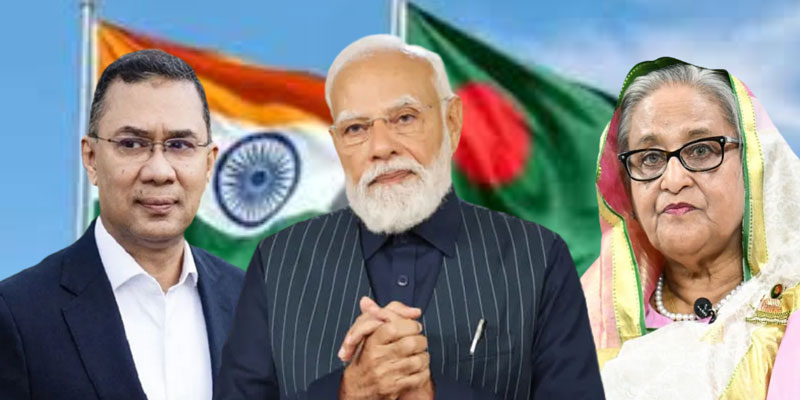
The presence of former Bangladeshi premier Sheikh Hasina in India and the future of transboundary river agreements—particularly the Ganga waters pact—are emerging as early priorities for Bangladesh’s incoming government. These issues are set to shape relations with India following the decisive electoral victory of the Bangladesh Nationalist Party (BNP), which is preparing to recalibrate foreign policy while addressing long-standing domestic concerns over water sharing and sovereignty.
BNP’s Sweeping Mandate and Political Reset
The BNP’s commanding performance in the February 2026 parliamentary elections marks a dramatic shift in Bangladesh’s political trajectory. Securing well over two-thirds of the 300-seat legislature, the party has returned to power after years in opposition and months of political upheaval that culminated in Hasina’s departure from office. With party leader Tarique Rahman poised to assume the premiership after years abroad, the new administration is presenting its mandate as a restoration of democratic processes and institutional balance.
The election followed a period of youth-led protests and economic dissatisfaction that eroded support for the previous government. While the BNP’s allies also gained substantial representation, critics—including the Awami League—have questioned aspects of the electoral process. Nonetheless, the BNP has moved quickly to outline its governance priorities, among them recalibrating ties with New Delhi on what it calls a more “equitable” footing.
India Relations and Early Diplomatic Priorities
Among the most sensitive issues in Dhaka’s early foreign-policy agenda are the renewal of the 1996 Ganga water-sharing treaty and the status of Hasina in India. BNP leaders have indicated that the presence of the former prime minister across the border complicates bilateral relations, particularly as legal proceedings against her unfold in Bangladesh. At the same time, they stress the importance of maintaining economic and strategic cooperation with India, given deep trade ties and energy interdependence.
Water-sharing disputes are expected to dominate negotiations. The Ganga treaty, due to expire in 2026, and the unresolved Teesta agreement have long been sources of friction. Dhaka has signaled it will seek revised terms that reflect changing climate conditions, agricultural needs and population pressures.
Ganga Treaty: Origins and Points of Contention
Signed in December 1996, the Ganga water-sharing agreement established a framework for allocating dry-season flows at the Farakka Barrage. The arrangement was intended to ensure predictable distribution between the two countries during the lean months from January to May. However, Bangladesh has frequently argued that water releases have fallen below agreed thresholds in certain years, affecting agriculture, fisheries and freshwater availability in its southwestern regions.
Indian officials counter that fluctuations in river flow are influenced by upstream hydrology and climate variability. They also emphasize the need to consider evolving domestic requirements in India’s eastern states. With the treaty nearing expiry, both sides face pressure to renegotiate terms that account for environmental change, population growth and technological improvements in water management.
Teesta Dispute and Regional Sensitivities
The Teesta River remains an unresolved bilateral issue. A draft agreement proposed in 2011 allocated specific shares to each country, but it stalled due to opposition from authorities in India’s West Bengal state, who cited concerns about local water availability. For Bangladesh, the Teesta is vital to irrigation and rural livelihoods in the north, making its equitable distribution a priority.
Repeated discussions under the Joint Rivers Commission have yet to produce a breakthrough. The BNP government is likely to push for renewed talks, linking progress on the Teesta to broader cooperation on transboundary water management and climate resilience.
Negotiation and Pragmatism Ahead
The BNP’s return to power ushers in a new phase in Bangladesh–India relations marked by both opportunity and tension. Issues surrounding Hasina’s presence and river-water distribution carry political sensitivity but also offer a platform for structured dialogue. Economic interdependence and shared regional interests suggest that neither side benefits from prolonged friction. The coming months will test whether both governments can balance domestic pressures with pragmatic diplomacy, forging updated agreements that address environmental realities while sustaining strategic partnership.
(With agency inputs)