Brief Overview: A Dramatic Return to Power
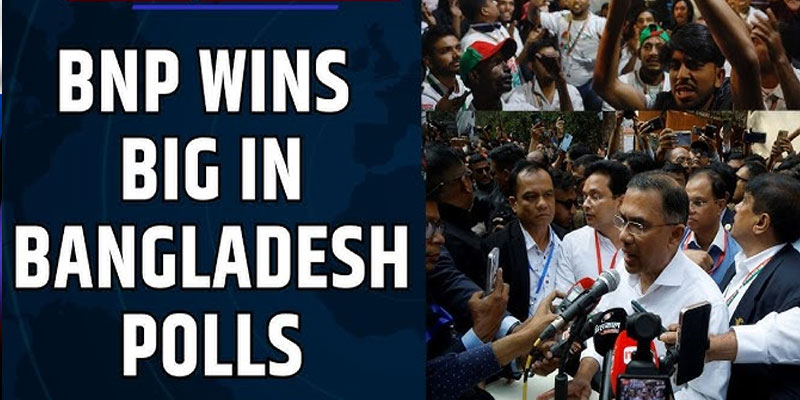
The Bangladesh Nationalist Party, under the leadership of Tarique Rahman, has secured a commanding parliamentary majority, marking a decisive political comeback after more than two decades. The February 2026 election—widely viewed as the first competitive poll since the 2024 upheaval that removed Sheikh Hasina and side-lined the Awami League—has reshaped the country’s political landscape and raised critical questions about governance, stability, and regional diplomacy.
Electoral Landscape and Domestic Dynamics
The BNP-led coalition captured an overwhelming share of seats in the 300-member parliament, decisively outpacing rivals. The bloc associated with Jamaat-e-Islami secured a smaller but notable presence, while the youth-driven National Citizen Party—which played a visible role in the 2024 protests—failed to convert activist momentum into substantial electoral success.
Voter participation remained moderate under tight security, reflecting both public fatigue and cautious optimism. The absence of the Awami League created a contest framed largely as a referendum on the interim period overseen by Muhammad Yunus. BNP’s messaging emphasized economic recovery, institutional stability, and a return to electoral legitimacy—appeals that resonated with voters weary of prolonged uncertainty.
Rahman’s return from years abroad symbolizes a generational and ideological shift within the party. Yet his government inherits a complex domestic environment: lingering polarization, concerns over minority safety, and expectations of swift economic revival.
Implications for India–Bangladesh Relations
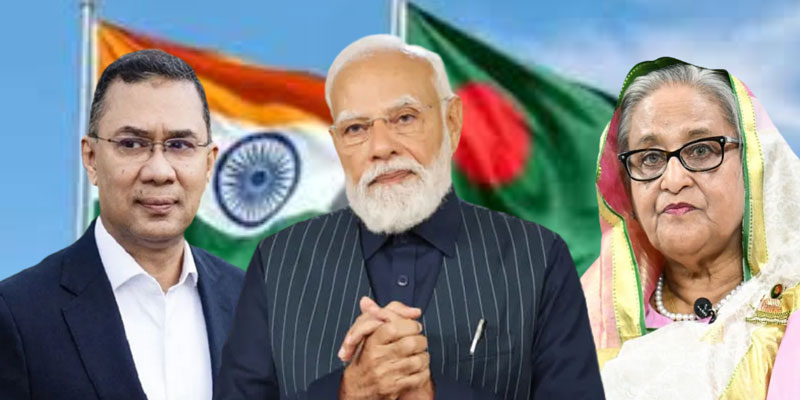
The electoral outcome carries substantial implications for ties with India. Prime Minister Narendra Modi swiftly congratulated Rahman, signaling New Delhi’s willingness to maintain continuity despite political change in Dhaka. Economic interdependence—particularly in trade, textiles, and energy—creates strong incentives for pragmatic cooperation.
However, the BNP’s traditional emphasis on a more balanced foreign policy could recalibrate Dhaka’s external alignments. While the previous government maintained exceptionally close ties with India, the new leadership may pursue a “Bangladesh-first” approach that diversifies partnerships. This could mean deeper engagement with China on infrastructure or warmer outreach to Pakistan, developments that New Delhi will watch carefully.
Security considerations remain central. India has historically expressed concern about cross-border militancy, minority protection, and irregular migration. Confidence-building through intelligence sharing and border management will be crucial to sustain trust. Meanwhile, unresolved issues such as water-sharing from the Teesta River could resurface as negotiation priorities under the new administration.
Despite potential frictions, economic logic favors continuity. Bilateral trade volumes, supply-chain integration in the ready-made garment sector, and connectivity projects across eastern South Asia all encourage cooperative engagement.
Geopolitical and Strategic Outlook
The election represents both a domestic reset and a regional inflection point. Dhaka’s foreign policy is likely to be more multi-vector, balancing relations among major partners rather than aligning closely with any single power. For India, this necessitates calibrated diplomacy—combining reassurance with responsiveness to Bangladesh’s evolving priorities.
A Mandate with Regional Consequences
BNP’s emphatic victory ushers in a new phase in Bangladesh’s politics, restoring elected governance while opening debates over national direction. For India–Bangladesh relations, the outcome offers both opportunities for renewed partnership and risks stemming from strategic recalibration. Much will depend on how Rahman’s government manages domestic stability, minority protections, and foreign policy balance. If handled pragmatically, the transition could foster a more mature, interest-based bilateral relationship—one shaped less by personalities and more by shared economic and security imperatives.
(With agency inputs)