A Sudden Himalayan Surge Triggers Emergency
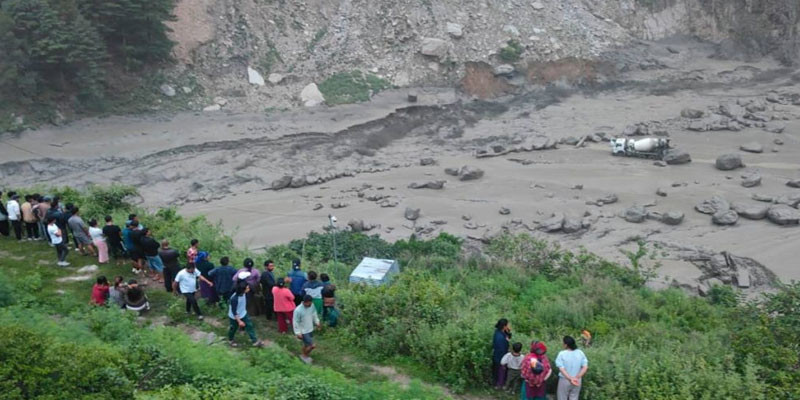
Nepal’s Rasuwa flood crisis has rapidly evolved into a major humanitarian emergency, after a sudden surge entered the Bhote Koshi river from the Tibet-facing side on Wednesday morning. Timure and Syabrubesi have suffered extensive damage to settlements and infrastructure, while the flood has moved downstream into the Trishuli river system. The full toll remains unclear, and authorities have urged people along vulnerable river corridors to move to safer ground.
What Happened in Rasuwa
The flash flood struck around 9 a.m., sweeping through areas near Timure and Syabrubesi, including markets, roads, bridges, security posts and the Timure customs area. Several hydropower facilities were also damaged, highlighting the scale of the surge. Reports indicate that the flood subsequently reached areas of Nuwakot and Dhading, prompting warnings farther downstream along the Trishuli.
The precise cause remains under investigation. Officials and meteorological assessments have pointed to significant rainfall on the Tibetan side, while possibilities including a glacial lake outburst or another sudden upstream release have also emerged. Until technical assessments are completed, however, the trigger should not be treated as established fact.
Rescue Operation Faces Difficult Terrain
The immediate challenge is rescuing people in a steep Himalayan region where damaged roads and bridges can quickly isolate communities. Prime Minister Balendra Shah has ordered an intensified response involving the Nepal Army, Armed Police Force and Nepal Police. Two army helicopters, medical teams and ambulances have been deployed, while private helicopter operators have also been placed on standby. Authorities are simultaneously evacuating vulnerable downstream communities.
The uncertainty surrounding casualties makes disciplined reporting particularly important. Authorities have yet to establish a confirmed overall death toll, while some security personnel and customs employees remain unaccounted for. The scale of destruction is still being assessed.
Economic Damage Could Extend Beyond Rasuwa
The disaster is also an economic shock. Hydropower projects, transmission infrastructure, roads and border-trade facilities lie along vulnerable river valleys. Damage to generation assets can disrupt electricity production, while destruction around the Rasuwa–Tibet corridor could affect trade and connectivity.
The downstream threat further demonstrates how a flood originating in one river basin can rapidly become a multi-district emergency. Authorities have warned communities along the Trishuli corridor as the surge moves southward.
From Emergency Response to Himalayan Resilience
Rasuwa is a warning that disaster preparedness must extend beyond local rainfall forecasts. Nepal needs integrated river-basin warning systems linking upstream monitoring, satellite data, real-time river gauges, mobile alerts and community evacuation plans. The cross-border nature of the event also strengthens the case for institutionalised Nepal-China sharing of information on rainfall, river levels, landslides and glacial risks.
For now, rescue must remain ahead of speculation. Verified casualty figures, scientific assessment of the flood’s origin and a systematic damage survey must guide the next phase. But the larger lesson is already clear: in a rapidly warming and increasingly volatile Himalayan environment, infrastructure and settlements must be designed not merely for yesterday’s floods, but for tomorrow’s extremes.
(With agency inputs)