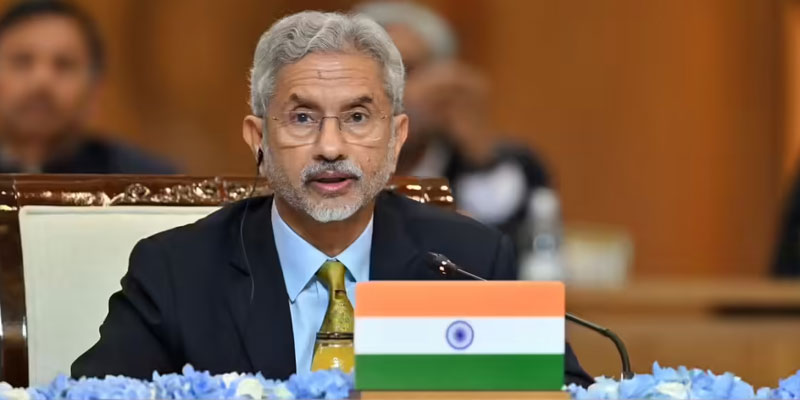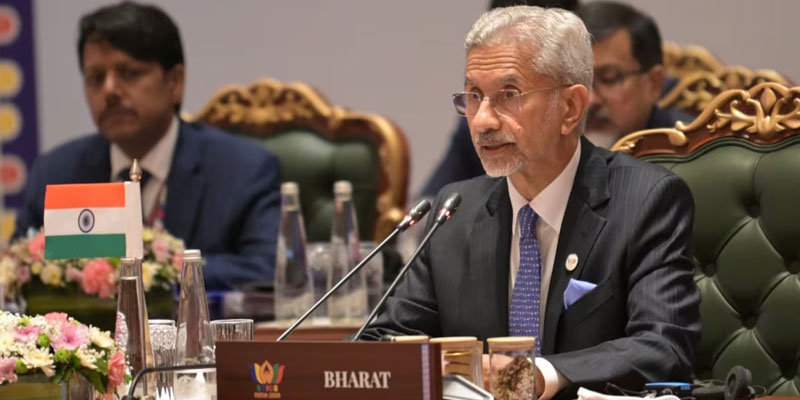
At a United Nations ministerial meeting, India renewed its call for comprehensive reforms of the UN system, arguing that the Security Council's inability to respond effectively to global conflicts has weakened public confidence in the organisation. Addressing the Ministerial Roundtable on "Making Multilateralism Fit for the Future," India's Permanent Representative to the UN, Harish Parvathaneni, said the credibility of multilateral institutions now depends on their ability to adapt to contemporary geopolitical realities. His remarks reflect India's long-standing position that the existing UN architecture, designed more than eight decades ago, no longer adequately represents the modern world or effectively addresses today's security challenges.
Why UN Security Council Reform Remains Contentious
The United Nations Security Council (UNSC) was established in 1945 in the aftermath of the Second World War, with five permanent members—the United States, Russia, China, the United Kingdom and France—granted veto powers over substantive decisions. While the structure was intended to preserve post-war stability, critics argue that it no longer reflects today's multipolar global order.
Repeated deadlocks over major international crises have intensified demands for reform. The veto power has often prevented collective action on conflicts, humanitarian emergencies and international security issues, leading many countries to question the Council's effectiveness and legitimacy.
India has consistently advocated expanding both the permanent and non-permanent categories of the Security Council to provide greater representation for emerging powers, Africa and the Global South. During previous negotiations on UNSC reforms, India opposed proposals for a permanent two-tier system and supported a compromise under which new permanent members could defer exercising veto powers for an initial period of 15 years.
India's Case for Comprehensive UN Reform
Speaking at the ministerial roundtable, Harish Parvathaneni argued that the Security Council's repeated inability to respond meaningfully to ongoing global conflicts has eroded confidence in the United Nations. He stressed that the organisation's institutional framework is no longer equipped to manage the complex political, security and humanitarian challenges confronting the international community.
India called not only for reforms of the Security Council but also for strengthening the General Assembly and the Economic and Social Council (ECOSOC) to make the UN more representative, accountable and effective.
The significance of India's intervention lies in its broader argument that institutional reform is no longer merely a question of fairness or representation. Instead, New Delhi contends that the effectiveness of multilateralism itself depends on updating institutions so they can deliver timely and credible responses to conflicts, terrorism, humanitarian crises and emerging global challenges.
Why the Timing Is Significant
India's renewed push comes alongside its campaign for a non-permanent seat on the UN Security Council for the 2028-29 term under the "Shanti: India for the United Nations Security Council 2028-29" initiative. The campaign reflects India's intention to strengthen its role within the UN while continuing to advocate structural reforms from inside the organisation.
The timing also coincides with growing international frustration over prolonged Security Council deadlocks on conflicts such as Ukraine and Gaza. These repeated instances of paralysis have intensified calls from many member states for a more representative and responsive global security architecture capable of addressing present-day geopolitical realities.
Reform as the Foundation of Effective Multilateralism
India's latest intervention reinforces its consistent position that the United Nations must evolve if it is to remain relevant in the twenty-first century. By linking institutional reform with the credibility and effectiveness of multilateralism, New Delhi has sought to shift the debate beyond representation toward performance. As global conflicts become increasingly complex and interconnected, meaningful reforms to the Security Council and other principal UN organs may prove essential for restoring confidence in international governance. Whether this long-standing demand translates into concrete institutional change will ultimately depend on the willingness of member states, particularly the permanent powers, to embrace a more inclusive and representative global order.
(With agency inputs)