Indian Shares Fall as Oil, Pharma Concerns Mount
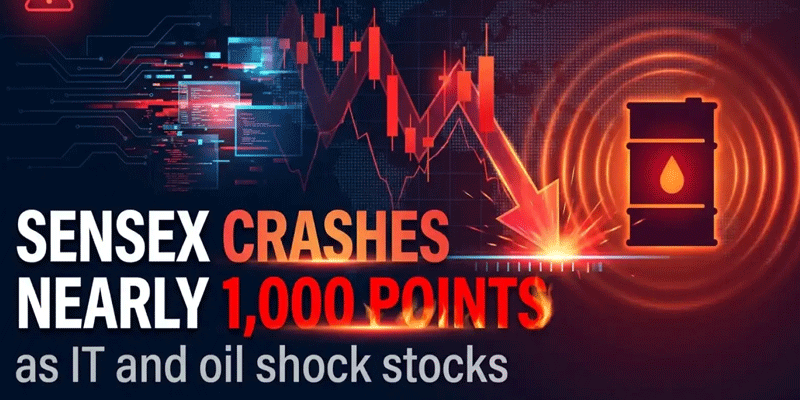
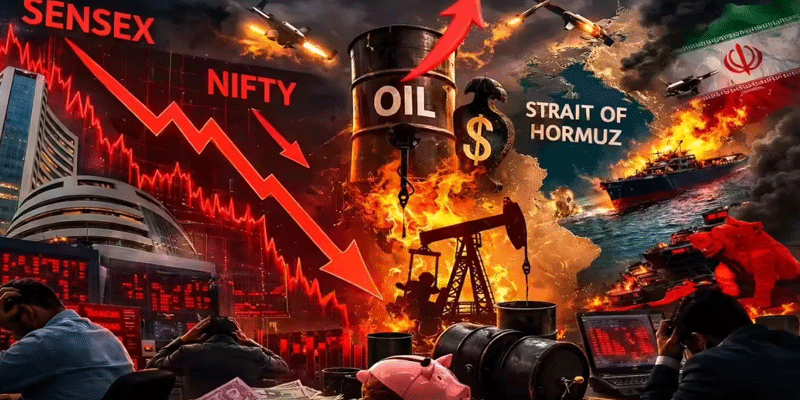
Indian equity markets witnessed a broad-based decline on Wednesday as surging crude oil prices and fresh concerns over US trade policy dampened investor sentiment. Benchmark indices came under pressure after Brent crude climbed above $92 a barrel, its highest level in over five weeks, amid escalating tensions in the Middle East. Adding to the market's worries, US President Donald Trump's proposed tariffs on imported generic medicines triggered a sell-off in pharmaceutical stocks, further weighing on overall market performance.
The twin global developments reinforced concerns over inflation, corporate profitability and India's export outlook.
Global Headwinds Hit Domestic Markets
Indian markets have remained resilient in recent months despite global uncertainties. However, as India imports nearly 85% of its crude oil requirements, any sharp rise in oil prices quickly raises concerns about inflation, the current account deficit and economic growth. At the same time, India's pharmaceutical industry remains heavily dependent on exports to the US, making policy changes in Washington closely watched by investors.
Wednesday's trading reflected the combined impact of both these external shocks.
Oil Spike Triggers Broad Market Sell-Off
Markets opened sharply lower as investors reacted to the spike in global crude prices.
Key developments included:
· Sensex fell nearly 400 points in early trade.
· Nifty slipped below the 24,100 mark.
· Brent crude crossed $92 per barrel, the highest level in more than five weeks.
The rise in oil prices follows escalating tensions in the Middle East, including continued US military operations and concerns over disruptions along key global shipping routes.
For India, higher crude prices raise fears of:
· Imported inflation.
· Pressure on the current account deficit.
· Increased fiscal burden if fuel prices are cushioned.
· Lower corporate profit margins due to higher energy costs.
Auto, Banking and Broader Markets Under Pressure
The weakness was widespread across sectors.
Among the major losers:
· Around 12 of the 16 sectoral indices ended lower.
· The Auto Index declined about 1.6%, reflecting concerns over rising fuel costs and higher input expenses.
· Banking and financial stocks fell nearly 1.1%, as higher inflation could delay interest-rate easing and affect credit demand.
Broader markets also remained weak:
· Small-cap stocks declined around 1%.
· Mid-cap stocks slipped nearly 0.4%.
The sell-off reflected a clear shift towards risk aversion amid growing global uncertainty.
Trump's Tariff Plan Hits Pharma Stocks
Pharmaceutical companies faced an additional setback after Trump announced a phased tariff plan on imported generic medicines.
The proposal includes:
· Zero tariffs until August 2028.
· 100% tariffs from August 2028.
· 200% tariffs beginning August 2029.
India supplies nearly 40% of the generic medicines consumed in the United States, making the sector particularly vulnerable.
As a result:
· The Nifty Pharma Index fell around 1.16%.
· Leading generic drug manufacturers with significant US exposure witnessed sharp declines.
· Investors fear higher tariffs could erode export competitiveness, compress profit margins and force companies to shift manufacturing closer to the US market.
Global Risks Overshadow Domestic Strength
The day's market movement highlighted how global developments continue to influence Indian equities despite relatively stable domestic fundamentals. Rising crude oil prices revived concerns over inflation and economic stability, while the proposed US tariff regime underscored the vulnerability of India's export-oriented pharmaceutical industry. Until there is greater clarity on the Middle East conflict, oil price movements and the future of US trade policy, investors are likely to remain cautious. The episode serves as a reminder that external geopolitical and policy risks can quickly overshadow domestic economic resilience and shape market sentiment.
(With agency inputs)