A Repeated Charge of ‘Vote Chori’
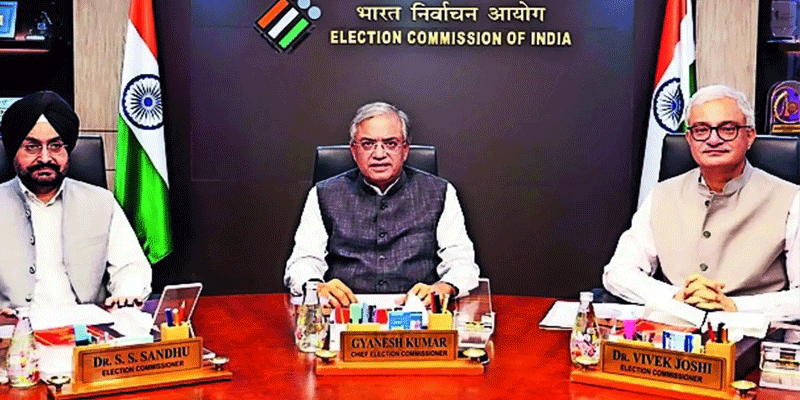
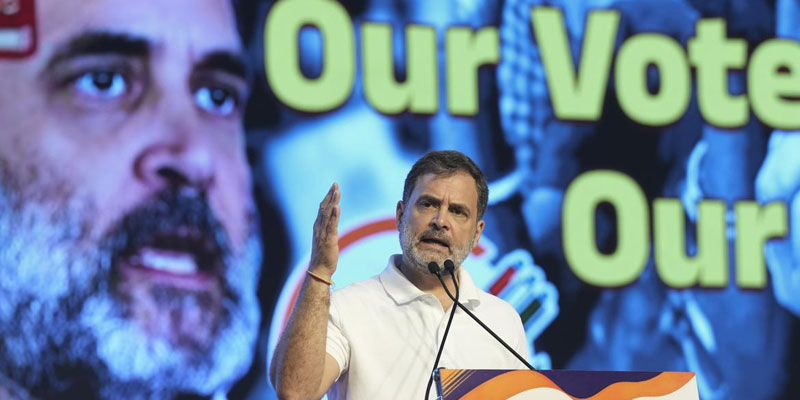
Congress leader and Leader of Opposition Rahul Gandhi has once again sharpened his attack on the Election Commission of India (ECI), accusing it of complicity in what he describes as “vote chori” (vote theft). At a press briefing, Gandhi claimed that voter names in Congress-leaning constituencies were deliberately deleted through manipulated logins, fake phone numbers, and automated software. His pointed criticism of Chief Election Commissioner Gyanesh Kumar marks an escalation in the Congress’s narrative that India’s electoral machinery is being subverted.
Allegations of Large-Scale Manipulation
Rahul Gandhi alleged that voter deletion during the 2023 Karnataka Assembly elections was not random but systematically executed. According to him, software-driven operations were used to remove the first name from electoral rolls in multiple booths. Applications were allegedly filed using mobile numbers from outside Karnataka, while many of the supposed applicants had no knowledge of their involvement.
To illustrate the scale, Gandhi highlighted Karnataka’s Aland constituency, where over 6,000 names were allegedly removed. The irregularity came to light, he said, when a booth-level officer discovered her own family member’s name missing from the list. Gandhi argued that such incidents prove a centrally coordinated operation rather than localised errors.
Targeting the Election Commission
In his press conference, Gandhi directly accused Chief Election Commissioner Gyanesh Kumar of shielding those behind the alleged manipulation. He pointed to 18 letters sent by the Karnataka CID to the ECI over the past 18 months, requesting crucial data such as IP addresses and OTP trails of voter deletion applications. According to Gandhi, the poll body’s refusal to share this information indicates deliberate protection of the perpetrators.
Holding up a copy of the Constitution, Gandhi accused the Commission of enabling what he called an “attack on democracy.” He urged the youth to recognize that electoral subversion threatens their future, jobs, and aspirations. He further demanded that the ECI release the requested data within a week or face public perception of collusion.
Broader Implications for Indian Democracy
If Gandhi’s allegations hold weight, the implications go far beyond Karnataka or the Congress party. At stake is the credibility of India’s electoral process, long regarded as a global model for large-scale democratic participation. The use of technology for voter manipulation—if proven—raises urgent questions about cyber security, transparency, and accountability in election management.
For citizens, even the perception of large-scale voter deletions risks eroding faith in the sanctity of the ballot box. In a country where over 900 million people are eligible to vote, trust in the Election Commission is foundational to democracy. Allegations that the institution is compromised could weaken public confidence and polarize political discourse further.
The Need for Transparency and Vigilance
Rahul Gandhi’s accusations may be politically charged, but they also spotlight a serious issue: the vulnerability of electoral systems to manipulation in the digital age. Whether or not the claims are substantiated, the ECI faces an urgent responsibility to provide clarity, release relevant data, and restore public faith. A strong democracy thrives not just on voter turnout but on the unquestioned legitimacy of the process. Ensuring that every citizen’s vote counts—and is counted—remains central to safeguarding India’s democratic future.
(With agency inputs)