A Judicial Intervention: Court to Appoint Senior Lawyers
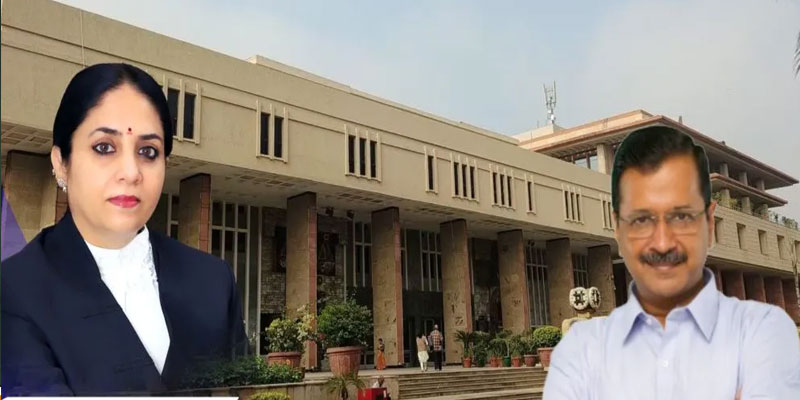
In a significant development, the Delhi High Court has indicated it will appoint senior lawyers as amicus curiae to represent Arvind Kejriwal, Manish Sisodia, and other accused in the excise policy case. This move follows their decision to boycott proceedings before Justice Swarana Kanta Sharma. The court is currently hearing a plea by the Central Bureau of Investigation (CBI), which has challenged a trial court’s order discharging the accused.
The High Court’s decision underscores a fundamental judicial principle: criminal cases must be decided on merit, regardless of whether parties choose to participate.
Background: Boycott, Recusal Plea, and ‘Satyagraha’
The controversy stems from a recusal plea filed by Kejriwal, Sisodia, and others, who argued there was a “reasonable apprehension of bias.” They cited the professional engagements of Justice Sharma’s family members with the central government and alleged potential political associations.
Justice Sharma firmly rejected the plea, stating that recusal cannot be based on subjective perceptions or unfounded concerns. She emphasized that judicial independence requires judges to resist pressure to step aside without objective justification.
Following this, Kejriwal escalated the matter by publicly declaring he would neither appear in court nor be represented by legal counsel. Invoking the philosophy of satyagraha, associated with Mahatma Gandhi, he framed his boycott as a moral stand. Sisodia soon echoed this stance, further intensifying the standoff.
Why the Court Is Appointing Amicus Curiae
Indian legal precedent, guided by Supreme Court jurisprudence, makes it clear that criminal appeals and revisions cannot be dismissed simply due to absence of the accused. Courts are obligated to examine cases thoroughly, especially those involving allegations of corruption or public policy.
In such situations, appointing an amicus curia—an independent legal expert—ensures that all arguments are properly presented. By choosing this route, the High Court aims to maintain procedural fairness while preventing the case from being derailed by non-participation.
This approach also avoids more coercive measures, such as issuing warrants, and instead focuses on preserving the integrity of the judicial process.
A Deeper Analysis: Institutional Tensions at Play
The episode highlights a complex institutional conflict. On one side is a High Court judge asserting judicial authority and refusing to recuse without valid grounds. On the other is a prominent political leader challenging the legitimacy of the bench and adopting a form of protest rooted in moral and political symbolism.
The court’s response—appointing independent legal representation—serves as a stabilizing mechanism. It ensures that the legal process continues uninterrupted, insulating it from political narratives and strategic boycotts.
At a broader level, the case raises questions about the limits of protest within judicial proceedings. While dissent is a democratic right, the judiciary must ensure that legal processes are not compromised.
Upholding Process Over Politics
The Delhi High Court’s decision to appoint amicus curiae reflects a careful balancing act between respecting individual choices and safeguarding the rule of law. By ensuring that the case proceeds on merit, the court reinforces the principle that justice cannot be stalled by tactical absences.
As the case unfolds, it will test not only legal arguments but also the resilience of institutions in the face of political confrontation. Ultimately, the judiciary’s commitment to fairness and continuity will determine how such conflicts are resolved.
In a system governed by law, the process must prevail—even when participation falters.
(With agency inputs)