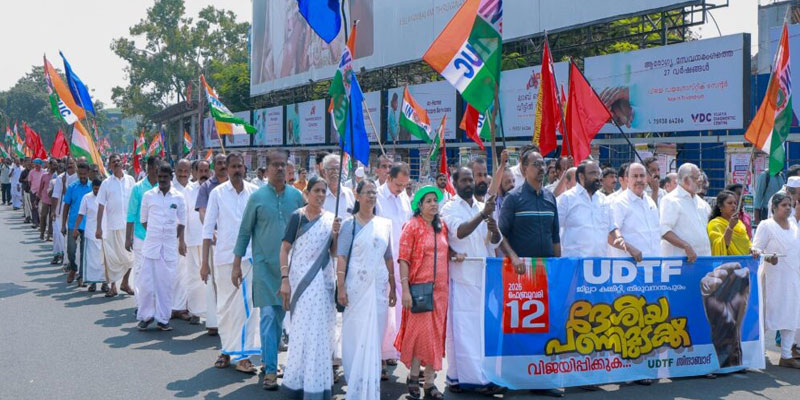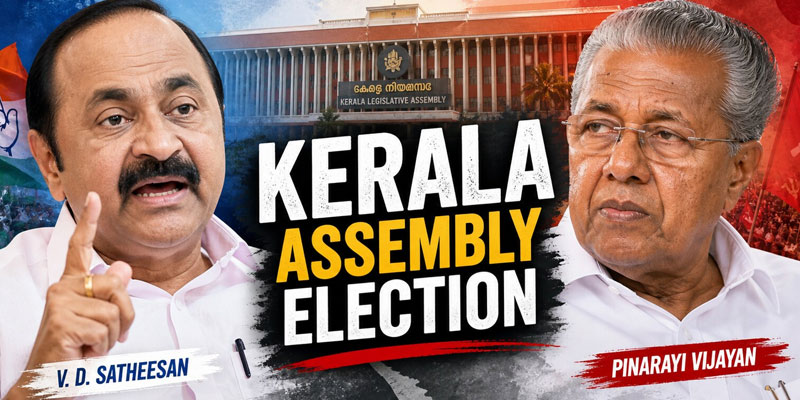
Early updates from the 2026 Kerala Assembly elections point to a significant political shift, with the Congress-led United Democratic Front (UDF) staging a strong comeback. As counting progresses, the UDF has crossed the crucial halfway mark, indicating a likely return to power after a decade. With voter turnout touching an impressive 79.6 percent—over 2.71 crore ballots cast—the mandate reflects a deeply engaged electorate and a potentially decisive verdict against the incumbent government.
UDF Crosses Halfway Mark, Leads in 77 Seats
According to early trends, the UDF is leading in at least 77 of the 140 Assembly seats, comfortably above the 70-seat majority threshold. Projections suggest the alliance could further expand its tally to between 80 and 90 seats, consolidating a clear majority.
This performance marks a dramatic recovery from the UDF’s 2021 tally of just 41 seats. Key constituencies in urban and semi-urban regions such as Thiruvananthapuram and Kochi have shown strong leads for UDF candidates, reflecting a broader shift in voter sentiment. These areas, often sensitive to governance and economic issues, appear to have played a pivotal role in driving the alliance’s resurgence.
Anti-Incumbency and Campaign Strategy at Play
A central factor behind the UDF’s surge is the wave of anti-incumbency against the ruling Left Democratic Front (LDF), led by Chief Minister Pinarayi Vijayan. After securing a historic second term in 2021, the LDF now appears to be facing voter fatigue.
Concerns around inflation, rising living costs, and governance issues have resonated strongly with voters. Analysts also credit senior Congress leader K. C. Venugopal for shaping an effective and cohesive campaign strategy, which helped unify the UDF’s messaging and outreach.
Vote-share estimates reinforce this trend, with the UDF projected to secure around 38–39 percent of votes, ahead of the LDF’s 33–34 percent. This gap underscores a clear preference shift, even as counting continues.
LDF Faces Sharp Decline and Structural Challenge
For the LDF, the emerging results signal a steep fall from its 2021 high of 99 seats. Current projections place the alliance in the low-40s, indicating not just a loss of power but a deeper erosion of its electoral base.
What makes this decline particularly significant is its spread across regions traditionally considered LDF strongholds, including coastal and central Kerala. If these trends hold, it could disrupt the long-standing “alternating cycle” of power between the UDF and LDF that has defined Kerala politics for decades.
Such a shift would mark a structural change, raising questions about the LDF’s ability to reposition itself as a dominant political force in the state.
NDA’s Limited but Notable Presence
The BJP-led National Democratic Alliance (NDA) continues to hold a steady vote base, estimated at around 20 percent. However, its impact remains limited in terms of seat conversion.
While the NDA may secure representation in select constituencies such as Wayanad and parts of northern Kerala, it is unlikely to significantly alter the core contest between the UDF and LDF. Nevertheless, its consistent vote share highlights its role as a structurally relevant, if not dominant, player in Kerala’s political landscape.
A Mandate for Change and Stability
The 2026 Kerala election trends point toward a decisive mandate in favor of the UDF, driven by anti-incumbency, strategic campaigning, and a cohesive alliance structure. If the current leads translate into final results, Kerala could witness a return to Congress-led governance after ten years.
For the LDF, the outcome signals the need for introspection and recalibration in the face of shifting voter expectations. Meanwhile, the NDA’s steady presence suggests an evolving multi-polar dynamic, even if it remains secondary in this election.
Ultimately, the verdict reflects a desire for change balanced with expectations of stability. As the final numbers emerge, the focus will shift to leadership choices and governance priorities, shaping Kerala’s political trajectory in the years ahead.
(With agency inputs)