A Spark in Murshidabad
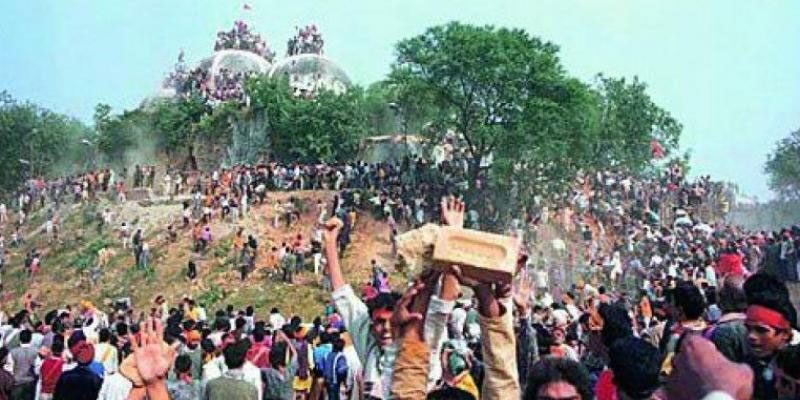
The political storm in Murshidabad began when TMC MLA Humayun Kabir announced that a “Babri Masjid” foundation stone would be laid in Beldanga on December 6—an anniversary loaded with national memory and emotion. What might have begun as a symbolic gesture quickly escalated into a district-wide confrontation. Posters carrying images of a proposed Babri structure appeared overnight. Murshidabad, a border district long marked by communal sensitivity, suddenly found itself echoing the battles of a city 800 km away: Ayodhya.
Kabir framed the move as an assertion of Muslim identity, even “justice.” TMC leaders, however, scrambled to control the fallout. Senior MLA Nirmal Ghosh disowned the announcement, labelling it beyond party policy. But by then, the spark had already touched dry grass.
Counter-Moves: The Ram Mandir Replicas
Kabir’s remarks collided with parallel efforts already underway. Local Hindu groups—backed, in varying degrees, by BJP workers—had announced plans to erect replicas of the Ram Mandir, with foundation rituals timed to coincide with the Ayodhya consecration. After Kabir’s declaration, two additional Hindu organisations unveiled their own Ram Mandir replica plans, framing these as defensive responses to “provocation.”
National BJP figures seized the opening. Spokesperson Shehzad Poonawalla accused TMC of “appeasement politics,” a familiar line since 2021. For the BJP, the Beldanga controversy is a portable Ayodhya—an opportunity to craft a narrative that TMC indulges minority hardliners while neglecting Hindu sentiment.
The Suspension and What It Signals
TMC suspended Kabir on December 4. The stated grounds were indiscipline and attempts to inflame communal sentiment. Firhad Hakim emphasised that Mamata Banerjee would not permit symbolic wars that threaten social peace. The timing matters: Banerjee was preparing to lead a protest in Murshidabad on voter roll revisions, positioning herself as protector of minority voting rights.
By disciplining Kabir, the party sent a dual message—disowning incendiary symbolism while attempting to reassure Hindus that TMC does not endorse sectarian provocation. Yet the replicas announced on both sides mean the district is already locked into a symbolic contest.
Electoral Calculus for 2026
Where TMC Stands to Lose—and Gain
Murshidabad, with its two-thirds Muslim population, is vital terrain. TMC dominated the district in 2021, but the BJP’s gains in pockets showed that Hindu consolidation can tilt some seats. With nearly 80–90 constituencies in Bengal shaped decisively by Muslim voters, even slight shifts in sentiment matter.
Hindu Response
Suspending Kabir helps TMC push back against the BJP’s “appeasement” charge. It may not convert committed BJP voters but could slow further Hindu consolidation in marginal border seats where contests are decided by 1–2% swings.
Muslim Response
Among Muslims, reactions will be mixed. Many will view the suspension as necessary de-escalation, reinforcing Mamata’s position as the strongest barrier to the BJP. But assertive sections—especially youth attuned to the symbolism of Babri injustice—may read it as suppression of minority assertion. This creates openings for Congress, the Left, and smaller Muslim-led outfits to capture a few percentage points in select seats.
State-wide Impact
The controversy is unlikely to reshape the entire 2026 map, but it may influence tight contests in border belts. If BJP manages to amplify “Babri in Bengal” into a state-wide theme, TMC could be forced into reactive mode; if the party contains the issue within Murshidabad, damage will remain localised.
A Controlled Fire, Not an Extinguished One
TMC’s response reflects a strategic tightrope walk: resisting communal escalation while guarding against the BJP’s narrative machinery. The Babri–Ram replica row will neither upend Bengal’s electoral landscape nor leave TMC untouched. It strengthens the party’s centrist appeal among some Hindu voters but introduces new vulnerabilities within parts of its Muslim base. In 2026, these shifts may not dictate state-wide outcomes—but in finely balanced constituencies, they could decide who crosses the finish line first.
(With agency inputs)