IndiGo’s Turbulent Week- How a Crew Crunch Triggered a National Passenger Crisis
India woke up to scenes of unprecedented airport chaos as IndiGo—normally synonymous with punctuality—was forced to cancel nearly 500 flights in a single day. Terminals in Delhi, Mumbai, Bengaluru and Hyderabad turned into holding areas for stranded travellers, some waiting upwards of 8–12 hours with little information or assistance. What began as a shortage of cockpit crew swiftly spiralled into one of the airline’s most damaging operational meltdowns, drawing intense scrutiny from the Directorate General of Civil Aviation (DGCA).
Passenger Fallout: A Breakdown of Basic Service
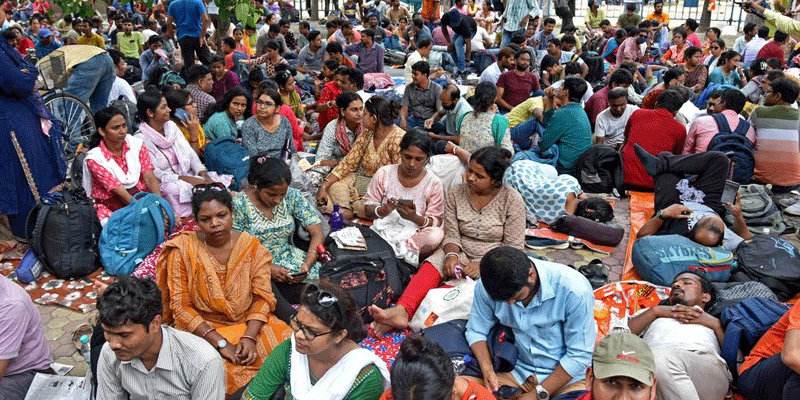
For thousands of travellers, the crisis unfolded in slow motion. At key hubs, baggage lay abandoned in piles while flights were repeatedly delayed or cancelled. Many passengers described a near-total communication blackout: confusing SMS alerts, unanswered calls, and terminal counters with no visible staff presence. Crowds snaked through corridors, gate changes became last-minute scrambles, and families resorted to sleeping on the floor.
Why the Disruption Escalated
Two structural triggers converged:
· A tightening of Flight Duty Time Limitation (FDTL) norms, particularly for night operations, which immediately restricted roster flexibility.
· A deficit of Captains, despite an adequate number of co-pilots. The airline reported 2,357 Captains in December against a November requirement of 2,422—small on paper but crippling once the stricter rules took effect.
The winter fog season, ATC congestion and minor technical issues further stressed the brittle schedule.
Regulatory Pushback: DGCA Steps In
As cancellations swelled, DGCA initiated a formal inquiry and summoned the airline’s senior management. IndiGo was ordered to provide:
· A structured mitigation plan to normalise operations
· Detailed timelines for crew hiring, training and roster redesign
· Regular progress reports on staffing levels, schedule stability and passenger-care improvements
The airline has since agreed to sharply scale down flights from December 8—a tacit admission that its aggressive capacity ramp-up was unsustainable under stricter fatigue norms.
DGCA’s Powers and Possible Penalties
Under the Aircraft Act, Aircraft Rules and Civil Aviation Requirements, DGCA wields expansive authority over airlines. It can:
· Conduct audits, demand documentation and order corrective action
· Enforce passenger-rights obligations for refunds, meals, accommodation and rebooking
· Impose monetary penalties, mandate schedule cuts, or place carriers under enhanced surveillance
· Suspend route, training or crew-related approvals—and in extreme cases, warn of licence suspension
Given reported passenger-care lapses, IndiGo faces likely financial penalties and compensation directives. If audits uncover fatigue-management violations, DGCA may impose additional fines, extend schedule caps or intensify surveillance—measures previously used against other airlines.
A Crisis That Demands Structural Reform
IndiGo’s meltdown is more than an operational blip—it exposes the fragility of running a high-density network with minimal crew buffers. For regulators, it underscores why safety-driven duty-time reforms must be backed by enforceable staffing resilience. For passengers, it raises hard questions about service standards at India’s largest carrier.
If IndiGo stabilises operations, compensates affected travellers and demonstrates credible progress on hiring and fatigue compliance, penalties will likely remain moderate. But if systemic issues persist, DGCA has ample authority to escalate. Ultimately, the episode is a warning to the entire industry: efficiency cannot come at the cost of resilience, and resilience cannot come at the cost of safety.
(With agency inputs)