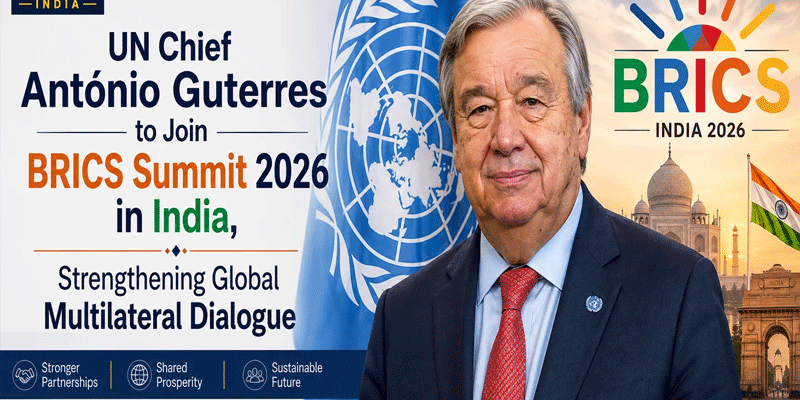
Multipolarity and reform of multilateral institutions will be central to UN Secretary-General António Guterres’ message when he addresses the 18th BRICS Summit in New Delhi on September 12–13. His intervention comes as global power is becoming more dispersed and developing countries increasingly demand a greater voice in institutions that shape international security, finance, trade and development.
BRICS and India’s Global Governance Push
BRICS has evolved from its original five-member grouping into a broader platform representing major emerging economies and much of the Global South. Its agenda now spans development finance, trade, energy, technology, climate action and reform of global governance.
Under India’s 2026 chairship, the summit is being guided by “Building for Resilience, Innovation, Cooperation and Sustainability”, anchored in a “Humanity First” vision. Its four priorities are resilience in health, food, energy and supply chains; innovation in startups, science, technology, AI and digital infrastructure; cooperation through stronger multilateralism; and sustainability through clean energy, climate action and responsible consumption.
Latest Developments
· Guterres at the summit: The UN chief is scheduled to travel to India and address BRICS leaders during the September 12–13 summit, placing institutional reform at the heart of his intervention.
· Security Council reform: Guterres is expected to argue that the UN Security Council must become more representative of contemporary geopolitical realities, particularly by giving developing regions a stronger voice.
· Bretton Woods institutions: He is also expected to support reforms to the IMF and World Bank, including changes to quotas and governance structures that better reflect the present global economic balance.
· Wider multilateral reform: Trade, climate finance and other international mechanisms also require restructuring so that developing economies can secure fairer access to resources, technology and decision-making.
· Closed-door deliberations: BRICS leaders will discuss “Inclusive Global Governance and Strengthening Multilateralism”, alongside an open session examining resilience, innovation, cooperation and sustainability as foundations for inclusive growth.
Guterres’ Core Message
Guterres’ argument is likely to be straightforward: multipolarity can create greater balance, but it cannot succeed without stronger and more representative institutions. A fragmented world in which power is distributed among more countries still needs credible mechanisms capable of managing conflicts, financing development and addressing global challenges.
For India, this closely complements New Delhi’s longstanding call for reformed multilateralism. Hosting the UN chief also strengthens India’s positioning as a bridge between established institutions and emerging powers.
From Multipolarity to Meaningful Reform
Guterres’ BRICS intervention could give greater international legitimacy to the bloc’s ambition to reshape global governance. But the real test will be whether BRICS can convert broad demands for reform into practical consensus. Internal differences, including India-China strategic tensions, remain significant. Ultimately, a multipolar world will be sustainable only when representation translates into responsibility, institutions become more inclusive, and developing nations gain not merely a seat at the table, but a meaningful voice in shaping the global order.
(With agency inputs)