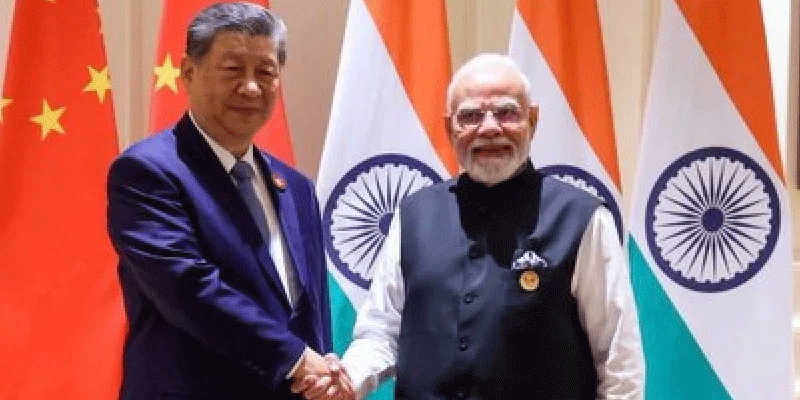
Modi-Xi meeting: a cautious reset, as the two leaders sought to stabilise India-China relations after years of tensions following the 2020 military confrontation along the Line of Actual Control. Their latest engagement did not resolve the boundary dispute, but it opened space for renewed dialogue, economic engagement and confidence-building.
A Meeting After Seven Years
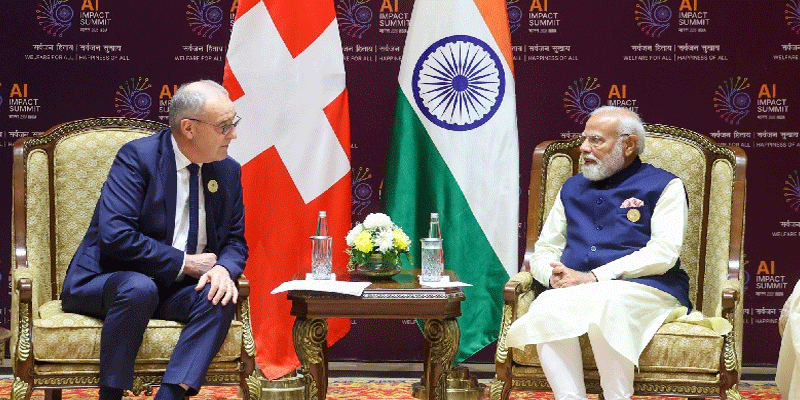
Prime Minister Narendra Modi met Chinese President Xi Jinping on the sidelines of the 18th BRICS Summit in New Delhi on September 12–13, 2026. The meeting was particularly significant as it marked Xi’s first visit to India in seven years and came amid efforts to rebuild ties after prolonged military and diplomatic tensions.
India’s position remains clear: peace and tranquillity along the border are essential for normal bilateral relations. At the same time, both countries recognise the importance of maintaining economic and strategic communication.
Seven Key Issues India, China Agreed Upon
· Fair and mutually acceptable boundary settlement: Modi and Xi reaffirmed their commitment to resolving the boundary question through a “fair, reasonable and mutually acceptable” settlement. While this does not constitute a territorial breakthrough, it keeps the negotiating process active.
· Peace and stability along the LAC: Both sides stressed the importance of maintaining peace and tranquillity in border areas and respecting existing agreements and understandings. Border stability remains the immediate foundation for improving wider relations.
· Strategic engagement and mutual respect: The leaders agreed that differences should not become disputes. Modi emphasised mutual respect, sensitivity and interest, while Xi characterised India and China as partners rather than rivals, signalling an effort to prevent competition from becoming confrontation.
· Addressing trade imbalance: Economic imbalances were acknowledged as an important concern. India wants improved access for its exports and fewer market barriers, while China seeks stable commercial relations. Recognition is significant, but actual correction will require measurable market-access reforms.
· Greater supply-chain cooperation: The two sides discussed making supply chains more predictable and resilient. Cooperation could become increasingly important in pharmaceuticals, electronics, renewable energy and critical technologies as businesses diversify production.
· Business ties and market access: Modi and Xi called for meaningful and predictable market access and stronger business linkages. The approach indicates an attempt to preserve economic opportunities despite continuing strategic mistrust and security concerns.
· People-to-people connectivity: Both sides agreed to encourage cultural exchanges, business contacts and greater mobility. The gradual revival of direct flights, visas and the Kailash Mansarovar pilgrimage could help rebuild confidence between the two societies.
Why The Reset Still Remains Fragile
The meeting gave political momentum to India’s BRICS chairship while demonstrating that multilateral cooperation can continue despite bilateral differences. However, unresolved issues—including the boundary dispute, trade deficit, investment restrictions, technology controls, trans-border river concerns and strategic competition in the Indo-Pacific—remain substantial.
From Diplomatic Signals to Measurable Progress
The Modi-Xi engagement should therefore be viewed as a cautious reset, not a strategic breakthrough. Its real significance will be determined by what follows: sustained border negotiations, verified de-escalation, improved market access and restored connectivity. If diplomatic commitments translate into concrete action, India and China can gradually rebuild a more stable relationship. If not, the meeting may remain another carefully worded pause in a relationship still defined by deep strategic mistrust.
(With agency inputs)