Meta Faces Tough Questions Over Content Promotion Practices
Meta has come under renewed regulatory pressure in India after reports that Chief Executive Officer Mark Zuckerberg apologised to government officials over lapses involving child sexual abuse material (CSAM), deepfake content and operational errors on the company's platforms. During discussions with Indian authorities, Meta is also reported to have acknowledged that money had been spent to boost certain categories of content, raising fresh concerns over the functioning of its recommendation algorithms and advertising systems. The developments have intensified the government's scrutiny of Meta's content moderation practices and could have significant implications for the company's legal protections under India's Information Technology framework.
A Long-Running Debate Over Platform Accountability
The latest controversy follows an earlier incident in which Facebook briefly removed a post from Prime Minister Narendra Modi's official account, prompting the government to summon Meta representatives for an explanation. The episode reignited debate over whether social media companies merely host user-generated content or actively influence its reach through algorithmic recommendations.
This distinction is legally significant because Section 79 of the Information Technology Act provides intermediary protection to platforms that primarily act as neutral hosts. If regulators determine that a platform actively curates, promotes or amplifies content, questions may arise over the extent of that legal immunity.
Child Safety and Deepfakes Take Centre Stage
The government's concerns extend well beyond the temporary removal of a political post. In recent months, authorities have repeatedly questioned Meta over advertisements and content allegedly linked to child sexual exploitation as well as the rapid spread of AI-generated deepfake videos.
According to reports citing official sources, Zuckerberg acknowledged operational shortcomings in Meta's moderation systems and apologised for lapses involving illegal content. Reports also suggest that company representatives admitted that significant financial resources had been used to promote certain categories of content, including material that later raised regulatory concerns.
If verified, such admissions could strengthen calls for greater transparency regarding how Meta's recommendation systems prioritise and distribute content to users.
Latest Developments Signal Stronger Regulatory Action
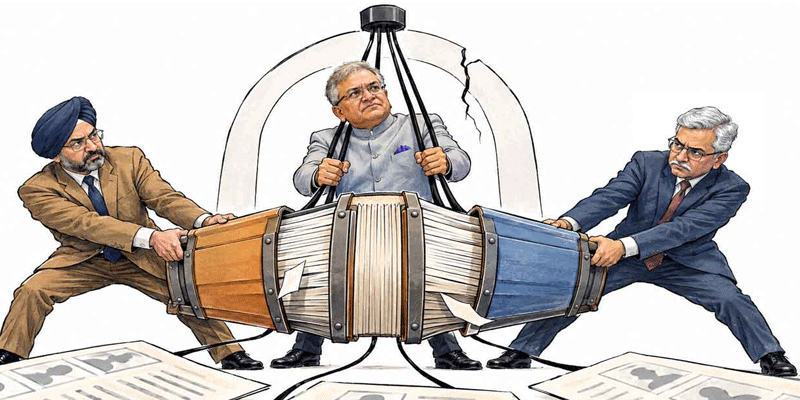
The latest meeting appears to have elevated the dispute beyond a single moderation error. Reports indicate that the Parliamentary Standing Committee on Communications and Information Technology has sought an "unqualified apology" from Zuckerberg within a stipulated timeframe while warning that continued concerns could lead to a review of Meta's intermediary protections.
Although no final regulatory action has been announced, the developments reflect a broader policy shift towards holding digital platforms more accountable for the content they recommend, promote and monetise.
The issues of child safety, deepfake regulation, algorithmic transparency and the treatment of high-profile accounts are increasingly being viewed as interconnected aspects of platform governance rather than isolated incidents.
Balancing Innovation with Accountability Will Define the Future
The latest controversy underscores the growing challenge of regulating powerful digital platforms in the age of artificial intelligence. While Meta continues to play a central role in India's digital ecosystem, the company now faces increasing expectations to strengthen content moderation, improve transparency and prevent the spread of harmful material.
At the same time, any regulatory response will need to balance platform accountability with the protection of legitimate free expression and technological innovation. As India refines its digital governance framework, the outcome of this episode could shape not only Meta's future operations but also the broader responsibilities of social media companies operating in one of the world's largest and most influential digital markets.
(With agency inputs)