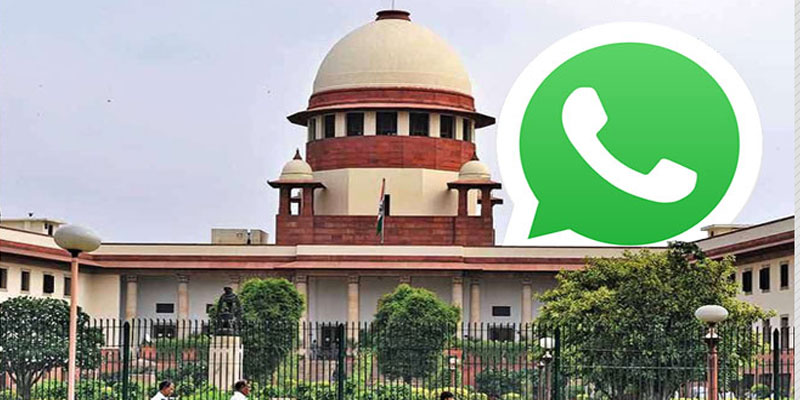
In a sharply worded courtroom intervention, Chief Justice of India Surya Kant on Monday issued a stern warning to Meta Platforms, telling the company it must comply with India’s Constitution or “leave India.” The remarks came during a Supreme Court hearing on petitions challenging WhatsApp’s controversial 2021 privacy policy, which mandates expanded data sharing with Meta entities.
Calling user privacy non-negotiable, the Chief Justice said the court would not allow the rights of Indian citizens to be diluted for commercial interests. He questioned whether the policy—drafted in dense legal language—could realistically be understood by millions of poor and digitally uneducated Indians. “We cannot compromise the privacy of our citizens,” the bench observed, underscoring the constitutional protections under Article 21.
The case traces back to WhatsApp’s 2021 policy update, which required users to consent to sharing transaction and business-related data with Meta platforms for advertising and analytics or risk losing access to services. The move triggered widespread public backlash, given WhatsApp’s more than 500 million users in India.
In 2024, the Competition Commission of India (CCI) fined Meta ₹213 crore for abusing its dominant position through coercive consent mechanisms. While the National Company Law Appellate Tribunal (NCLAT) upheld the penalty in 2025, it relaxed certain restrictions on data sharing. Meta challenged those findings in the Supreme Court earlier this year, arguing that end-to-end encryption safeguards personal messages and that users retain choice.
During Monday’s hearing, Solicitor General Tushar Mehta termed the policy “exploitative,” accusing Meta of monetising user data from vulnerable sections of society. Meta’s counsel faced sustained questioning from the bench on the validity of consent under India’s new Digital Personal Data Protection Act, 2023.
No final ruling was delivered. The matter will be heard again after the Centre files its response. The outcome could reshape how global tech firms operate in India’s digital economy.
(With agency inputs)