War, Stalled Diplomacy, and a Grinding Stalemate
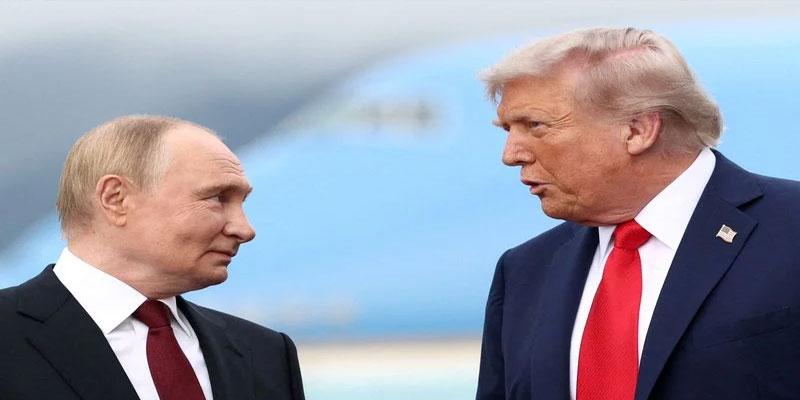
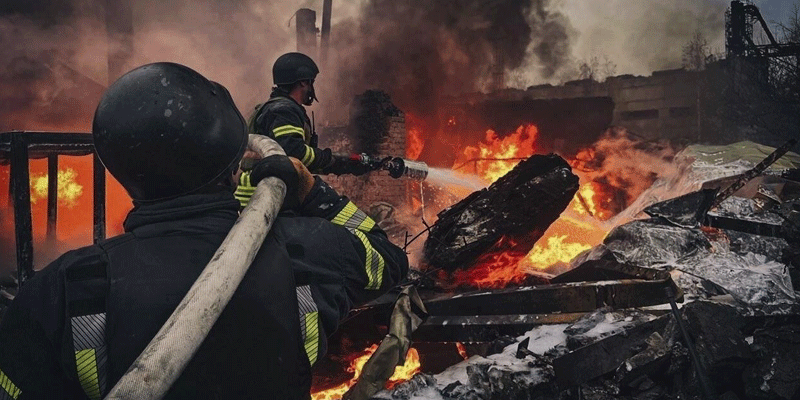
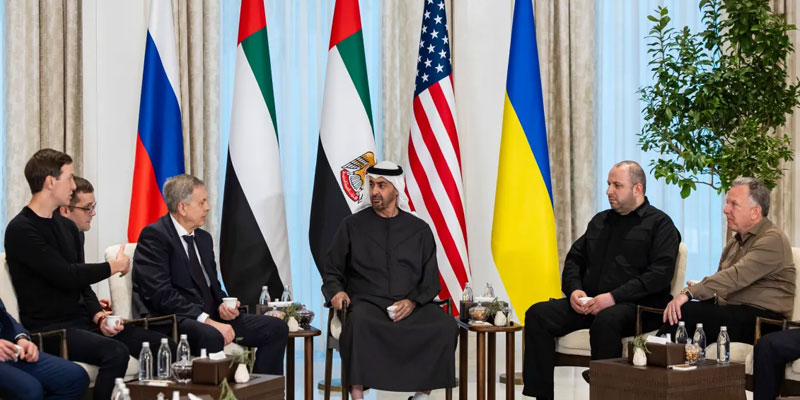
Four years after Russia’s full-scale invasion of Ukraine, another attempt at diplomacy has begun, with US-mediated talks resuming in early February 2026. The negotiations follow a protracted conflict marked by battlefield stalemates, failed peace initiatives, and deep mistrust between Moscow and Kyiv. While frontlines have shifted only marginally in recent months, casualties and economic strain continue to mount. Previous negotiations collapsed over irreconcilable demands on territory, security guarantees, and political arrangements, leaving the war locked in a costly stalemate even as international mediators press for a settlement.
Renewed Talks, Familiar Divisions
The latest round of discussions highlights both the urgency and difficulty of ending the conflict. Russia has reiterated preconditions that include Ukrainian withdrawal from contested regions and formal recognition of territorial changes, while Ukraine continues to insist on sovereignty and security guarantees. Despite renewed diplomatic engagement, the gap between the two sides remains wide, reflecting not only competing territorial claims but also fundamentally different visions of Europe’s security order.
Military and Political Background
The war, which escalated dramatically in February 2022, has roots in earlier tensions stemming from Russia’s 2014 annexation of Crimea and the emergence of separatist movements in eastern Ukraine. Since then, the conflict has become Europe’s most destructive war in decades, with hundreds of thousands of casualties and widespread displacement. Ukraine has relied heavily on Western military and financial support, while Russia has adjusted its economy and military strategy to sustain a prolonged campaign. Although neither side has achieved decisive breakthroughs, attritional fighting and economic pressures continue to shape the strategic landscape.
Why Previous Peace Efforts Failed
Earlier negotiations faltered due to disagreements over Ukraine’s security orientation, the status of occupied territories, and accountability for wartime damage. Kyiv’s proposals emphasized restoration of territorial integrity and international security guarantees, whereas Moscow demanded neutrality and recognition of its territorial gains. Each side viewed concessions as existential risks, leading to repeated breakdowns in talks. The current negotiations face similar obstacles, compounded by accumulated grievances and the strategic calculations of external powers.
Russia’s Full Set of Conditions Beyond Territory
While territorial withdrawal and recognition remain central to Moscow’s demands, its conditions for a settlement extend further. Russia has consistently called for Ukraine to adopt permanent neutrality, ruling out membership in NATO or other military alliances. It also seeks limits on Ukraine’s armed forces, restrictions on certain categories of weapons, and assurances against hosting foreign military bases.
Politically, Moscow has called for protections for Russian-speaking populations and amnesty for separatist actors in contested regions. Economically and legally, it has pressed for the removal of Western sanctions, the release of frozen Russian assets, and guarantees that Ukraine will not pursue reparations claims. Additionally, Russia has demanded a halt to Western arms deliveries to Kyiv as part of any ceasefire framework. Collectively, these conditions aim to reshape Ukraine’s strategic orientation and secure recognition of Russia’s security interests.
The breadth of these demands underscores why negotiations remain fraught. For Ukraine, many of the conditions would constrain sovereignty and long-term security. For Russia, they represent minimum assurances against perceived encirclement and future conflict. External mediators face the challenge of narrowing this gap without triggering further escalation.
A Long Road to Settlement
The resumption of talks reflects a shared recognition that a purely military resolution remains elusive. Yet the scope of Russia’s conditions — spanning territorial, military, political, and economic dimensions — makes compromise difficult. Any sustainable peace will require balancing Ukraine’s sovereignty with broader security arrangements acceptable to all parties. Until then, the conflict is likely to persist as a prolonged standoff, with diplomacy offering incremental progress rather than a swift breakthrough.
(With agency inputs)