From Cadre to Command: The Making of BJP’s Youngest National President
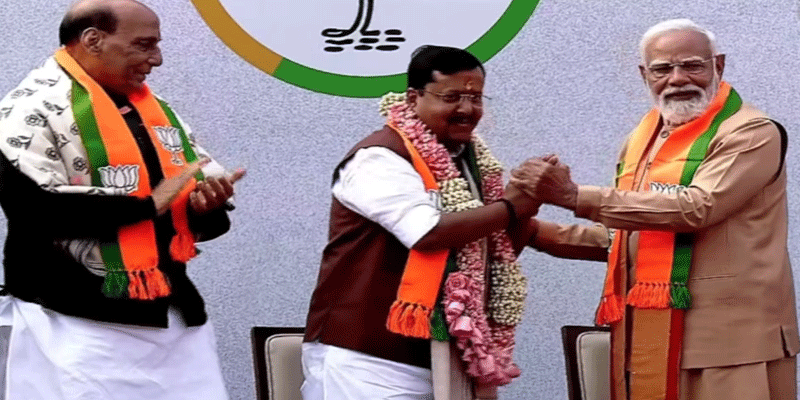
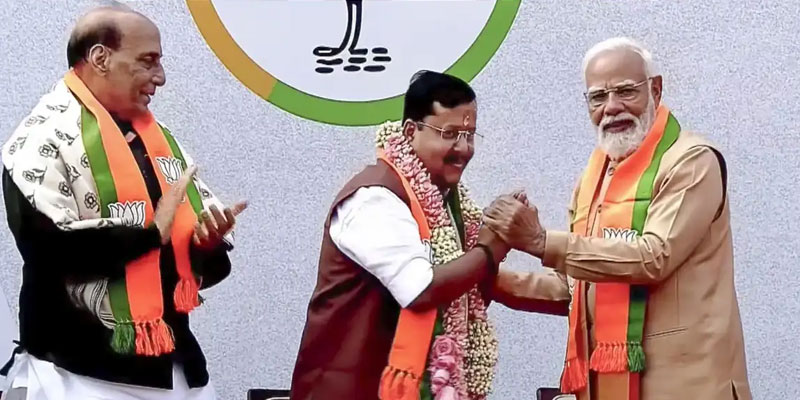
At 45, Nitin Nabin has scripted a rare ascent in Indian party politics. Taking charge as the Bharatiya Janata Party’s youngest-ever National President in January 2026, the Bihar leader represents a transition from the era of veteran mass leaders to a new generation of organisational managers. A five-time MLA from Patna’s Bankipur constituency and a minister known more for groundwork than rhetoric, Nabin’s elevation marks the culmination of nearly two decades of disciplined party work, largely away from national limelight.
Background and Political Trajectory
Nitin Nabin’s political journey began in the crucible of Bihar politics. Entering the assembly through a by-election in 2006, he steadily consolidated Bankipur into a BJP stronghold. His tenure as Bihar’s BJP Yuva Morcha president sharpened his skills in cadre mobilisation, while ministerial responsibilities gave him administrative credibility. Within the party, he built a reputation as a reliable organiser—someone trusted to manage elections, coordinate alliances, and execute strategy rather than command headlines. This profile ultimately made him an acceptable consensus choice for the party’s top organisational post.
Why the BJP Chose Nabin Now
The timing of Nabin’s appointment is as significant as the individual himself. Coming after a general election in which the BJP fell short of its earlier parliamentary highs, the leadership faced the dual challenge of renewal without rupture. By selecting a younger president with deep organisational roots, the party signalled generational change while avoiding internal contestation. Prime Minister Narendra Modi’s public endorsement—framing himself symbolically as a “party worker”—reinforced the idea that Nabin’s role is managerial execution under a strong central leadership rather than ideological reinvention.
Rebalancing Power: Impact on BJP’s Internal Factions
Nitin Nabin’s elevation subtly reshapes factional equations within the BJP.
· First, it consolidates the dominance of the Modi–Shah axis. Nabin is widely viewed as a trusted organisational hand rather than a power centre in his own right, ensuring that strategic authority remains firmly with the top leadership. This effectively sidelines speculation about rival claimants or emerging satraps challenging the existing hierarchy.
· Second, his rise helps recalibrate relations with the Rashtriya Swayamsevak Sangh (RSS). In recent years, occasional friction surfaced over questions of autonomy and ideological emphasis. Nabin, shaped by student and youth wings closely aligned with the Sangh ecosystem, is seen as a bridge figure—reassuring the RSS without conceding operational control.
· Third, the appointment carries regional and caste balancing implications. As the first BJP national president from Bihar, Nabin gives eastern India greater prominence within the party’s leadership structure. Socially, his background allows the BJP to signal inclusivity without disturbing its broader coalition, particularly in the Hindi heartland. Simultaneously, his early move to assign responsibilities in southern states hints at an attempt to reduce north-centric perceptions and manage diverse regional aspirations.
Opportunities and Risks Ahead
The advantages of this arrangement are clear: organisational stability, smoother coordination with state units, and renewed focus on data-driven election management. However, risks remain. Nabin’s relatively low national profile means he must quickly establish authority over powerful regional leaders. Failure to do so could expose him to perceptions of being merely an extension of the central command.
Continuity Wrapped in Change
Nitin Nabin’s presidency does not herald a dramatic ideological shift within the BJP. Instead, it represents continuity wrapped in generational change—an attempt to future-proof the party by investing in organisational competence over charisma. If he succeeds, the BJP strengthens its electoral machine for the next decade. If he falters, it will underline the limits of managerial leadership in a party built on strong personalities. Either way, his rise marks a significant moment in the BJP’s evolving internal architecture.
(With agency inputs)