India’s Expanding Metro Footprint
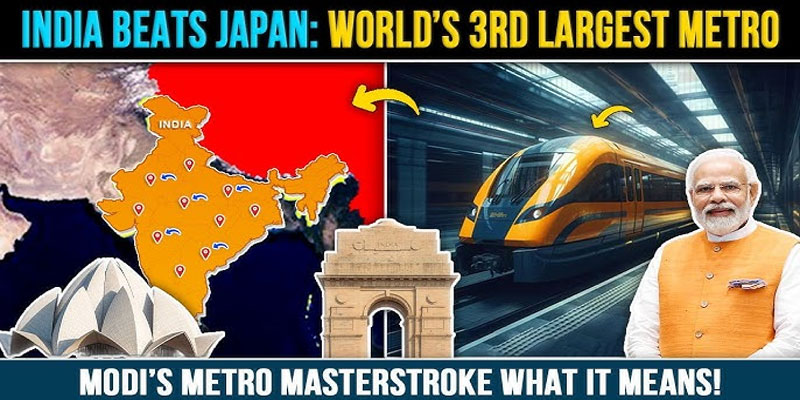
India has emerged as a global leader in urban rail transit, now boasting the world’s third-largest metro network. The milestone was highlighted by Union Minister Tokhan Sahu during a felicitation ceremony for Delhi Metro enthusiast Anil Marwah in New Delhi.
According to the minister, India’s operational metro system now stretches beyond 1,000 kilometres across more than 23 cities—placing it behind only China and the United States in terms of scale. With over 700 kilometres currently under construction, India is expected to soon overtake the US in total network length.
Among the largest systems, the Delhi Metro remains the flagship network, covering nearly 400 kilometres, followed by systems in Bengaluru, Mumbai, and Hyderabad. Together, these networks serve roughly 12 million passengers daily.
A Citizen’s Passion for the Metro
The ceremony also honored Anil Marwah, who has become a symbol of public enthusiasm for India’s metro expansion. Since December 24, 2002—the day the first corridor of the Delhi Metro opened—Marwah has ridden the inaugural train of every new Delhi Metro line.
His 24-year ritual reflects the emotional connection many urban commuters have with the metro system, which has significantly reshaped daily mobility in the capital. Officials estimate that the network has helped reduce traffic congestion in Delhi by nearly 40 percent while improving commuting reliability for millions.
How Metros Are Transforming Indian Cities
The rapid expansion of metro networks has had a profound impact on India’s urban infrastructure. By shifting commuters away from private vehicles and toward electric rail transport, metros have played a key role in reducing air pollution and greenhouse-gas emissions.
Transport studies indicate that metro corridors can reduce citywide particulate pollution by 10–20 percent by lowering dependence on cars, buses, and two-wheelers—the major contributors to urban pollution. Electric trains also cut carbon emissions significantly, with large systems such as Delhi’s saving up to one million tonnes of CO₂ annually.
Traffic congestion has also eased in several cities. Metro systems often absorb between 10 and 40 percent of peak-hour travel demand along major corridors. In Delhi, average travel speeds in areas served by the metro have improved markedly, reducing commute times and improving productivity.
Strategic Importance for India’s Urban Future
India’s metro expansion is closely tied to broader urban and economic trends. With the country’s urban population projected to reach nearly 600 million by 2030, efficient mass transit is becoming essential for sustainable development.
Metro systems also support national climate goals by lowering oil consumption and reducing reliance on imported fuel. Analysts estimate that widespread metro usage already saves India more than $1 billion annually in oil imports.
Integration with regional rail networks and transit-oriented development policies is expected to further boost economic growth, creating jobs and encouraging commercial activity around metro corridors.
A New Era of Urban Mobility
India’s rise to the position of the world’s third-largest metro network marks a major milestone in its infrastructure journey. From easing congestion to reducing pollution and boosting economic productivity, metro systems are becoming the backbone of urban mobility.
However, continued investment in last-mile connectivity, integration with buses and regional rail, and affordable fares will be essential to fully unlock the potential of this expanding network. If these challenges are addressed, India’s metro revolution could reshape how millions move, work, and live in the decades ahead.
(With agency inputs)