Delhi CM Announces Plan to Merge Three Major Hospitals
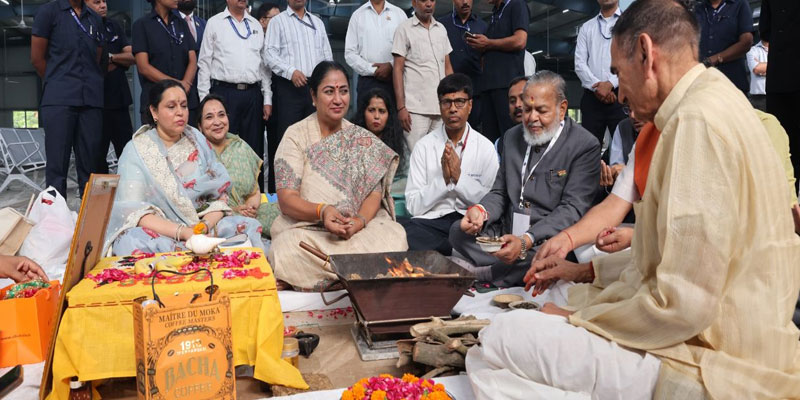
Delhi is preparing for a major transformation in its public healthcare system. Chief Minister Rekha Gupta recently announced plans to integrate three major government hospitals—Guru Teg Bahadur Hospital, Delhi State Cancer Institute and Rajiv Gandhi Super Speciality Hospital—into a single AIIMS-style “super medical hub.”
The proposed model aims to streamline services and improve access to specialized treatment for millions of residents in Delhi and the surrounding National Capital Region. The announcement followed a high-level meeting involving Delhi’s health leadership, including Health Minister Pankaj Kumar Singh, where officials discussed reorganizing healthcare infrastructure to reduce overcrowding and eliminate duplication of services.
Currently, each of the three hospitals handles large patient loads independently, often resulting in long waiting times, fragmented referrals and uneven distribution of resources.
Why Integration Is Being Proposed
The three institutions collectively serve nearly two million patients annually. Guru Teg Bahadur Hospital alone handles around 14 lakh outpatient visits and nearly 95,000 inpatient admissions every year, making it one of the busiest government hospitals in Delhi. Meanwhile, Delhi State Cancer Institute focuses primarily on oncology services with over 1.2 lakh outpatient consultations annually, while Rajiv Gandhi Super Speciality Hospital manages more than 2.8 lakh OPD patients with strong expertise in cardiology, nephrology and other advanced specialties.
Despite these capacities, the current system often forces patients to move between facilities for different tests or treatments. Officials believe a unified structure will allow better coordination of doctors, equipment and diagnostic services.
Under the proposed blueprint, the hospitals would function under a common governance framework similar to the model used by the All India Institute of Medical Sciences, New Delhi. Specialties would be distributed strategically—oncology at DSCI, cardiology and nephrology at RGSSH, and general medicine, orthopaedics and neurology at GTB Hospital—while digital integration would allow seamless patient records across facilities.
Expected Timeline and Estimated Cost
Although the government has not announced a detailed project timeline or budget yet, officials suggest the integration will likely proceed in phases. The first stage will involve administrative and digital integration, including unified management, human resources and electronic medical records. This phase could take between six months and one year.
The second phase would focus on infrastructure upgrades, including expansion of wards, centralized laboratories and shared diagnostic equipment. Experts estimate that the project could take two to three years to complete.
Based on comparable projects, the cost of building and upgrading infrastructure for the integrated hub could range between ₹2,000 crore and ₹3,000 crore. Funding is expected to come from Delhi’s health budget, which currently allocates around ₹18,000 crore for healthcare expenditure.
If implemented smoothly, the integrated facility could offer more than 2,000 beds and significantly increase treatment capacity.
Comparison With AIIMS Delhi
The proposed hub is inspired by the operational model of All India Institute of Medical Sciences, New Delhi, India’s premier government medical institution. AIIMS Delhi operates under an autonomous structure with centralized governance and integrated departments covering nearly every medical specialty.
AIIMS treats approximately 48 lakh outpatient cases annually and manages over 3.6 lakh inpatient admissions with more than 3,600 beds. By comparison, the proposed Delhi medical hub will initially operate at a smaller scale but aims to replicate AIIMS’ coordinated service delivery and specialized care system.
If successful, the integrated model could reduce waiting times, improve referrals and make advanced healthcare more accessible within the city.
A Potential Turning Point for Urban Healthcare
Delhi’s plan to create an AIIMS-style medical hub represents a bold attempt to modernize public healthcare infrastructure in one of India’s most densely populated urban regions. By integrating major hospitals under a unified system, the government hopes to optimize resources, shorten treatment delays and improve patient outcomes.
However, the success of the project will depend on effective implementation, cooperation among hospital staff and sustained financial investment. If executed well, the initiative could become a model for other Indian cities seeking to build large-scale, integrated public healthcare systems capable of meeting the demands of rapidly growing populations.
(With agency inputs)