PM Modi Launches Mega Development Drive in Kochi
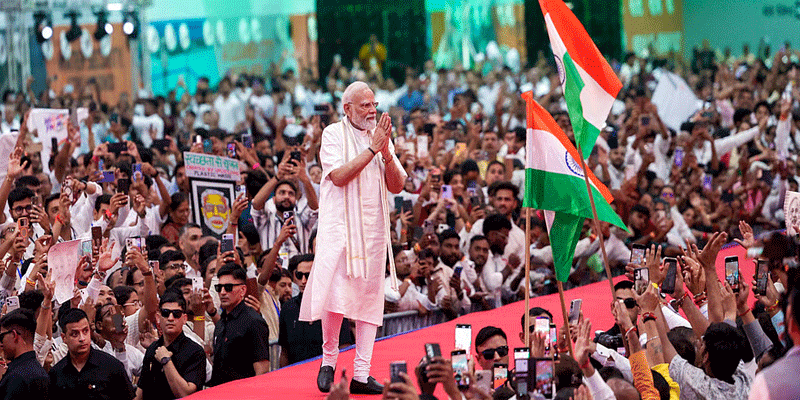
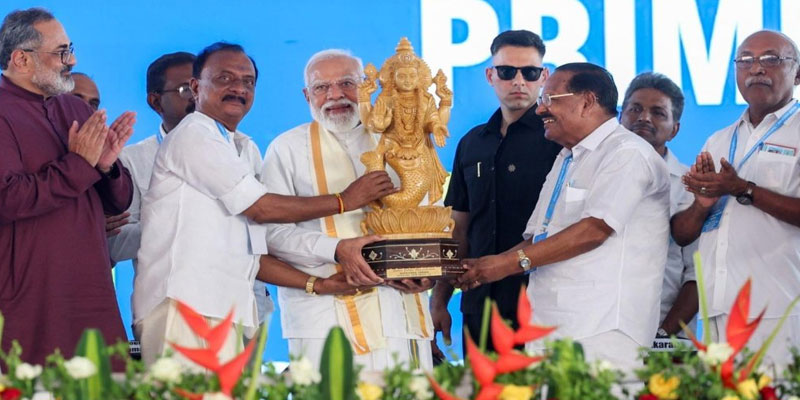
Prime Minister Narendra Modi on March 11 unveiled a sweeping package of development projects worth nearly ₹11,000 crore in Kochi, aimed at strengthening infrastructure, energy security, and industrial growth in the southern state. Addressing a public gathering in Ernakulam, the Prime Minister described the initiatives as a key step toward building a “Viksit Kerala,” emphasizing job creation, improved connectivity, and long-term economic resilience.
The projects span petroleum processing, renewable energy, rail modernization, and highway expansion—forming what the government hopes will be a powerful catalyst for industrial transformation in Kerala.
Petroleum and Manufacturing: Strengthening India’s Petrochemical Chain
At the heart of the package is a ₹5,500-crore Polypropylene (PP) unit at the Bharat Petroleum Kochi Refinery. With an annual capacity of about 400 kilotonnes, the facility will produce polypropylene used in packaging, automobiles, textiles, and medical devices.
The project is expected to deepen India’s petrochemical value chain while reducing dependence on imports. By generating feedstock for downstream industries, it can support clusters of small and medium manufacturers that rely on polymer-based materials.
Strategically, the expansion also reinforces Kochi’s role as a major refining hub in India, complementing large refining complexes such as those operated by Reliance Industries in Jamnagar. With global oil markets experiencing volatility, strengthening domestic refining and petrochemical capacity is increasingly seen as an economic safeguard.
Renewable Energy Push: Floating Solar Initiative
Alongside petroleum investments, the government is also advancing renewable energy infrastructure. A 50-megawatt floating solar power plant at West Kallada will harness Kerala’s extensive water bodies to generate clean electricity.
Floating solar systems offer multiple advantages in water-rich states like Kerala, including efficient land use and reduced evaporation losses. The project supports India’s broader ambition of achieving 500 gigawatts of non-fossil energy capacity by 2030 while helping the state diversify its power sources.
Rail and Road Connectivity Upgrades
Infrastructure connectivity is another central component of the development package. Railway upgrades worth ₹142 crore will focus on electrification and station modernization, improving passenger services and boosting freight efficiency.
Road development will also see a major boost through the six-laning of the Thalapady–Chengala stretch of National Highway 66, a project valued at ₹2,650 crore. The expanded corridor will strengthen logistics links between ports, industrial zones, and tourism hubs across the state.
Such connectivity projects complement broader maritime initiatives under the Sagarmala Programme, which seeks to modernize ports and coastal infrastructure to boost trade and shipbuilding.
Economic and Employment Impact
Together, the projects are expected to generate thousands of direct and indirect jobs, especially in manufacturing, logistics, and renewable energy sectors. For Kerala, where youth migration to other states and abroad remains a major economic pattern, industrial investment could help create opportunities closer to home.
Improved infrastructure also makes the state more attractive for foreign and domestic investment, potentially accelerating growth in sectors such as petrochemicals, shipbuilding, tourism, and high-value manufacturing.
Building an Industrial Future for Kerala
The ₹11,000-crore investment package reflects a broader strategy to transform Kochi into a hub connecting energy, manufacturing, and logistics. If implemented effectively, the projects could strengthen India’s industrial supply chains while giving Kerala a stronger foothold in the national manufacturing landscape.
However, the long-term impact will depend on coordinated execution between the central and state governments, timely clearances, and sustained investment. If these elements align, Kochi’s infrastructure push could mark a significant step toward a more diversified and resilient Kerala economy.
(With agency inputs)