A Diplomatic Forum Becomes a Trade Milestone
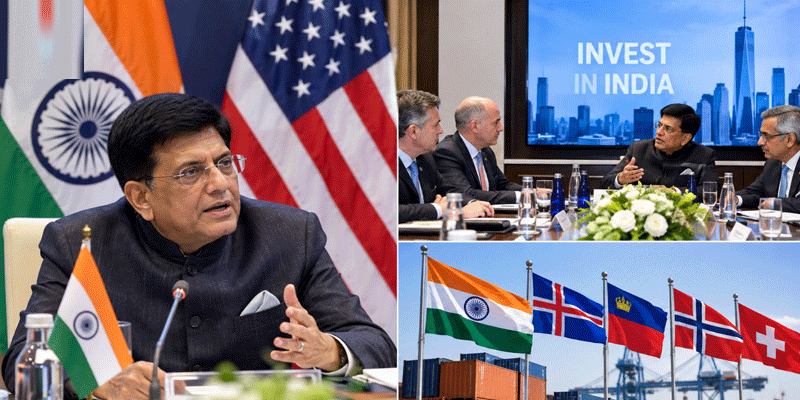
What began as Prime Minister Narendra Modi’s participation in the 2026 G7 Summit in Evian, France, quickly evolved into a showcase of India’s growing economic influence and trade diplomacy. At a time when global supply chains are being reshaped by geopolitical tensions, protectionist tendencies, and economic uncertainty, India emerged from the summit with renewed momentum in trade negotiations with three of its most important economic partners—the United Kingdom, the European Union, and the United States.
The convergence of progress on these fronts has reinforced India's position as a key growth engine in the global economy and highlighted its increasing ability to secure trade arrangements that balance market access with domestic priorities.
The Context: Years of Negotiations Reach a Turning Point
India’s trade engagements with the UK, EU and US have been marked by lengthy negotiations, complex regulatory discussions, and concerns over market access, tariffs, services, and mobility of professionals. While all three tracks had witnessed intermittent progress over the years, the G7 summit provided a decisive political push that accelerated outcomes.
The timing is significant. As major economies seek to diversify supply chains and reduce overdependence on traditional manufacturing hubs, India has emerged as a preferred partner owing to its large market, demographic advantages, and expanding manufacturing base. This broader geopolitical and economic backdrop has helped create favourable conditions for trade agreements that were once considered difficult to conclude.
UK Trade Pact Delivers the First Concrete Win
The clearest outcome from the summit came in India-UK trade relations. Following discussions between Modi and UK Prime Minister Keir Starmer, both countries confirmed that the India-UK Comprehensive Economic and Trade Agreement (CETA) will come into force on July 15, 2026.
Signed in July 2025 after more than three years of negotiations, the agreement grants duty-free access to 99 per cent of India’s exports to the UK, covering nearly the entire value of bilateral trade. Labour-intensive sectors such as textiles, leather, gems and jewellery, marine products, and agriculture are expected to be among the biggest beneficiaries. At the same time, India has protected sensitive sectors including dairy, pulses and smartphones, while securing access across 137 services sub-sectors ranging from information technology to finance and healthcare.
EU and US Negotiations Gather Pace
Momentum was equally visible in India’s negotiations with the European Union. European Commission President Ursula von der Leyen indicated that the India-EU Free Trade Agreement could be formally signed before the end of 2026. Having concluded negotiations in January this year after nearly two decades, the agreement is expected to create one of the world’s largest integrated economic partnerships, connecting markets representing nearly two billion people.
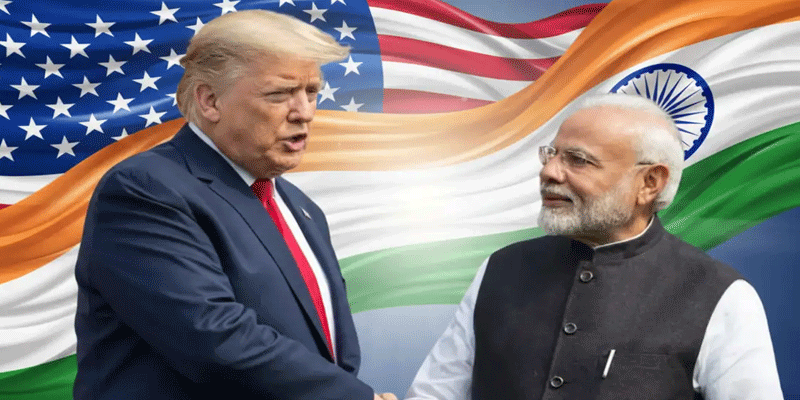
Meanwhile, the United States signalled that its trade negotiations with India are nearing completion. President Donald Trump described the talks as being in their “final stages”, suggesting that both sides are close to resolving longstanding issues. The progress marks a notable improvement from recent tariff-related tensions and reflects a shared interest in deepening economic cooperation.
India’s Trade Diplomacy Comes of Age
The developments witnessed at the G7 summit underscore a broader transformation in India’s global economic standing. Simultaneous progress with the UK, EU and US demonstrates New Delhi’s ability to pursue ambitious trade goals while safeguarding domestic interests. More importantly, these agreements position India as a trusted partner in an increasingly fragmented global economy. For the Modi government, Evian was not merely another diplomatic gathering—it became a powerful affirmation that India’s trade diplomacy has entered a new and more influential phase.
(With agency inputs)