Parliament Monsoon Session Live Updates
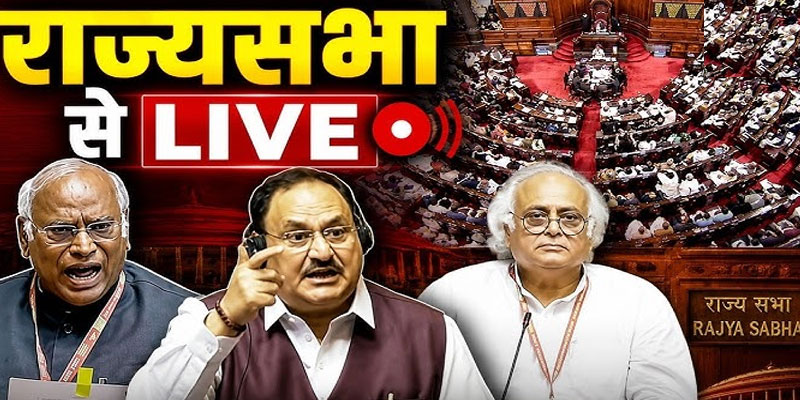
Parliament's Monsoon Session continues to remain paralysed as the political battle over the NEET-UG 2026 paper leak intensifies. What was expected to be a productive legislative session has increasingly turned into a confrontation between the government and the Opposition over accountability in one of India's biggest examination controversies. With both the Lok Sabha and Rajya Sabha witnessing repeated disruptions, legislative business has taken a back seat while the demand for Union Education Minister Dharmendra Pradhan's resignation dominates proceedings. The NEET issue has now evolved beyond an education controversy into a broader political contest over governance, responsibility and parliamentary functioning.
How the NEET Controversy Reached Parliament
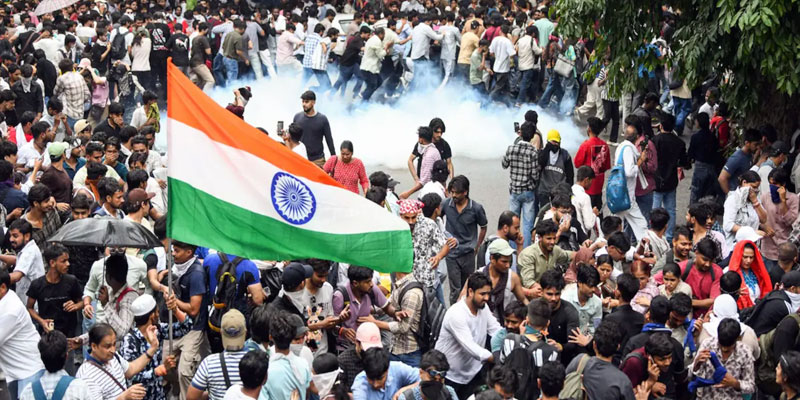
The current deadlock has its roots in the cancellation and subsequent re-conduct of the NEET-UG 2026 examination after evidence of a question paper leak surfaced. The incident triggered nationwide protests by students, multiple court petitions and intense criticism of the National Testing Agency (NTA) and the Union Education Ministry.
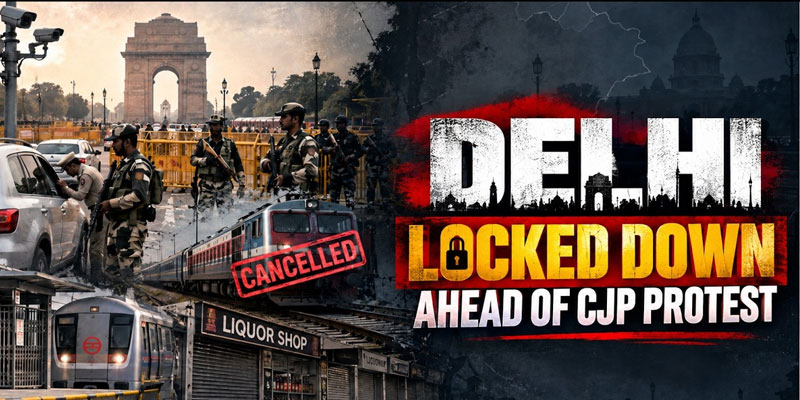
Public outrage was further amplified by police action against protesting students and members of the Cockroach Janta Party (CJP), giving the controversy both political and civil liberties dimensions. By the time Parliament convened for its Monsoon Session, the unresolved public anger had inevitably shifted from the streets into the nation's highest legislative forum.
Resignation Demand Triggers Parliamentary Deadlock
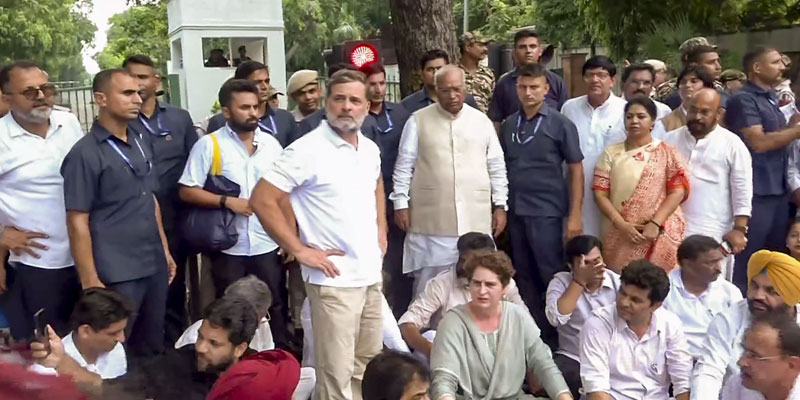
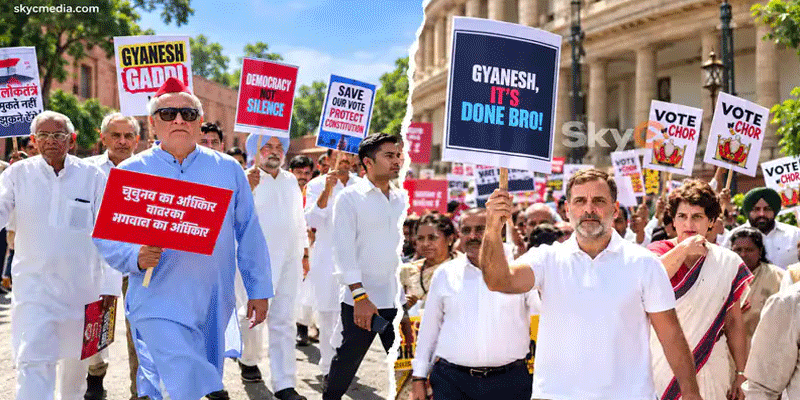
The fourth day of the Monsoon Session witnessed both Houses being adjourned shortly after assembling as Opposition members stormed the Well carrying placards and raising slogans demanding the resignation of Education Minister Dharmendra Pradhan.
The INDIA bloc has declared the Minister's resignation a non-negotiable condition before agreeing to any substantive discussion on the NEET controversy. Opposition leaders argue that repeated examination failures, administrative lapses and the handling of student protests warrant clear ministerial accountability.
The government, however, has firmly rejected this demand. It maintains that Parliament is the appropriate forum to debate the issue and insists that questions can be answered without forcing the resignation of a cabinet minister. Accepting such a demand, according to the ruling side, would establish an undesirable precedent where political pressure rather than institutional processes determines ministerial accountability.
Government Defends Its Legislative Priorities
The treasury benches have repeatedly asserted that they are prepared to discuss NEET and every other issue raised by the Opposition. Senior BJP leaders have accused the Opposition, particularly Leader of the Opposition Rahul Gandhi, of deliberately disrupting proceedings instead of participating in parliamentary debate.
Despite the disruptions, the government remains committed to advancing an ambitious legislative agenda during the Monsoon Session. Important proposals, including the Supreme Court (Number of Judges) Amendment Bill, 2026 and the Vande Mataram Bill, remain on the legislative calendar, reflecting the government's determination to prevent the NEET controversy from overshadowing its broader governance priorities.
NEET Becomes a Broader Political Flashpoint
The controversy now represents multiple overlapping political battles. At one level, it concerns students demanding fairness, transparency and credibility in one of India's most important competitive examinations. At another, it has become a debate over civil liberties following police action against demonstrators. Simultaneously, it has emerged as an early political test for Prime Minister Narendra Modi's third term in office.
The Opposition seeks to portray the paper leak and the government's response as evidence of administrative failure and declining institutional credibility. The ruling coalition, meanwhile, argues that investigations are underway and accuses Opposition parties of politicising a criminal incident for electoral advantage.
Parliament's Institutional Challenge
The repeated adjournments highlight a larger institutional concern. Parliament's primary role is to debate, scrutinise and resolve national issues through democratic deliberation. However, prolonged disruptions weaken this function and shift political contestation to courts, protest sites and television studios.
The current impasse reflects two fundamentally different approaches to accountability. The Opposition believes political responsibility must precede discussion, while the government argues that accountability should emerge through parliamentary debate and legal investigation rather than ministerial resignation.
If neither side softens its position, important legislation risks being delayed, passed with limited debate or approved under procedural constraints, potentially raising concerns over democratic legitimacy and legislative scrutiny.
Consensus, Not Confrontation, Will Restore Public Confidence
The NEET controversy has grown into far more than an examination scandal—it has become a test of India's democratic institutions, governance standards and political maturity. While students seek reassurance that examination integrity will be protected, Parliament remains divided over the path to accountability. Restoring public trust will ultimately require more than investigations or political rhetoric. Constructive parliamentary engagement, transparent institutional reforms and a willingness to balance accountability with democratic dialogue will determine whether this crisis strengthens India's institutions or further deepens public scepticism about their ability to respond to national challenges.
(With agency inputs)