US Signals Opposition to Possible Return of Nouri al-Maliki
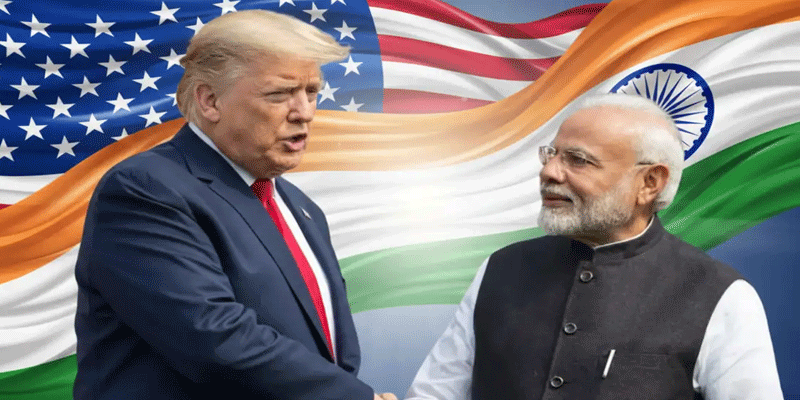
Political tensions in Baghdad sharpened after US President Donald Trump warned Iraq that American assistance could be reconsidered if former Prime Minister Nouri al-Maliki returns to power. The statement, issued in late January 2026, followed reports that influential Shia political blocs were backing Maliki amid ongoing government negotiations. Washington has argued that reinstating the former premier risks reviving policies that previously destabilized Iraq and deepened sectarian divisions.
Iraqi leaders, however, insist that leadership choices remain a domestic matter, setting the stage for renewed friction between sovereignty concerns in Baghdad and strategic interests in Washington.
Why the Debate Matters Now
Iraq’s political system remains fragile, still grappling with corruption, economic challenges, militia influence, and the lingering threat of extremist groups. The United States continues to provide military cooperation and economic assistance, especially in counterterrorism and stabilization efforts.
Against this backdrop, the potential political comeback of Maliki—one of Iraq’s most polarizing post-Saddam figures—has revived international and domestic debates over the country’s political direction. Supporters view him as a strong administrator capable of restoring order, while critics argue his previous tenure contributed directly to instability.
The controversy has therefore become not only about personalities but about Iraq’s future alignment, governance model, and ability to maintain internal cohesion.
What Was Nouri al-Maliki’s Role in Iraq’s 2006–2014 Instability?
Maliki served as prime minister from 2006 to 2014, a period marked by insurgency, sectarian violence, and state-building challenges following the US invasion. His leadership remains deeply contested.
1. Intensification of Sectarian Divisions
Critics argue that Maliki’s administration increasingly favored Shia political interests, alienating large sections of the Sunni community. Policies aimed at removing former Baath Party members from public life often disproportionately affected Sunni officials, reinforcing perceptions of exclusion. The handling of Sunni protests between 2012 and 2013 further deepened mistrust, creating fertile ground for insurgent recruitment.
2. Concentration of Executive Authority
Another major criticism concerns Maliki’s consolidation of power within the prime minister’s office. Security institutions and intelligence agencies increasingly came under direct control of his inner circle, weakening institutional independence. Political opponents accused him of marginalizing rivals and using legal and administrative mechanisms to side-line challengers.
3. Military Weakness and the ISIS Crisis
Perhaps the most damaging episode of his tenure was the 2014 collapse of Iraqi security forces in Mosul when ISIS militants captured large swathes of territory. Investigations later revealed systemic corruption, poor military readiness, and mismanagement, including the phenomenon of “ghost soldiers” on payrolls but absent from duty. The fall of Mosul severely undermined public confidence in the government.
4. Growing Iranian Influence
Maliki’s critics also claim his administration drew Iraq closer to Iran, empowering militia groups with Tehran ties. This shift complicated Iraq’s relations with Western partners and fueled domestic political rivalries.
Despite these criticisms, supporters argue that Maliki governed during one of Iraq’s most volatile periods and faced immense challenges inherited from years of war and occupation.
Iraq at a Political Crossroads Again
The renewed controversy surrounding Maliki underscores how unresolved Iraq’s political wounds remain. Washington’s warning reflects concerns about regional influence and governance stability, while Iraqi leaders continue to navigate internal power balances. Whether or not Maliki returns to office, Iraq’s long-term stability will depend less on personalities and more on building inclusive institutions capable of bridging sectarian divides and restoring public trust.
(With agency inputs)