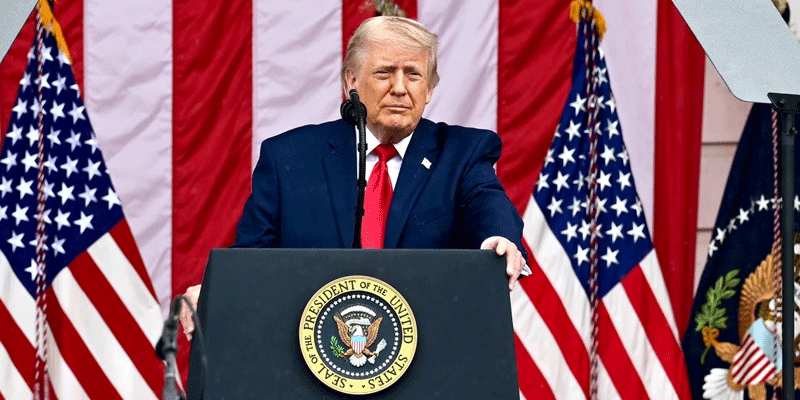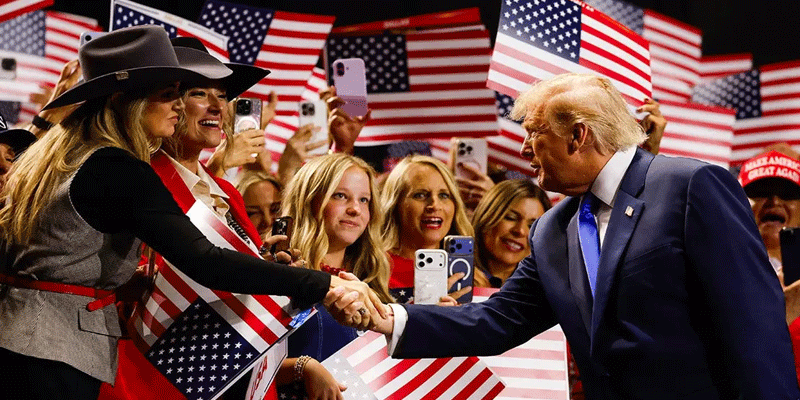
President Donald Trump’s $5,000 “dividend” pledge has transformed the approaching US midterm elections into an even higher-stakes political contest. Speaking at the Republican Party’s midterm convention in Dallas, Trump promised the payment to every adult US citizen if Republicans retain control of both the House and Senate in November. The proposal is less a fully developed economic programme than a striking political gamble linking Republican electoral success directly to a promised financial reward.
Why November’s Election Matters
The November 3 election will determine control of Congress, shaping how much legislative freedom Trump has during the remainder of his presidency. Every one of the 435 House seats and roughly one-third of Senate seats will be contested.
A Republican victory in both chambers would give Trump substantially greater room to pursue his priorities, including tax cuts, deregulation, immigration restrictions, trade measures and further changes to domestic and foreign policy. A Democratic takeover of either chamber, by contrast, would mean tougher negotiations, intensified congressional oversight and potentially aggressive investigations into administration policies.
The election is consequently becoming a referendum on Trump’s second-term record, particularly the economy, inflation, energy prices and the continuing war with Iran. His decision to make himself central to the Republican campaign reflects the political importance of his personal popularity to vulnerable GOP candidates.
Latest Updates on the $5,000 Pledge
· The promise: Trump said every adult US citizen would receive $5,000 if Republicans win both chambers. He compared the payment to a corporate dividend and said the money would have to be spent in the United States.
· Funding remains unclear: Trump provided no detailed financing mechanism. His remarks suggested that the country’s economic strength and tariff revenues could support the proposal, but available tariff collections fall far short of the potential cost.
· A trillion-dollar question: Depending on eligibility, estimates put the programme’s cost at more than $1 trillion, with Reuters reporting an estimate of about $1.35 trillion.
· Congressional approval needed: The White House cannot simply distribute such payments on its own. A programme of this scale would require congressional authorisation and funding, making the proposal dependent on the very Republican congressional victory Trump is seeking.
· Political calculation: The pledge comes as Republicans confront difficult electoral headwinds and Trump seeks to energise his base while persuading voters focused on household costs. Some vulnerable Republicans have also shown caution about being too closely identified with him.
A Promise Carrying Economic Risks
The proposed payout could provide immediate financial relief to households, but a transfer exceeding $1 trillion would raise serious questions about deficits, debt and inflation. Injecting substantial purchasing power into an economy already facing elevated prices could create additional inflationary pressure.
It also raises a fundamental policy question: should potentially large tariff revenues be distributed directly to citizens, or used to reduce government debt and finance other priorities?
The Midterms Will Test More Than Trump
Trump’s dividend promise is therefore both an economic proposition and a political instrument. If Republicans retain Congress, he will face pressure to convert the headline-making pledge into legislation while confronting difficult questions about its cost and implementation. If Republicans lose, the promise could instead become evidence for critics of fiscal populism.
Ultimately, November will determine not only who controls Congress, but whether Trump’s political strategy of personal leadership, economic promises and direct voter incentives can withstand growing scrutiny. The $5,000 dividend may win attention—but turning it into reality could prove considerably harder.
(With agency inputs)