Eighth Defence Policy Dialogue Reviews Expanding Security Cooperation
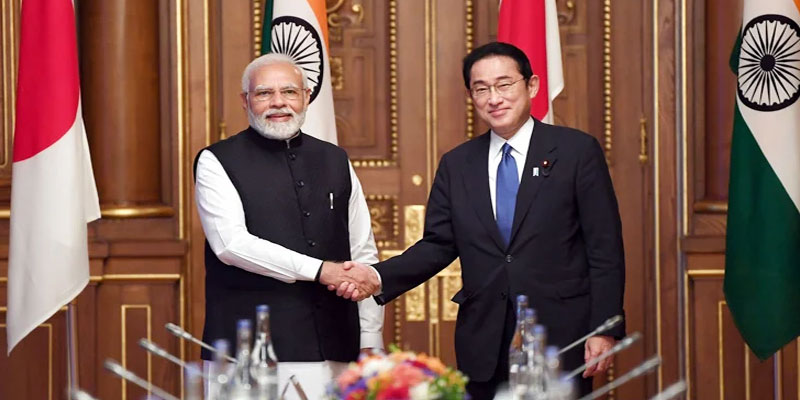
India and Japan have reaffirmed their commitment to strengthening defence cooperation during the 8th India-Japan Defence Policy Dialogue held in Tokyo, underscoring the growing strategic importance of their partnership in the Indo-Pacific. The two sides reviewed the full spectrum of bilateral defence engagement, ranging from military exchanges and maritime security to defence technology and capacity building. More than a routine diplomatic exercise, the dialogue reflected the steady evolution of India-Japan ties into a structured and practical security partnership aimed at promoting regional stability and a rules-based Indo-Pacific order.
A Partnership Built Over Two Decades
India and Japan have steadily expanded their defence relationship over the past two decades, transforming it from limited strategic consultations into one of the Indo-Pacific's most significant bilateral security partnerships.
The foundation was laid through the Joint Declaration on Security Cooperation in 2008, followed by regular defence dialogues, annual summit meetings, and the establishment of the 2+2 Ministerial Dialogue, involving the foreign and defence ministers of both countries. Over time, the relationship has expanded to include joint military exercises, coast guard cooperation, defence equipment discussions, intelligence exchanges, and collaboration on regional security issues.
This growing engagement forms part of the broader India-Japan Special Strategic and Global Partnership, which seeks to strengthen cooperation across defence, economic development, technology, infrastructure, and regional diplomacy.
What Was Discussed at the Tokyo Dialogue
The eighth edition of the Defence Policy Dialogue brought together senior officials from both countries to review the entire spectrum of defence cooperation.
The Indian delegation was led by Defence Secretary Rajesh Kumar Singh, while Japan was represented by Vice Minister of Defence for International Affairs Kano Koji. Their discussions covered military-to-military cooperation, armed forces exchanges, joint exercises, maritime security, defence equipment and technology collaboration, institutional exchanges, and capacity-building initiatives.
The high-level participation demonstrated that the dialogue serves as an important policy mechanism for identifying new areas of cooperation and ensuring that ongoing initiatives continue to progress in line with changing regional security dynamics.
Maritime Security and Defence Technology Take Centre Stage
Maritime security emerged as one of the most significant themes of the discussions. Both India and Japan depend heavily on secure sea lanes for trade and energy supplies and share concerns over increasing geopolitical competition, coercive activities, and grey-zone challenges in the Indo-Pacific.
The emphasis on naval cooperation aligns with years of growing operational coordination through bilateral and multilateral exercises, including participation in the Malabar naval exercise alongside other strategic partners.
Equally significant was the continued focus on defence technology and industrial collaboration. Rather than limiting cooperation to military exchanges, both countries are increasingly exploring partnerships in advanced defence technologies, equipment development, maritime innovation, and institutional cooperation. Such initiatives aim to improve interoperability while strengthening resilience in defence manufacturing and supply chains.
A Partnership Moving Towards Strategic Delivery
The eighth India-Japan Defence Policy Dialogue highlights the steady maturation of one of Asia's most important strategic partnerships. By expanding cooperation across defence diplomacy, maritime security, technology, and institutional engagement, both nations are building a relationship that extends beyond shared principles into practical security collaboration. As the Indo-Pacific continues to face evolving geopolitical challenges, sustained dialogues of this nature will play a crucial role in enhancing regional stability, safeguarding maritime interests, and reinforcing a free, open, and rules-based international order.
(With agency inputs)