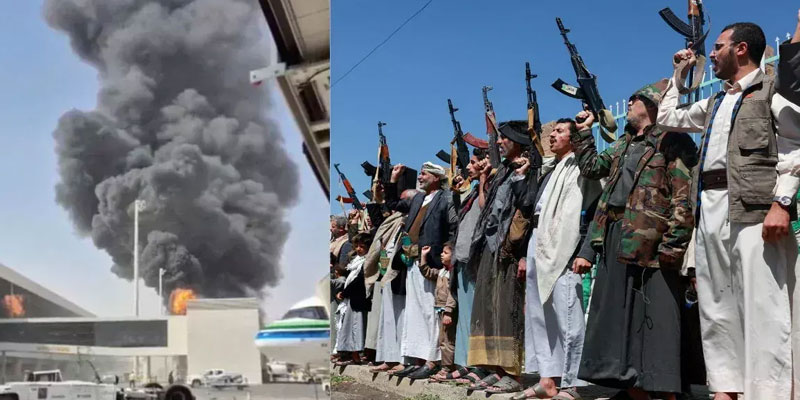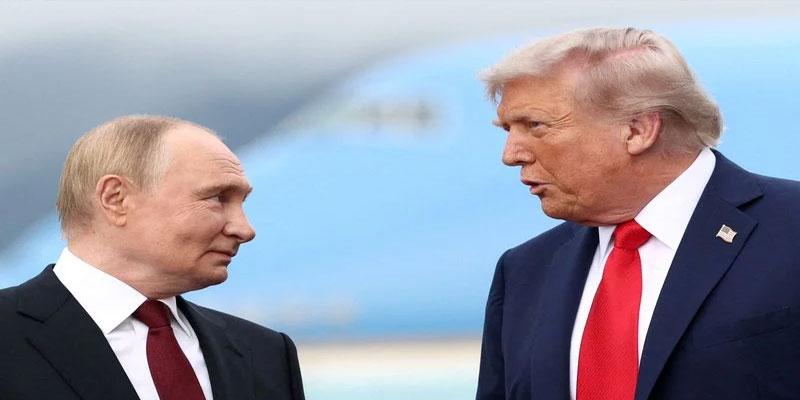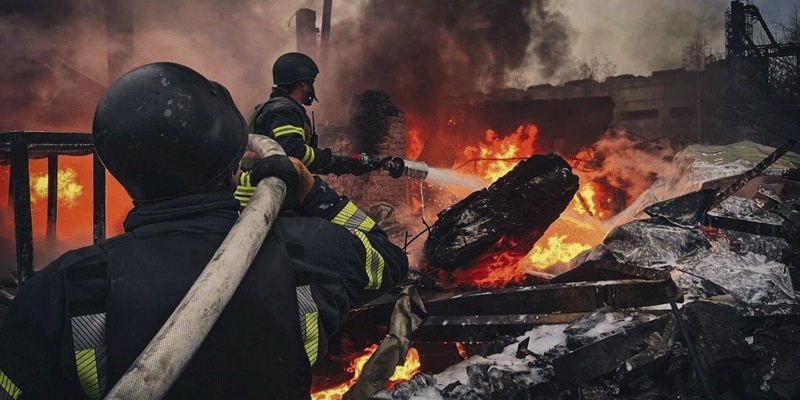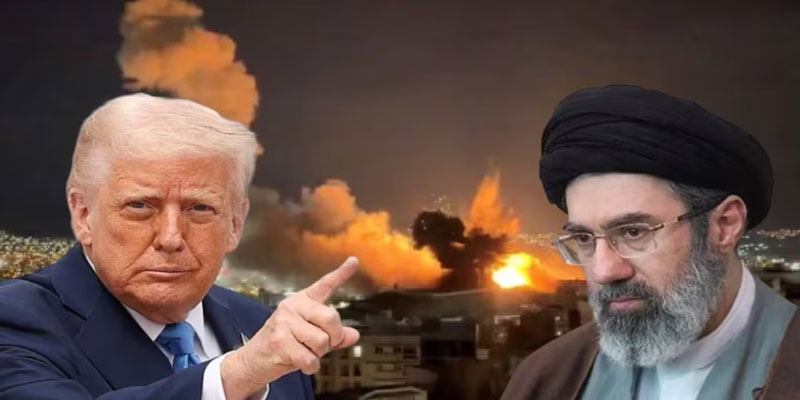
US President Donald Trump has issued a stark warning to Iran, declaring that any attempt to target him would invite overwhelming retaliation. The remarks, delivered amid heightened tensions in West Asia, represent one of his strongest public warnings since returning to office and come at a time when the region is already witnessing escalating military confrontations involving the United States, Israel and Iran. By combining personal security concerns with broader geopolitical messaging, Trump's statement has intensified anxieties over the possibility of a wider regional conflict and further diminished hopes for near-term diplomatic engagement.
A Long History of Confrontation
The latest warning is rooted in years of adversarial relations between Washington and Tehran. During his first presidential term, Trump withdrew the United States from the 2015 Iran nuclear agreement and launched the "maximum pressure" campaign, imposing sweeping economic sanctions while increasing military pressure on Iran. Relations deteriorated sharply following the killing of Iranian General Qassem Soleimani in 2020, leading to retaliatory actions and prolonged hostility.
Since returning to the White House, Trump has revived his hard-line approach toward Tehran. The situation has become even more personal after American intelligence agencies reportedly warned of Iranian assassination plots targeting him. Consequently, Trump's recent statements are directed not only at the Iranian state but also at what he perceives as a direct threat to his own security.
Trump's Message and the Strategy Behind It
Trump's latest remarks convey two parallel messages. First, they seek to deter Iran by warning of devastating military consequences should any attack occur. Second, they portray Iran as economically weakened, diplomatically isolated and ultimately compelled to negotiate under sustained pressure.
This reflects a classic strategy of coercive diplomacy—combining credible threats with the possibility of negotiations. By emphasising Iran's economic distress alongside military deterrence, the administration aims to convince Tehran that compromise is preferable to continued confrontation.
However, whether such an approach encourages dialogue or deepens hostility remains uncertain.
How Dangerous Is the Current Situation?
The dangers arising from such rhetoric are considerable. Public threats exchanged during an already volatile regional conflict increase the likelihood of miscalculation. Military commanders, proxy groups or regional actors may interpret aggressive statements as signals of imminent action, potentially triggering unintended escalation.
Iran is also unlikely to negotiate while appearing to yield under direct public pressure. Instead, it could respond through indirect means, including cyber operations, proxy militias or limited attacks designed to avoid full-scale war while maintaining strategic pressure.
The broader implications extend well beyond the region. Any escalation involving Iran could threaten critical maritime routes in the Gulf, disrupt global energy supplies, increase oil prices and create uncertainty in international financial markets. Regional allies and adversaries alike would also be forced to reassess their security calculations, increasing the possibility of wider geopolitical instability.
The convergence of personal threats, regional warfare and unresolved nuclear disputes makes the present situation particularly unpredictable, with each new statement carrying significant diplomatic and military consequences.
Diplomacy Must Prevail Over Escalatory Rhetoric
Trump's warning underscores the fragile and increasingly confrontational state of US-Iran relations. While deterrence remains an important element of national security strategy, sustained reliance on public threats risks narrowing the space for meaningful diplomacy and increasing the possibility of unintended conflict. With West Asia already experiencing profound instability, measured engagement and sustained diplomatic channels remain essential to preventing further escalation. The coming months will test whether strategic restraint can prevail over confrontational rhetoric, or whether the region moves closer to another dangerous cycle of military confrontation.
(With agency inputs)