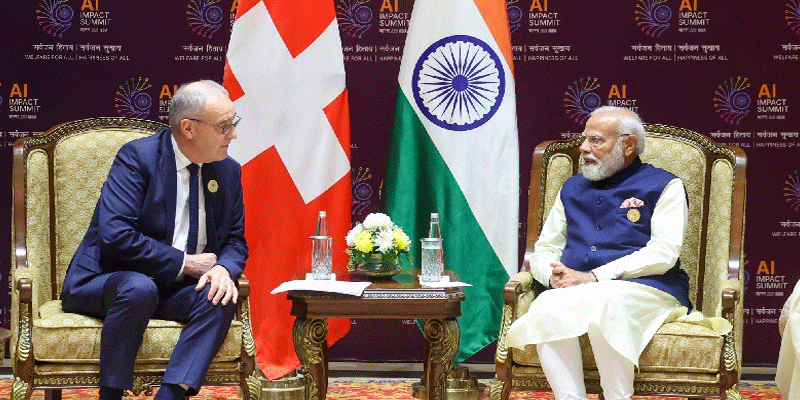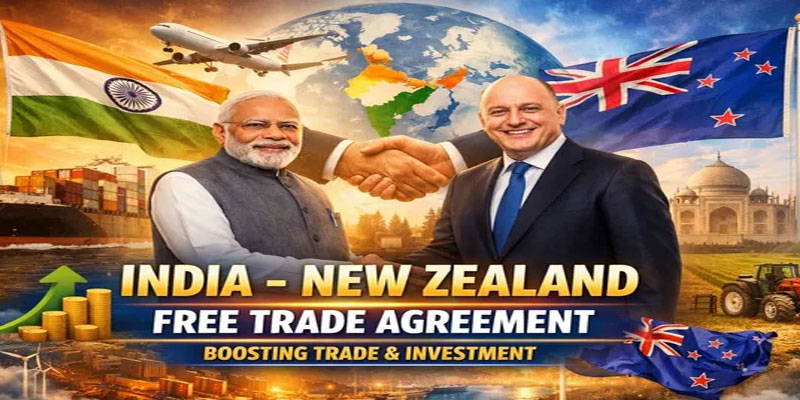
India and New Zealand on Saturday formally elevated their bilateral relationship to a Strategic Partnership, unveiling an ambitious roadmap extending to 2030 with a target of increasing two-way trade in goods and services to NZ$7 billion. The agreement marks a significant milestone in bilateral ties, reflecting a shared commitment to deepen cooperation across trade, defence, maritime security, education, technology and people-to-people exchanges. Beyond the announcement itself, the roadmap signals the determination of both nations to transform longstanding goodwill into measurable outcomes through institutional cooperation and sustained engagement.
A Relationship with Untapped Potential
India and New Zealand have traditionally enjoyed cordial relations rooted in shared democratic values, a vibrant Indian diaspora, educational exchanges, sporting links and growing commercial interactions. However, despite these strengths, the partnership remained relatively modest compared to the economic and strategic capacities of both countries.
The relationship received fresh momentum with the March 2025 Joint Statement, which called for closer collaboration in trade, defence, science, innovation, mobility and regional security. It also highlighted a shared vision for a free, open and stable Indo-Pacific. The newly announced Strategic Partnership and the 2030 roadmap build upon that foundation, converting broad political intent into a structured framework for long-term cooperation.
Prime Minister Modi's Visit and Key Agreements
Prime Minister Narendra Modi's visit has emerged as a defining moment in India-New Zealand relations, bringing together a series of initiatives that significantly expand the scope of bilateral engagement.
A central feature of the roadmap is the commitment to double bilateral trade to NZ$7 billion by 2030, reflecting confidence in the untapped commercial opportunities between the two economies. Both sides also reaffirmed their resolve to expedite negotiations on the proposed India-New Zealand Free Trade Agreement, recognising that reduced trade barriers and improved market access will be essential to achieving this ambitious target.
Another major outcome is the strengthening of defence and maritime cooperation. The roadmap establishes a dedicated Maritime Security Dialogue, complementing the defence cooperation memorandum signed earlier. As maritime nations with shared interests in safeguarding sea lanes and promoting a rules-based Indo-Pacific, both countries see greater security collaboration as vital to regional stability.
The agreements further expand cooperation in education, agriculture, technology, innovation, sports, mobility and skills development. Special emphasis has also been placed on ensuring student welfare, strengthening diaspora engagement and facilitating greater movement of talent, reinforcing the people-centric dimension of the partnership.
Why the Strategic Partnership Matters
The elevation of ties represents more than a diplomatic upgrade. It reflects a broader convergence of strategic and economic interests at a time when the Indo-Pacific has become central to global geopolitics. For India, New Zealand adds another like-minded partner supporting regional stability and diversified economic engagement. For New Zealand, closer ties with one of the world's fastest-growing major economies offer new opportunities in trade, investment and technology collaboration.
The roadmap also demonstrates a shift from symbolic diplomacy to implementation-focused cooperation, with clearly defined economic and institutional objectives.
Turning Shared Vision into Lasting Outcomes
The India-New Zealand Strategic Partnership marks the beginning of a more purposeful and comprehensive phase in bilateral relations. While the roadmap lays out an ambitious agenda encompassing trade, security and people-to-people cooperation, its ultimate success will depend on timely implementation of the proposed initiatives, particularly the Free Trade Agreement and institutional dialogues. If both nations sustain political commitment and overcome regulatory and commercial challenges, the partnership has the potential to emerge as one of the Indo-Pacific's most dynamic and mutually beneficial strategic relationships by the end of the decade.
(With agency inputs)