A Sudden and Severe Selloff
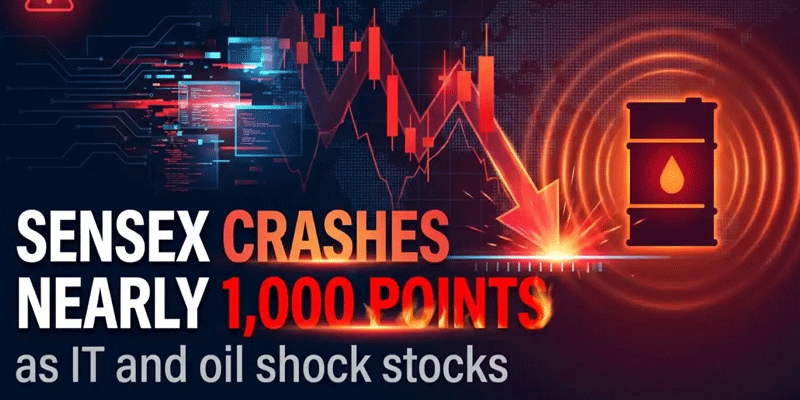
Indian markets witnessed a dramatic collapse on March 19, 2026, as the BSE Sensex plunged over 1,900 points and the Nifty 50 slipped below 23,200. The sharp fall wiped out nearly ₹7 lakh crore in investor wealth within hours, abruptly halting a three-session rally. What began as cautious profit-booking quickly spiraled into a full-scale rout, driven by a potent mix of global shocks and domestic instability that rattled investor confidence across the board.
About Key Factors Driving the Market Crash
Oil Shock and Geopolitical Tensions
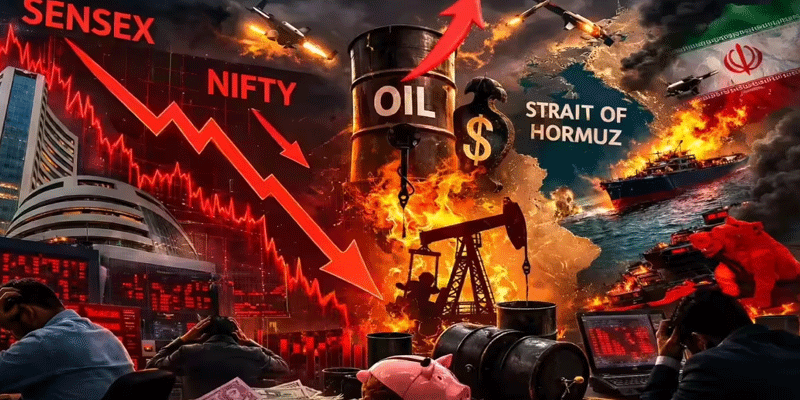
One of the most immediate triggers was the spike in global crude prices. Brent Crude Oil surged past $110 per barrel amid escalating conflict in West Asia, particularly after strikes on critical energy infrastructure. For India, which imports nearly 89% of its crude requirements, this development carries serious macroeconomic implications. Higher oil prices translate into rising inflation, a widening current account deficit, and potential pressure on the rupee. These factors tend to compress equity valuations, especially in sectors sensitive to interest rates and input costs, amplifying the selloff.
HDFC Bank and the Governance Shock
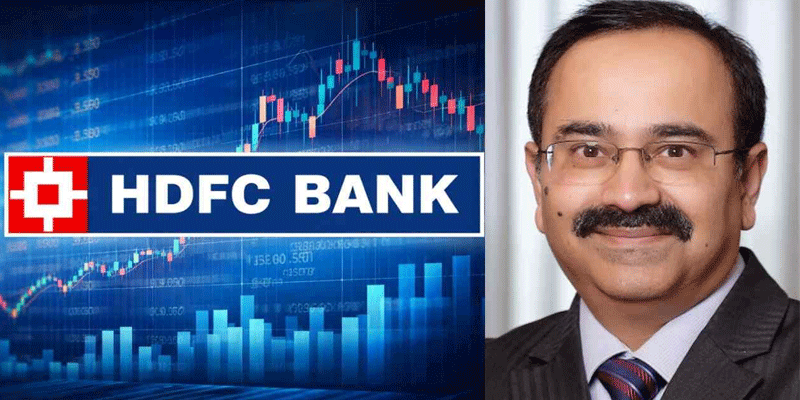
Domestically, the biggest blow came from HDFC Bank, whose stock tumbled nearly 8–9%, making it the worst performer on both indices. The abrupt resignation of part-time chairman Atanu Chakraborty, citing ethical concerns over certain developments within the bank, triggered alarm among investors. Given HDFC Bank’s significant weight in benchmark indices and its status as a bellwether for financial stability, the episode sparked fears of deeper governance issues. Although the appointment of Keki Mistry as interim chairman aimed to restore stability, the damage to sentiment had already been done, prompting institutional investors to unwind positions aggressively.
Global Cues and FII Selling
External monetary signals added further pressure. The US Federal Reserve maintained a hawkish stance, indicating that interest rates may remain elevated for longer due to persistent inflation. This “higher-for-longer” outlook tends to draw capital away from emerging markets like India, as investors seek safer, higher-yielding assets in the US. Consequently, Foreign Institutional Investors (FIIs) continued their selling streak, exacerbating the market decline and limiting any meaningful recovery during the session.
Broad-Based Selling and Sectoral Impact
The selloff was widespread, sparing almost no sector. IT, auto, public-sector enterprises, and even traditionally defensive stocks witnessed steep declines. The Nifty Auto index was particularly hard hit, with all its constituents ending in the red, reflecting concerns over rising fuel costs and weakening consumer demand. Market breadth remained deeply negative, indicating that the crash was not confined to heavyweight stocks but extended across mid- and small-cap segments as well. This pointed to a broader capitulation, including retail and leveraged participants exiting positions under pressure.
A Stress Test for Market Resilience
The March 19 crash underscores how quickly market sentiment can reverse when global and domestic risks collide. The combination of an external oil shock, tightening global liquidity, and internal governance concerns created a perfect storm that exposed vulnerabilities in India’s equity narrative. While the fundamentals of the economy remain intact, the episode serves as a stark reminder that markets are highly sensitive to both macroeconomic disruptions and institutional trust. Going forward, stability in oil prices, clarity on global interest-rate trajectories, and restored confidence in key financial institutions will be crucial in determining whether this correction remains temporary or signals deeper turbulence ahead.
(With agency inputs)