Indus Suspension Deepens India-Pak Tensions
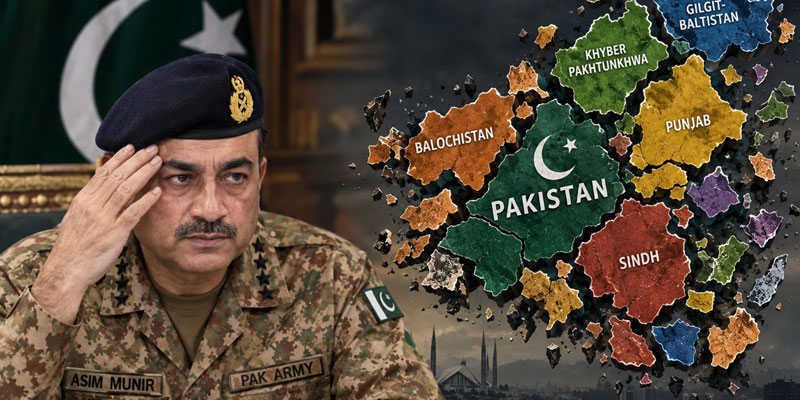
The suspension of the Indus Waters Treaty (IWT) by India has triggered one of the most serious diplomatic confrontations between New Delhi and Islamabad in recent years. Pakistan Defence Minister Khawaja Asif has warned that the dispute could escalate into a “water war,” accusing India of weaponizing river resources and threatening Pakistan’s survival. India, however, has maintained that the suspension is a direct response to the April 2025 terrorist attack in Pahalgam, Jammu and Kashmir, in which 26 people were killed, and that normal treaty obligations cannot continue unless Pakistan takes credible and irreversible action against cross-border terrorism.
A Landmark Water-Sharing Agreement
The Indus Waters Treaty, signed in 1960 and brokered by the World Bank, is widely regarded as one of the most durable international water-sharing agreements. The treaty allocated the waters of the three western rivers—the Indus, Jhelum and Chenab—to Pakistan, while India received rights over the eastern rivers—the Ravi, Beas and Sutlej.
For more than six decades, the agreement survived multiple wars, military standoffs and diplomatic crises between the two nuclear-armed neighbours. Its endurance was often cited as proof that cooperation over shared natural resources could continue even amid deep political hostility.
What Led to the Treaty’s Suspension?
The current crisis emerged after the April 2025 Pahalgam terror attack, which India linked to a Pakistan-based militant group. On April 23, 2025, New Delhi announced that it was placing the treaty “in abeyance” with immediate effect, citing national security concerns and Pakistan’s alleged support for cross-border terrorism.
India argued that the circumstances under which the treaty had functioned for decades had fundamentally changed. According to New Delhi, continued adherence to the agreement could not be separated from Pakistan’s actions on terrorism. In May 2026, India reiterated that the suspension would remain in place until Islamabad demonstrated a permanent and verifiable end to support for terrorist activities directed against India.
The move marked a significant shift in India’s approach, linking water cooperation directly to security considerations for the first time.
Pakistan’s Response and the Water War Narrative
Pakistan has strongly opposed the suspension, accusing India of manipulating river flows and withholding critical information. Khawaja Asif described India’s actions as “weaponization of water” and warned that Islamabad was prepared to defend its interests.
However, Pakistan’s concerns are also shaped by growing domestic water stress. The country faces chronic challenges, including declining water availability, ageing infrastructure, rapid population growth, climate-related pressures and inefficient irrigation systems. Reports of drying canals and agricultural distress have intensified fears that any disruption to river flows could worsen an already fragile situation.
International Reactions and Legal Questions
The international community has largely called for restraint and adherence to established legal frameworks rather than openly taking sides. The World Bank, which facilitated the original treaty, has not endorsed unilateral suspension but has consistently encouraged dialogue and dispute-resolution mechanisms.
Meanwhile, the Permanent Court of Arbitration (PCA) ruled in decisions issued in June 2025 and February 2026 that the treaty does not permit either party to unilaterally suspend its obligations. India, however, argues that international law recognizes the principle that treaties may be reconsidered when fundamental circumstances change because of another party’s conduct.
As a result, the dispute has evolved beyond water management into a broader debate over security, sovereignty and treaty obligations.
Water, Security and the Future of Bilateral Relations
The Indus Waters Treaty crisis represents a turning point in India-Pakistan relations. For India, the suspension reflects an effort to link long-standing security concerns with diplomatic and strategic leverage. For Pakistan, it has heightened fears over water security and economic stability. While legal and diplomatic arguments continue, the dispute ultimately underscores the growing intersection of water resources, national security and regional geopolitics. A sustainable resolution will require not only addressing river-sharing mechanisms but also confronting the deeper trust deficit that has long defined relations between the two neighbours.
(With agency inputs)