India Registers Strong Protest After Fatal Gulf Attack
India has summoned Iranian Deputy Chief of Mission Mohammad Javed Hossini after the latest wave of Iranian attacks on ships in West Asian waters killed one seafarer and injured six others, most of them Indian nationals. The move marks New Delhi’s strongest diplomatic response yet to the escalating violence in and around the Strait of Hormuz, where repeated strikes on commercial vessels have transformed one of the world’s busiest maritime corridors into a conflict zone. The incident has heightened concerns over the safety of Indian citizens, uninterrupted energy supplies and the broader stability of the Gulf region.
Why the Strait of Hormuz Matters
The Strait of Hormuz remains one of the world's most strategically important maritime chokepoints, carrying a substantial share of global crude oil and liquefied natural gas exports. Any disruption to navigation in these narrow waters immediately reverberates across global energy markets, shipping routes and diplomatic channels.
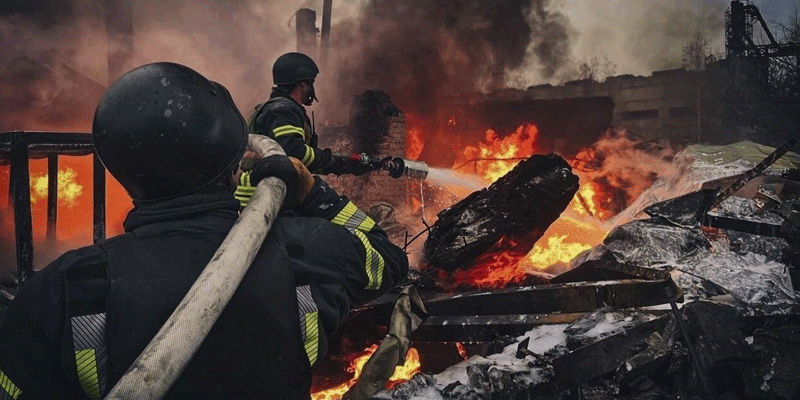
Since early July 2026, the region has witnessed an intense cycle of retaliatory military actions involving Iranian missile and drone strikes, attacks on commercial shipping and successive US military operations against Iranian targets. The confrontation has already resulted in civilian casualties, disrupted maritime trade and triggered heightened air-defence alerts across several Gulf nations.
Iran-US Conflict Deepens in Gulf Waters
The latest escalation followed reports that Iran launched cruise missile attacks on two Emirati oil tankers — Mombasa and Al Bahiyah — while they were transiting the Strait of Hormuz. One sailor was killed and several others were injured, with the deceased and six of the eight injured identified as Indian nationals. The incident prompted India to summon Mohammad Javed Hossini to formally convey its strong protest and demand the safety of Indian citizens and commercial shipping.
The United States responded by launching additional strikes on Iranian military targets, arguing that continued attacks on international shipping threatened freedom of navigation and global commerce. Washington also announced renewed measures aimed at keeping the Strait of Hormuz open, while Gulf nations including Bahrain, Jordan and the United Arab Emirates activated air-defence systems to intercept incoming missiles and drones amid continuing regional alerts.
Word War Over the Strait of Hormuz
Alongside military exchanges, an equally intense diplomatic confrontation has unfolded. Iranian officials have defended their actions by asserting greater control over the Strait and warning external powers against interference, portraying their operations as defensive measures.
The United States has sharply rejected these assertions, insisting that no nation can obstruct an internationally significant maritime passage. Washington has reiterated its commitment to safeguarding commercial navigation, while Gulf allies have echoed calls for collective maritime security, reflecting an increasingly polarised regional narrative.
Implications for India and Regional Stability
India’s decision to summon the Iranian envoy reflects a carefully calibrated diplomatic approach. While firmly condemning attacks that endangered Indian lives and commercial interests, New Delhi continues to balance its longstanding relations with both Iran and Gulf partners without appearing aligned with either camp.
Commercially, repeated attacks on tankers are increasing freight charges, insurance premiums and rerouting costs, adding fresh uncertainty to India's energy imports. Strategically, prolonged hostilities could expand multinational naval deployments, deepen US-Gulf security cooperation and increase the risk of a wider regional conflict.
What Lies Ahead
The trajectory of the crisis will largely depend on whether Iran sustains its pressure in the Strait of Hormuz and whether more countries deploy naval escorts or impose additional sanctions. Equally important will be casualty updates, maritime insurance advisories and policy decisions by India's Ministry of External Affairs, all of which will shape New Delhi's diplomatic, consular and security responses in the weeks ahead.
(With agency inputs)