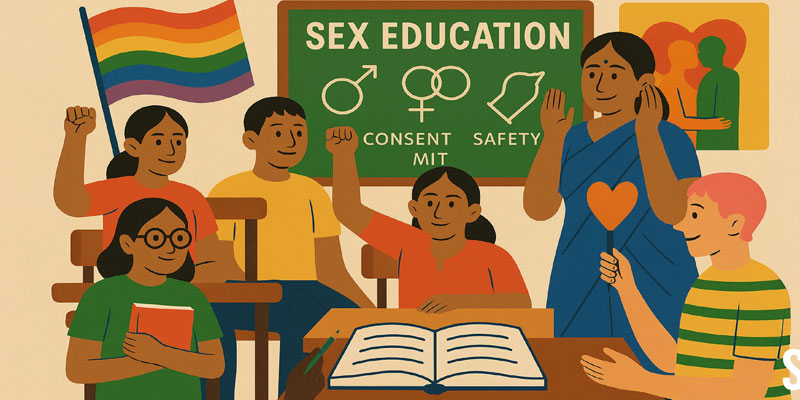
Centre Plans Age-Appropriate Sex Education in Schools and Colleges
Comprehensive sex education may soon become part of the formal curriculum in schools and colleges across India, marking a significant shift in the country's approach to adolescent education and child protection. The proposed reform is not merely aimed at expanding health education but is closely linked to addressing legal and social challenges arising under the Protection of Children from Sexual Offences (POCSO) Act. The Centre has informed the Supreme Court that it has accepted the recommendations of an expert committee and is prepared to implement the curriculum once it receives judicial clearance, signalling a major policy change in how young people are educated about relationships, consent and personal safety.
A Shift from Moral Debate to Child Protection
For decades, sex education in India has remained a politically and socially sensitive subject. In many schools, it was either confined to limited awareness sessions or excluded altogether because of cultural concerns and varying state-level policies.
The proposed curriculum seeks to replace this fragmented approach with structured, age-appropriate learning covering puberty, bodily changes, consent, safe and unsafe touch, child sexual abuse awareness, healthy relationships and basic sexual health. The initiative emerged from a Supreme Court review of increasing cases where consensual relationships between adolescents were being prosecuted under the POCSO Act because the law does not clearly distinguish between sexual abuse and consensual relationships involving older teenagers.
What Does the Proposal Mean?
The Centre's acceptance of the expert committee's recommendations paves the way for introducing comprehensive sex education across educational institutions. If implemented, students will receive scientifically designed, age-specific lessons aimed at equipping them with knowledge about personal safety, bodily autonomy, emotional well-being and responsible behaviour.
The proposal also reflects a preventive approach to child protection. By helping students understand consent, boundaries and healthy relationships from an early age, policymakers hope to reduce vulnerability to abuse while improving awareness of legal rights and responsibilities. Importantly, the initiative is intended to complement existing child protection mechanisms rather than replace them.
Potential Impact and Public Response
The proposed curriculum could have far-reaching educational and social benefits. Better awareness about consent and personal boundaries may enable children to identify abuse earlier, report inappropriate behaviour confidently and seek timely support. It could also encourage healthier communication between students, teachers and parents on issues that are often considered taboo.
From a legal perspective, the reform is expected to address concerns arising from the increasing criminalisation of consensual adolescent relationships under POCSO. While education alone cannot change the law, improved awareness may reduce misunderstandings and encourage more informed decision-making among young people.
Public response, however, has been mixed. Many educators, child rights advocates and healthcare professionals have welcomed the proposal, arguing that scientifically accurate and age-appropriate sex education is essential for safeguarding children and promoting informed choices. They view the move as long overdue, particularly given rising concerns about online exploitation, child abuse and adolescent health.
At the same time, some parents, religious organisations and conservative groups have expressed reservations, fearing that introducing such topics at an early age may conflict with cultural values or encourage premature exposure to sensitive issues. Others have questioned whether schools possess adequately trained teachers to deliver the curriculum effectively and sensitively.
A Landmark Reform Requiring Careful Implementation
India's proposed introduction of comprehensive sex education represents a significant evolution in education and child protection policy. By linking classroom learning with legal awareness, personal safety and adolescent rights, the initiative seeks to prepare young people for real-life challenges while strengthening safeguards against abuse. However, the success of the reform will depend on carefully designed, age-appropriate content, extensive teacher training and constructive engagement with parents and communities. If implemented thoughtfully, it could transform sex education from a neglected subject into a vital component of children's safety, well-being and informed development.
(With agency inputs)