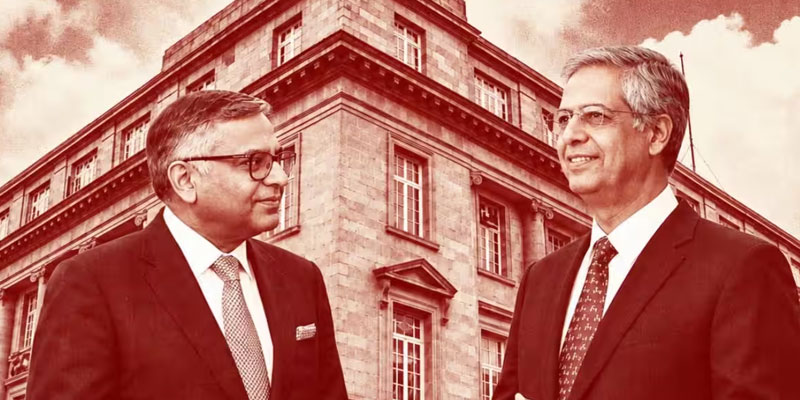
A Sudden Exit Before a Crucial AGM
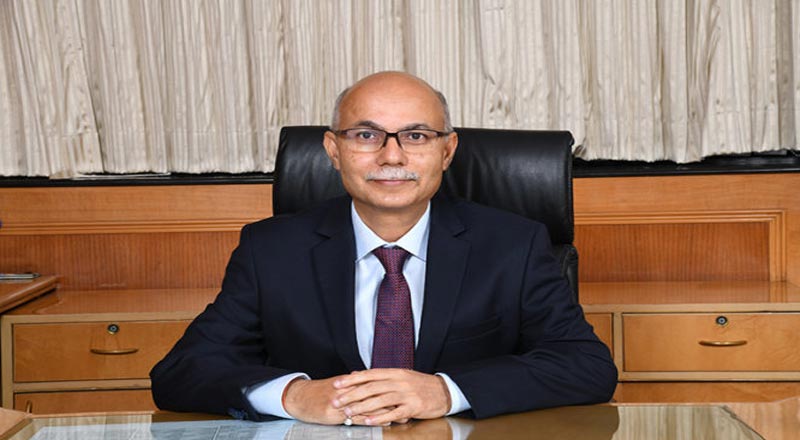
N Chandrasekaran has stepped down as chairman of Tata Sons, while continuing in the role until his current term ends in February 2027. His decision comes just days before the company’s August 18 annual general meeting, turning what was expected to be a routine corporate exercise into a significant leadership moment for the Tata Group.
From Successful Tenure to Leadership Uncertainty
Chandrasekaran became chairman of Tata Sons in 2017, succeeding Ratan Tata, and subsequently emerged as the key professional executive overseeing the conglomerate’s transformation. Under his leadership, Tata expanded aggressively into aviation, electronics, semiconductors, batteries and digital businesses while strengthening its presence across established sectors.
His second term runs until February 2027. The question of a third term became contentious earlier this year after Tata Sons board discussions failed to produce consensus. Reports said Tata Trusts had backed his continuation, but concerns were subsequently raised about losses in newer businesses, capital deployment and the strategic direction of Tata Sons.
Governance Tensions Behind the Resignation
Chandrasekaran has presented his decision primarily as a matter of institutional consensus. He indicated that although the Tata Trusts had recommended a further five-year term, the proposal did not receive unanimous board support. With the issue remaining unresolved for months, he decided not to seek reappointment and asked the board to begin succession planning.
The development highlights deeper differences between Tata Sons and Tata Trusts, which collectively control about 66% of Tata Sons. Areas of reported disagreement include the future regulatory status of Tata Sons, possible listing requirements, capital discipline and the financial performance of ambitious new ventures.
Why The August 18 AGM Matters
The timing of the resignation is particularly significant because the upcoming AGM could have become a test of shareholder support and governance stability. Chandrasekaran’s continuation as chairman also depends on his position within Tata Sons’ board structure.
By choosing a controlled transition rather than allowing the leadership question to become a potentially divisive shareholder confrontation, Chandrasekaran has effectively sought to provide clarity while giving the group time to identify his successor.
Markets Signal Concern Over Tata’s Future
Investors reacted immediately. Shares of major Tata companies declined, with TCS falling nearly 4% and other prominent group stocks also coming under pressure. The market reaction reflects concerns not simply about one individual, but about continuity in a conglomerate undertaking several capital-intensive bets simultaneously.
The challenge will be especially important for businesses such as Air India, Tata Electronics, batteries and semiconductor manufacturing, where returns are expected over longer horizons and substantial capital is involved.
Tata Needs Stability Beyond Succession
Chandrasekaran’s departure is therefore more than a routine change at the top. It exposes unresolved questions about strategy, risk appetite, governance and the balance between Tata Sons’ management and the Tata Trusts’ oversight. His successor will inherit both a globally ambitious conglomerate and a delicate internal equation. The immediate priority must be to restore institutional consensus without sacrificing the long-term investments that could define Tata’s next decade.
(With agency inputs)