Can Doval’s Beijing Visit Reset Ties?
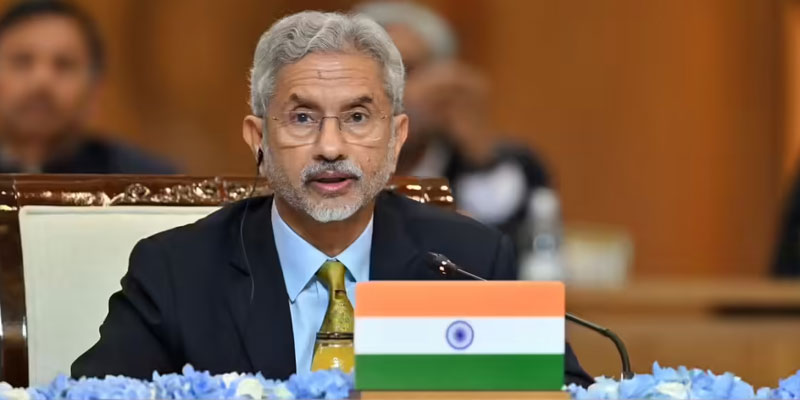
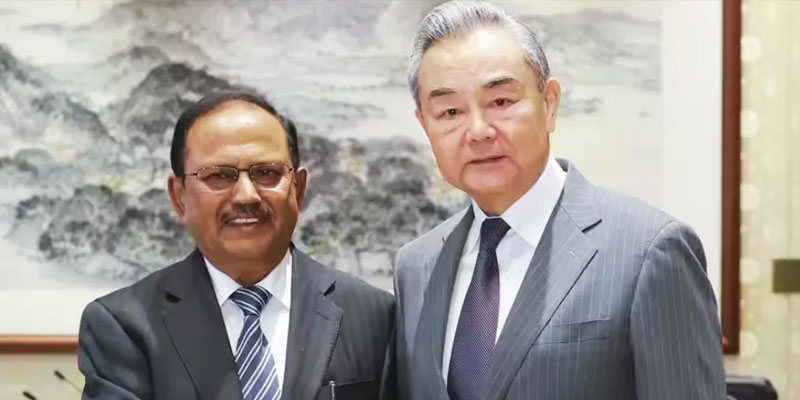
National Security Adviser Ajit Doval’s visit to Beijing for the 25th India-China Special Representatives’ dialogue is emerging as a crucial test of whether the fragile stabilisation following the Ladakh crisis can develop into broader bilateral normalisation. His talks with Chinese Foreign Minister Wang Yi come ahead of the BRICS summit in New Delhi on September 12–13, where Chinese President Xi Jinping is expected to participate and could potentially meet Prime Minister Narendra Modi.
A Relationship Still Shadowed by Ladakh
India-China relations deteriorated sharply after the 2020 eastern Ladakh military confrontation. New Delhi has consistently maintained that normal bilateral relations depend on peace and tranquillity along the border.
The Special Representatives mechanism, established in 2003, was created to explore a political framework for resolving the roughly 3,488-km boundary question. Yet competing territorial claims, differing perceptions of the Line of Actual Control and the absence of a mutually accepted boundary map continue to make a final settlement extremely difficult.
A significant step came in October 2024, when India and China reached an agreement on patrolling arrangements in Depsang and Demchok, completing disengagement from the last major friction points. But disengagement is not the same as de-escalation. Large military deployments, infrastructure and deep strategic mistrust continue to shape the border environment.
What Doval and Wang Yi Must Address
The Beijing dialogue is expected to examine several layers of the relationship:
· Military de-escalation: Exploring phased and reciprocal reductions in forward deployments and heavy military assets.
· Patrolling arrangements: Clarifying patrol protocols and buffer zones to prevent local encounters from escalating.
· Crisis communication: Strengthening military hotlines, commander-level communication and advance notification mechanisms.
· Boundary negotiations: Taking forward the Expert Group established during the 24th Special Representatives’ dialogue to explore possible “early harvest” arrangements on delimitation without prejudging a final settlement.
· Border institutions: Improving the functioning of existing consultation and coordination mechanisms to preserve stability.
· Economic normalisation: Discussing direct flights, visas, trade and people-to-people exchanges, while addressing India’s concerns over supply-chain dependence and market access.
BRICS Adds Political Urgency
The timing of Doval’s visit is particularly significant because of the upcoming BRICS summit in New Delhi. A constructive outcome could provide diplomatic space for a possible Modi-Xi interaction and help both governments demonstrate that competition need not permanently prevent engagement.
However, New Delhi is unlikely to treat symbolic gestures as sufficient. Economic or diplomatic normalisation will remain closely linked to demonstrable stability along the LAC.
A Roadmap Matters More Than Optics
Doval’s Beijing mission should therefore be judged not by whether it produces a dramatic breakthrough, but by whether it creates measurable mechanisms to prevent another border crisis. A boundary settlement remains distant, but stronger military communication, clearer patrol rules, reciprocal de-escalation and gradual restoration of civilian ties could build confidence.
If Doval and Wang can establish such a roadmap, the visit could become the foundation for a cautious reset. If it produces only diplomatic warmth without verifiable border stability, the thaw may prove temporary.
(With agency inputs)