A Currency Collapse Signals a Wider Economic Crisis
Iran’s rial has fallen to a historic low as Washington intensifies economic pressure on Tehran, exposing the combined impact of war, sanctions, financial isolation and deep-rooted domestic weaknesses. On August 24, the currency touched around 2.02 million rials to the US dollar on the informal market, while the official rate remained near 1.5 million. The widening gap illustrates how severely confidence and access to foreign currency have deteriorated.
From Long-Term Weakness to Wartime Shock
The rial was already under pressure before the US-Israeli attacks on February 28, with Iran facing high inflation and negative economic growth. Nearly six months of conflict, restrictions on oil exports and banking, and the US naval blockade have compounded those vulnerabilities. The latest depreciation is therefore not simply a reaction to new sanctions; it reflects the cumulative erosion of Iran’s economic capacity.
For ordinary Iranians, the parallel-market exchange rate matters particularly because it influences the cost of imported goods and business inputs. As confidence in the rial declines, households and companies tend to seek dollars, gold or other stores of value, creating further pressure on the currency.
Washington Opens a New Economic Front
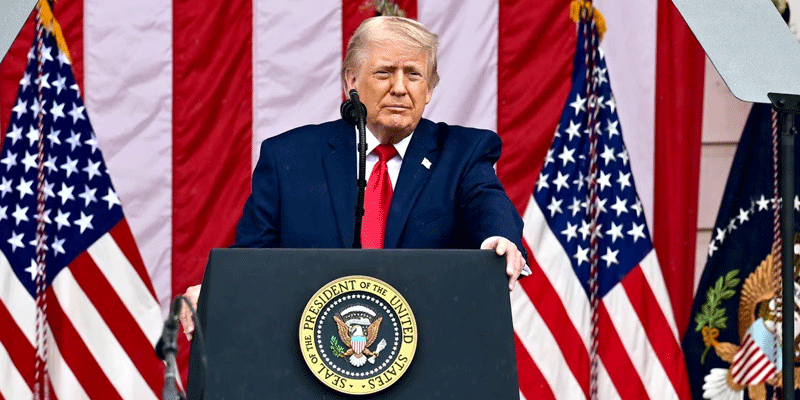
The latest escalation came with the launch of “Operation Economic Outcast” by the US Treasury on August 24. Treasury Secretary Scott Bessent described it as a broad campaign designed to sever Iran’s remaining economic lifelines. Washington sanctioned nearly 60 Iran-linked individuals, entities and vessels and expanded the potential reach of secondary sanctions.
The measures focus on financial and commercial channels connected with Iran’s oil revenues, procurement and other strategic activities. The wider threat of secondary sanctions also places foreign companies and financial institutions on notice, potentially discouraging them from maintaining business with Tehran for fear of losing access to the US financial system.
Inflation, Imports and Household Pain
A weaker rial immediately raises the local-currency cost of imports, from food ingredients and medicines to machinery and industrial inputs. Businesses face higher operating expenses, while consumers confront declining purchasing power. Inflation, already exceptionally high, can therefore accelerate as companies pass increased costs to households. Recent estimates put Iranian inflation at roughly two-thirds annually.
This creates a damaging cycle: sanctions restrict revenue and foreign-exchange access; the rial depreciates; inflation rises; people seek hard currency; and increased demand for dollars places still greater pressure on the rial.
Hormuz Turns Economic Pressure into Global Risk
The crisis also carries consequences far beyond Iran. The Strait of Hormuz remains a critical energy chokepoint, and any sustained disruption could increase oil prices, shipping costs and insurance premiums worldwide. Tehran's control over the waterway gives it leverage, but disruption would also threaten Iran’s own ability to export oil.
Economic Pressure May Not Deliver Political Surrender
Iran’s record-low rial demonstrates the extraordinary economic cost of prolonged conflict and isolation. Yet economic pain does not automatically translate into political concessions. Tehran may respond by strengthening alternative trade channels and deepening relationships with countries willing to maintain commerce.
The central question now is whether Washington’s intensified economic campaign can force negotiations—or instead deepen Iran’s isolation while worsening civilian hardship. The rial’s collapse is therefore more than a financial warning: it is a measure of how economic warfare, geopolitical confrontation and domestic fragility are converging into one of Iran’s most severe crises in decades.
(With agency inputs)