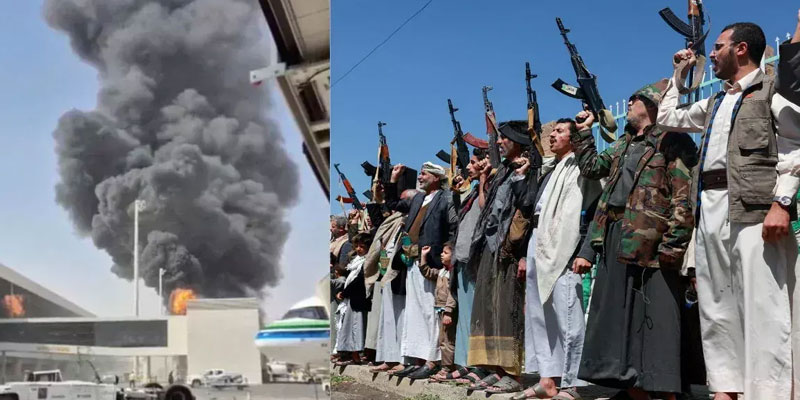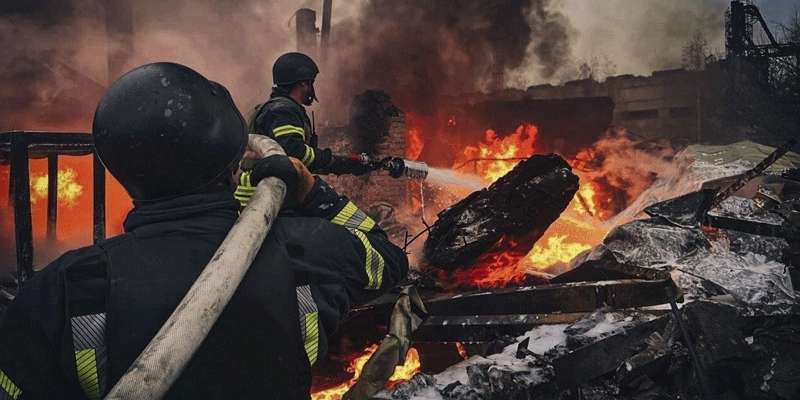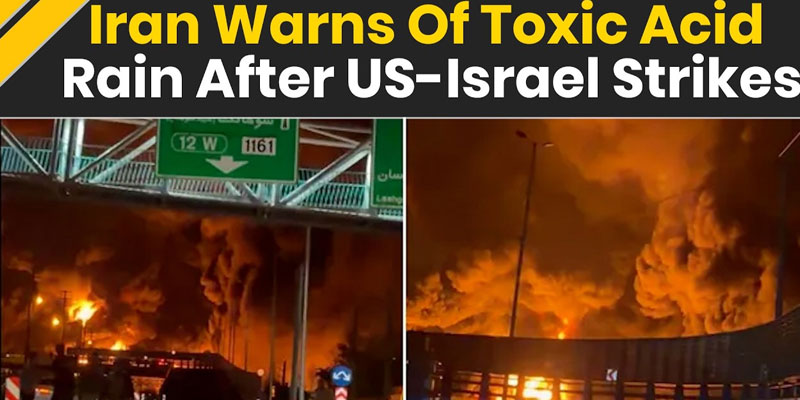
A doomsday-like scene unfolded in Tehran after Israeli airstrikes ignited massive fires at fuel depots across the Iranian capital, sending towering flames and thick black smoke into the sky. The March 7 strikes targeted several strategic oil storage sites, and within hours residents began reporting an unusual phenomenon — dark, oily drizzle falling from smoke-filled clouds. Authorities warned that the polluted rainfall could pose serious health risks, sparking fears of “acid rain” as the conflict between Israel and Iran escalates.
Oil Depot Strikes Turn Tehran’s Skyline into a Firestorm
The airstrikes reportedly hit multiple facilities linked to Iran’s energy and military logistics network, including depots in Aghdasieh, Shahran, southern refinery zones, and the nearby industrial city of Karaj. Massive explosions followed, igniting fires across at least four major fuel storage locations.
Burning hydrocarbons released enormous plumes of soot and chemical gases, blanketing large parts of Tehran in dense, toxic smoke. Strong winds carried the pollution more than 50 kilometers across the metropolitan area, turning daylight into a dim orange haze and forcing millions of residents indoors.
The strikes come amid escalating war tensions following the assassination of Iran’s Supreme Leader, dramatically expanding the conflict’s humanitarian and environmental consequences.
How the ‘Black Rain’ Formed
Scientists say the phenomenon reported by residents is not classic acid rain but a dangerous hybrid of polluted precipitation. The fires released massive quantities of hydrocarbons, sulfur oxides (SOx), and nitrogen oxides (NOx) into the atmosphere.
These pollutants mixed with moisture in the air and nearby cloud systems, creating acidic aerosols that eventually fell as rain. Unlike typical acid rain — which forms when sulfur dioxide and nitrogen oxides dissolve in water — Tehran’s rainfall also carried oil droplets and soot particles, giving it a dark color and oily smell.
Early estimates suggest the precipitation may have had a pH between 4 and 5, acidic enough to corrode surfaces and irritate skin. Residents reported black stains on vehicles, rooftops, and roads shortly after the drizzle began.
Immediate Health Risks for Residents
Health experts warn that exposure to this toxic fallout could have serious short-term effects. Direct contact with contaminated droplets can cause skin irritation and chemical burns, while inhaling polluted air may trigger respiratory distress, coughing, and asthma attacks.
Children, elderly individuals, and people with pre-existing lung conditions face the highest risk. Hospitals in Tehran have already reported a surge in respiratory complaints following the explosions.
Air quality indicators worsened dramatically, with PM2.5 pollution levels pushing the Air Quality Index above 400, a level considered extremely hazardous. Initial reports also cited six deaths and about 20 injuries from the explosions and immediate fallout.
Environmental and Long-Term Damage
Beyond immediate health threats, the environmental consequences could be severe. Hydrocarbon residues from the rainfall may seep into soil and groundwater, contaminating agriculture and drinking water supplies.
These toxins can accumulate in crops, fish, and livestock, potentially entering the food chain. Long-term exposure to pollutants such as benzene and heavy metals is linked to cancer, neurological damage, and cardiovascular disease.
Urban infrastructure may also suffer. Acidic precipitation and soot deposits can corrode metal structures, damage vehicles, and degrade buildings — effects reminiscent of the environmental devastation caused by the 1991 Gulf War oil fires in Kuwait.
Iran’s Government Response to the Acid Rain Threat
Iranian authorities responded quickly as the crisis unfolded. The Iranian Red Crescent Society issued urgent warnings advising residents to remain indoors due to high pollution levels.
Officials urged people to seal windows and doors with wet cloths, avoid using air conditioners that could recirculate polluted air, and wear protective masks if venturing outside. Residents were also told to cover exposed food and water supplies and wash thoroughly after any outdoor exposure.
The Tehran governor instructed citizens to wear masks in public, while Red Crescent teams distributed protective equipment and monitored air quality levels. Hospitals were placed on alert for respiratory emergencies.
At the same time, state media condemned the attacks as “environmental terrorism.” Fire crews from the Revolutionary Guards battled flames at multiple sites, though officials acknowledged that around 10,000 buildings nationwide had been damaged by ongoing strikes.
War’s Environmental Frontline
The toxic haze hanging over Tehran underscores a grim reality of modern warfare: environmental devastation can become a powerful and indiscriminate weapon. Beyond military objectives, attacks on energy infrastructure risk poisoning the air, water, and soil that millions depend on for survival.
As fires continue to burn and pollution lingers in the atmosphere, Tehran’s residents face an invisible but dangerous aftermath. The crisis highlights how geopolitical conflict can rapidly transform into a humanitarian and ecological emergency — one whose effects may persist long after the bombs stop falling.
(With agency inputs)