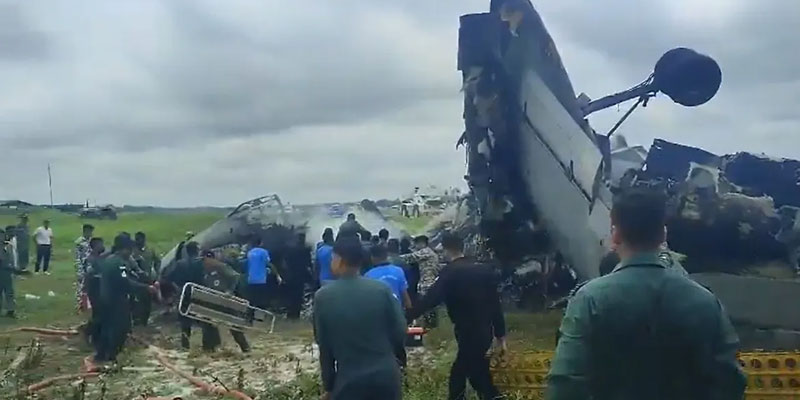
An Indian Air Force AN-32 transport aircraft crashed and caught fire on Saturday at the Jorhat Air Force Station in Assam, triggering immediate emergency response operations within the airbase premises. Thick smoke and flames were seen rising from the crash site as rescue and firefighting teams rushed to contain the blaze and assess the damage. The incident has once again drawn attention to the safety record of the ageing AN-32 fleet, which has long served as a critical logistical backbone for the Indian Air Force.
The Incident at Jorhat Airbase
According to preliminary reports, the AN-32 aircraft went down within the Jorhat Air Force Station shortly after operations began, though the exact sequence of events remains unclear. Emergency services were immediately activated, and security personnel cordoned off the area as firefighting units attempted to extinguish the flames.
Cause and Casualties Still Unconfirmed
The exact cause of the crash remains unknown. Officials are expected to initiate a formal Board of Inquiry to determine whether the incident resulted from technical malfunction, operational failure, weather conditions, or human error. Investigators will likely examine flight data, maintenance records, and communication logs to reconstruct the events leading to the crash.
There is also no official confirmation yet regarding casualties or injuries. Rescue operations continued for several hours as emergency teams searched the wreckage and secured the area. The uncertainty surrounding casualties has heightened anxiety among defense personnel and local authorities.
AN-32’s Operational Importance and Troubled History
The AN-32, a twin-engine turboprop military transport aircraft, has been widely used by the Indian Air Force for logistical operations, especially in high-altitude and border regions. Its ability to operate from short and difficult airstrips has made it vital for missions in the Northeast and Himalayan sectors.
However, the aircraft has also faced repeated safety concerns over the years. The most notable incident occurred on June 3, 2019, when another AN-32 took off from the same Jorhat Air Force Station for Mechuka in Arunachal Pradesh before disappearing from radar. After an extensive search operation, the wreckage was discovered in the Pari Hills, and all 13 personnel on board were confirmed dead.
Earlier this year, another IAF aircraft tragedy occurred when a Sukhoi Su-30MKI fighter jet crashed in Assam’s Karbi Anglong district, resulting in fatalities and renewed debate over operational safety standards.
Questions Over Fleet Safety Intensify
The latest AN-32 crash at Jorhat has once again highlighted the operational risks associated with ageing military aircraft fleets. While the final cause will only emerge after a detailed investigation, the incident underscores the urgent need for continued modernization, rigorous maintenance oversight, and enhanced aviation safety protocols within the Indian Air Force. As rescue efforts continue and official details emerge, the focus remains on ensuring accountability and preventing similar tragedies in the future.
(With agency inputs)