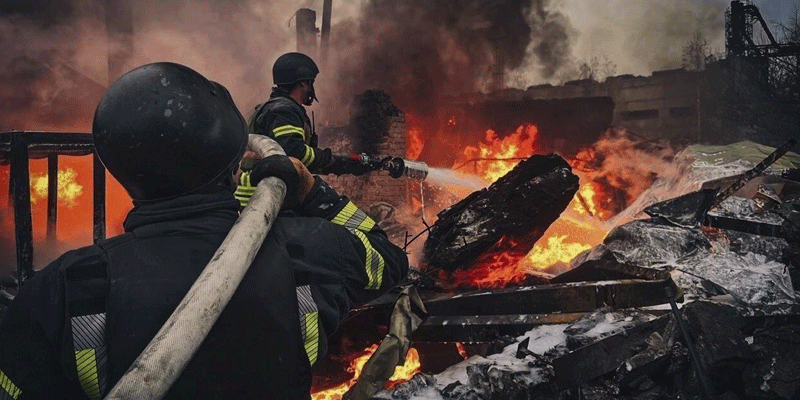
Several people were injured and flight operations were disrupted after Iranian missiles and drones struck Kuwait International Airport in the latest escalation of the conflict between the United States and Iran. The attack damaged parts of the airport’s Terminal 1 building and forced authorities to suspend air traffic, reigniting concerns over the security of critical infrastructure in the Gulf. The incident was followed by retaliatory US military action against Iranian targets on Qeshm Island, a strategically important location near the Strait of Hormuz.
A Fragile Conflict Reaches a New Flashpoint
The latest exchange comes amid a conflict that has simmered for months despite repeated diplomatic efforts to secure a lasting ceasefire. Tensions have remained high since military confrontations earlier this year drew in several countries across the Gulf region.
The Strait of Hormuz remains at the centre of the geopolitical contest. The narrow waterway handles roughly one-fifth of the world’s oil shipments, making any military activity in the area a matter of global concern. Qeshm Island, located close to the strait, has become a key military and strategic asset in the ongoing standoff.
How the Latest Escalation Unfolded
The crisis intensified in the early hours of June 3 when Iranian ballistic missiles and drones targeted Kuwait International Airport. Kuwaiti authorities confirmed damage to Terminal 1 and reported injuries among several individuals who received medical treatment. Flight operations were suspended immediately as emergency services assessed the situation.
The United States responded through its Central Command (CENTCOM), which said American and partner forces intercepted multiple missiles and drones. Washington subsequently carried out what it described as “self-defense” strikes against military-linked facilities on Qeshm Island. US officials maintained that the action was intended to neutralise threats posed by Iranian attacks across the region.
Competing Narratives Fuel Uncertainty
As often happens during regional conflicts, both sides have offered sharply different versions of events.
The United States claims Iran initiated the latest round of attacks by targeting locations in Kuwait and Bahrain. CENTCOM stated that missiles aimed at Kuwait either failed to reach their targets or broke apart, while others targeting Bahrain were intercepted. It also rejected Iranian claims that the US Fifth Fleet headquarters in Bahrain had been successfully struck.
Iran, however, argues that its actions were retaliatory. The Islamic Revolutionary Guard Corps (IRGC) says the attacks followed US military actions near the Strait of Hormuz and on Qeshm Island, including alleged strikes affecting Iranian assets and infrastructure. Tehran insists its operations were a response rather than a provocation.
Regional and Global Implications
The disruption at Kuwait International Airport highlights the broader risks posed by the conflict. Aviation networks across the Gulf have repeatedly faced interruptions this year, while governments and airlines continue to reassess security arrangements. The latest escalation has also heightened concerns over energy markets, given the strategic importance of the Strait of Hormuz. Oil prices have already reacted to renewed uncertainty in the region.
Diplomacy Faces Its Toughest Test
The attack on Kuwait International Airport underscores how fragile the regional security environment remains despite ongoing diplomatic efforts. With both Washington and Tehran exchanging military strikes while simultaneously keeping communication channels open, the Gulf finds itself caught between conflict and negotiation. Whether the latest confrontation becomes another temporary flare-up or evolves into a broader regional crisis will depend largely on the ability of both sides to prevent retaliation from overtaking diplomacy. As strategic locations, energy routes and civilian infrastructure increasingly come under threat, the urgency for a durable political settlement has rarely been greater.
(With agency inputs)