Emerging Framework for a Fragile Peace
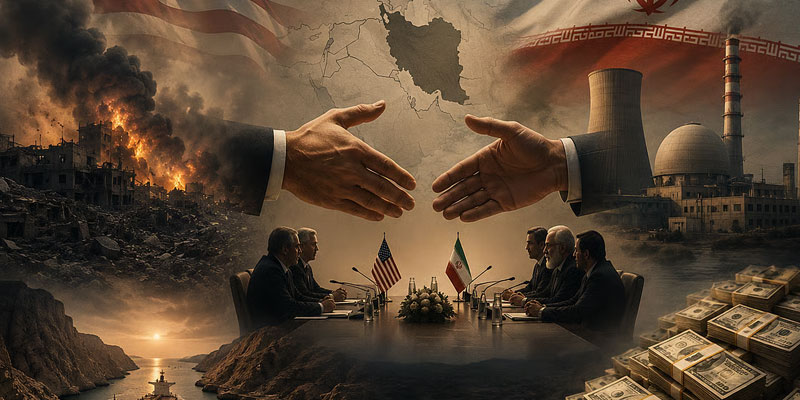
A significant diplomatic effort is underway in West Asia as the United States and Iran negotiate a draft memorandum of understanding (MoU) aimed at ending months of conflict, easing regional tensions and restoring stability to global energy markets. The proposed framework combines security guarantees, economic incentives, sanctions relief and maritime access into a single package. While negotiators describe the discussions as closer to agreement than previous rounds, the deal remains unfinished and subject to political approval in both Washington and Tehran. Recent reports indicate that a 60-day ceasefire extension, the reopening of the Strait of Hormuz and a major reconstruction mechanism for Iran form the backbone of the emerging understanding.
Conflict, Sanctions and Strategic Pressure
The negotiations are taking place against the backdrop of prolonged military confrontation, stringent economic sanctions and disruptions to one of the world's most important energy corridors. The Strait of Hormuz, through which a substantial share of global oil and liquefied natural gas shipments pass, has been affected by Iranian restrictions, sea mines and a US-led naval blockade. These developments have heightened concerns about regional security and global energy supplies. Diplomats involved in mediation have warned that prolonged deadlock could trigger renewed escalation, making a negotiated settlement increasingly urgent.
The Proposed $300 Billion Reconstruction and Investment Mechanism
The most debated component of the draft agreement is the proposal for a large-scale reconstruction and investment fund for Iran. Iranian officials have described it as a reconstruction programme designed to support economic recovery after years of sanctions, conflict and infrastructure damage. Some participants in the negotiations have cited a figure of approximately $300 billion, although other mediators stress that no final amount has been agreed upon.
Unlike direct reparations, the mechanism is reportedly being discussed as an international investment fund facilitated by the United States and potentially supported by regional partners. Access to financing would likely be phased and linked to compliance with agreed commitments, including de-escalation measures and progress on nuclear-related obligations. Analysts view this structure as an attempt to balance Iran's demand for economic recovery with Washington's desire to retain leverage through conditional disbursements.
If implemented, such a fund could help rebuild infrastructure, attract foreign investment and stabilise Iran's economy. At the same time, its conditional nature would provide negotiating leverage to ensure adherence to future commitments.
Reopening the Strait of Hormuz
The second major pillar of the draft concerns the restoration of maritime traffic through the Strait of Hormuz. Current proposals reportedly envisage Iran removing sea mines, reducing naval interference and restoring commercial shipping to pre-conflict levels. In return, the United States would gradually ease its naval blockade and facilitate freer navigation through the waterway.
The arrangement would initially operate during a 60-day ceasefire period while broader negotiations continue. Maritime de-escalation is also linked to discussions on Iran's nuclear programme, including future arrangements regarding uranium stockpiles and enrichment activities.
Latest Developments and Political Challenges
Recent reports suggest negotiators are nearing consensus on several core principles, but significant differences remain over sanctions relief, compensation mechanisms and nuclear commitments. The framework reportedly awaits formal approval from President Donald Trump, while Iranian leaders must justify any concessions to domestic audiences. The White House has also publicly downplayed some reported details, underscoring the sensitivity of ongoing negotiations.
A Delicate Path Towards De-escalation
The emerging US–Iran draft deal represents an ambitious attempt to exchange confrontation for structured cooperation. By linking a potentially transformative reconstruction and investment framework with the reopening of the Strait of Hormuz, the proposal seeks to address both Iran's economic needs and wider regional security concerns. Yet the agreement remains a draft rather than a settled accord. Its success will ultimately depend on whether both sides can bridge remaining differences and translate a fragile diplomatic opening into a durable and enforceable peace.
(With agency inputs)