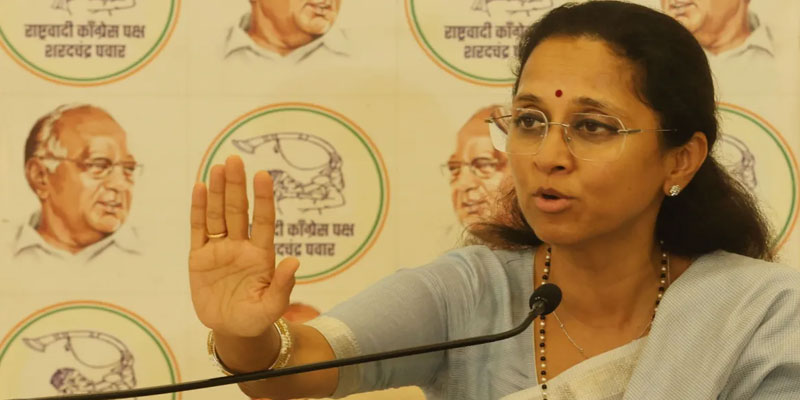
Nationalist Congress Party (Sharad Pawar faction) leader Supriya Sule has clarified that neither her party nor the INDIA bloc has taken any official decision on the proposed Delimitation Bill, dismissing reports suggesting that NCP chief Sharad Pawar had already extended support to the legislation. Sule stressed that the issue remains under discussion and that any formal stand would only emerge after detailed consultations within the opposition alliance. Her remarks come amid growing political debate over the government's plan to link parliamentary delimitation with the implementation of women's reservation, making the issue one of the most closely watched constitutional questions ahead of the Monsoon Session.
Why the Delimitation Bill Is Significant
The Delimitation Bill, 2026, introduced in the Lok Sabha on April 16 along with the Constitution (131st Amendment) Bill and the Union Territories Laws (Amendment) Bill, seeks to redraw parliamentary and assembly constituencies based on the latest census available when a Delimitation Commission is constituted. According to PRS Legislative Research, this would likely mean using the 2011 Census as the basis for the exercise.
The proposed legislation is also closely tied to the implementation of the 33% reservation for women in the Lok Sabha and State Assemblies, as the reservation framework is scheduled to come into effect only after a fresh delimitation exercise. This linkage has made the debate politically sensitive because delimitation goes beyond revising constituency boundaries—it could substantially alter the distribution of parliamentary seats among states due to varying population growth rates. The process may also require an expansion in the strength of the Lok Sabha, potentially reshaping India's political landscape for decades.
Supriya Sule Clarifies Party's Position
Addressing speculation over the party's stance, Supriya Sule categorically stated that neither the NCP (Sharad Pawar faction) nor the INDIA alliance has formally demanded delimitation or decided to support the government's proposal. She emphasised that the alliance would hold detailed internal discussions before arriving at any collective position.
Sule also underlined that her party's immediate priority remains the implementation of the 33% reservation for women, rather than endorsing delimitation as an independent political objective. Her statement draws an important distinction between supporting women's political representation and accepting the broader constitutional and electoral implications of constituency reorganisation.
The clarification suggests that while the party supports greater representation for women, it may still seek changes regarding the timing, census basis or seat redistribution mechanism proposed under the delimitation framework.
Latest Political Developments
Recent media reports had suggested that the Sharad Pawar-led NCP might support the Delimitation Bill during the upcoming Monsoon Session. However, Sule described such reports as premature, reiterating that no formal approval has been granted by the party.
She also ruled out speculation about any political realignment with the National Democratic Alliance (NDA), indicating that the NCP would continue to evaluate each legislative proposal on its merits. This leaves the future of the Delimitation Bill uncertain, particularly because constitutional amendments require a two-thirds majority in Parliament. Without broad opposition support, securing passage of the legislation could prove challenging.
The government may therefore need to negotiate extensively with opposition parties, especially if they seek separate consideration of the women's reservation provisions and the delimitation framework.
Consensus Will Determine the Bill's Future
Supriya Sule's remarks reinforce that the debate over delimitation remains far from settled. While there is broad political support for increasing women's representation, the mechanism through which it is implemented continues to generate significant constitutional and political questions. As delimitation has the potential to redefine parliamentary representation and alter the balance of power among states, any decision will require careful deliberation and broad political consensus. For now, the government's proposal remains under scrutiny, and the INDIA bloc's final position is likely to emerge only after comprehensive internal consultations, making the coming parliamentary session crucial for the future of this landmark reform.
(With agency inputs)