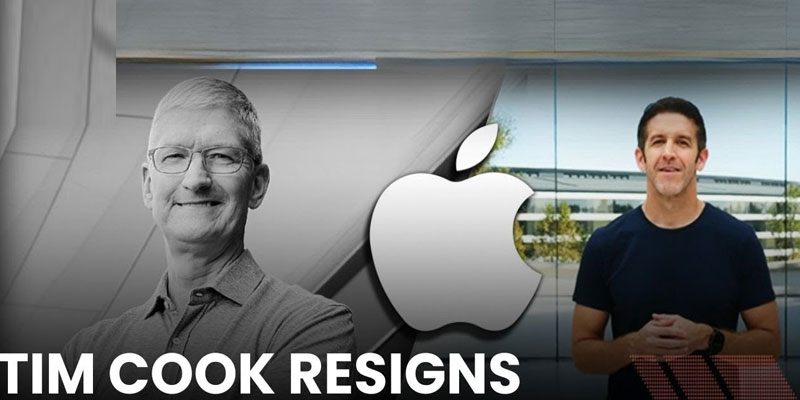
Tim Cook has announced that he will step down as CEO of Apple Inc. after nearly 15 years at the helm, marking the end of one of the most transformative leadership tenures in corporate history. Effective September 1, 2026, Cook will transition to the role of executive chairman, handing over day-to-day leadership to long-time Apple executive John Ternus. The announcement, delivered through a heartfelt letter to employees, signals both continuity and change for the Cupertino giant.
A Letter of Transition: Cook’s Endorsement of His Successor
In his message to staff, Cook struck a tone of gratitude and confidence, emphasizing the strength of Apple’s leadership bench. He described Ternus as a “brilliant engineer and thinker,” highlighting his 25-year journey within the company and his deep involvement in shaping some of Apple’s most successful products. Cook praised Ternus’s “obsession with detail” and product integrity—qualities he believes are essential to Apple’s continued success.
Importantly, Cook reassured employees and investors alike that this transition is carefully planned. He will remain actively involved through the summer to ensure a smooth handover, and as executive chairman, he will continue to influence strategic decisions, particularly in areas like global policy and supply chain dynamics.
Cook’s Legacy: From Stability to Scale
When Cook succeeded Steve Jobs in 2011, Apple’s market capitalization stood at around $350 billion. Under his leadership, it has soared past $4 trillion, with annual revenue growing from $108 billion to a record $416 billion in FY2025. Net profit has also surged, reflecting both operational efficiency and sustained demand.
Cook’s tenure is defined by diversification. While the iPhone remained central, he expanded Apple’s ecosystem with products like the Apple Watch and AirPods, and built a powerful services segment including Apple Music, Apple TV+, and Fitness+. These services have become a major revenue driver, delivering high margins and recurring income.
Equally significant was Cook’s mastery of the global supply chain, particularly in China, and his emphasis on user privacy as a core brand value. He successfully navigated regulatory scrutiny, geopolitical tensions, and shifting consumer trends—though challenges such as delays in artificial intelligence innovation persisted.
John Ternus: The Engineer at the Helm
Ternus, born in 1975 and an Apple veteran since 2001, represents a continuation of Apple’s internal leadership culture. A mechanical engineering graduate from the University of Pennsylvania, he has led hardware engineering efforts across flagship products including the iPhone, iPad, Mac, and Apple Watch.
Known for his low-profile yet highly effective leadership style, Ternus has been instrumental in Apple’s transition to its own silicon chips, a move that redefined performance standards across devices. His appointment reflects Apple’s renewed focus on hardware innovation, particularly as the company explores emerging technologies like augmented reality and AI-driven devices.
Strategic Transition: Stability Amid Industry Pressures
The leadership shift comes at a pivotal moment. Apple faces intensifying competition in artificial intelligence, regulatory pressures in the US and Europe, and slowing growth in its core smartphone market. Ternus inherits a financially strong but strategically challenged company, where the next phase of innovation—AI integration, AR/VR, and new device categories—will be critical.
Cook’s continued presence as executive chairman ensures continuity, particularly in navigating geopolitical complexities such as US-China trade relations and expanding manufacturing in India.
A Legacy Secured, A Future Unfolding
Tim Cook’s departure as CEO closes a chapter defined by scale, stability, and ecosystem dominance. His leadership not only preserved Apple’s legacy after Steve Jobs but expanded it into unprecedented territory. With John Ternus stepping in, Apple is betting on deep technical expertise and product-focused leadership to drive its next wave of innovation. The transition reflects a company confident in its foundations, yet aware that its future will depend on how boldly it adapts to a rapidly evolving technological landscape.
(With agency inputs)