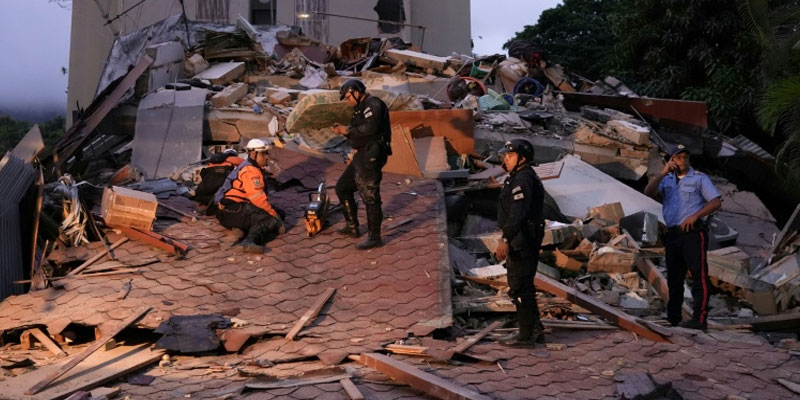
Death Toll Rises as Rescue Operations Intensify
Venezuela is grappling with one of its most devastating natural disasters in recent years after twin earthquakes struck the country’s northern region, leaving at least 32 people dead and more than 700 injured. The powerful back-to-back tremors triggered widespread destruction, damaged critical infrastructure and prompted a nationwide emergency response. As rescue teams continue to search for survivors beneath collapsed buildings, authorities have warned that the casualty count could rise further in the coming days.
Acting President Delcy Rodríguez has called for national unity, stressing that the government's immediate priority is saving lives, supporting affected communities and accelerating relief efforts.
Rare Twin Earthquakes Strike Within Seconds
The disaster unfolded on Wednesday when two major earthquakes struck northern Venezuela within seconds of each other. The first quake measured 7.2 in magnitude, followed just moments later by an even stronger 7.5-magnitude tremor.
The seismic events were felt across large parts of the country, including Caracas and the states of Miranda, La Guaira, Aragua, Carabobo and Falcón. The unusual occurrence of two major earthquakes in such rapid succession amplified both the physical damage and public panic, overwhelming emergency services in several areas.
Seismologists note that closely timed, high-magnitude earthquakes can significantly increase destruction because structures weakened by the first tremor often collapse during the second.
Recent Updates from Ground Zero
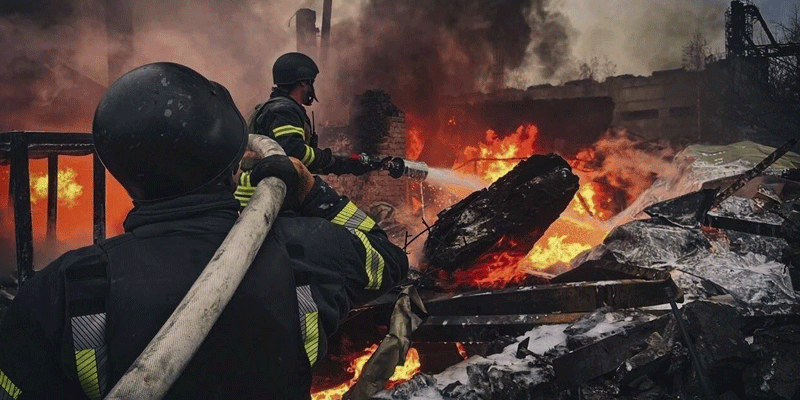
Authorities have confirmed extensive damage to residential, commercial and public infrastructure. Among the most significant incidents was the collapse of the Hotel Eduard in La Guaira, where rescue personnel continue searching for trapped victims.
The Venezuelan government has declared a nationwide state of emergency and deployed military commanders to coordinate rescue and relief operations. Emergency crews have been mobilised across the affected regions to clear debris, provide medical assistance and restore essential services.
The disaster has also disrupted transportation and utility networks. Venezuela temporarily shut down its principal airport after reports of structural damage, while gas supplies were suspended in several areas to reduce the risk of fires and secondary explosions.
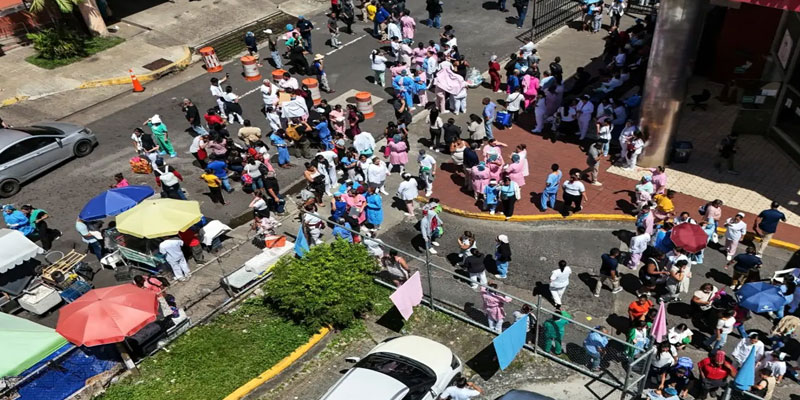
Compounding the crisis, authorities have recorded at least 20 aftershocks since the main earthquakes. These continued tremors have heightened fears of additional collapses and have complicated rescue efforts, forcing many residents to remain outdoors or in temporary shelters.
National and International Response
Acting President Rodríguez has urged citizens to remain united and resilient as the country confronts the challenge ahead. In a public address, she expressed confidence that Venezuela would recover through collective effort and coordinated action.
International support has begun to flow in. Several Latin American countries, along with the United States, have offered assistance. Humanitarian organisations and international donors are also mobilising relief supplies, medical aid and emergency funding to support affected communities.
A Long Road to Recovery
The twin earthquakes have left Venezuela facing a profound humanitarian and reconstruction challenge. Beyond the immediate loss of life and widespread injuries, the disaster has exposed vulnerabilities in infrastructure and emergency preparedness. While rescue operations remain the top priority, attention will soon shift toward rebuilding homes, restoring public services and helping communities recover. The scale of destruction is immense, but the combination of national solidarity and international assistance may prove crucial in guiding Venezuela through one of the most difficult chapters in its recent history.
(With agency inputs)