What Set Off the Latest Protests
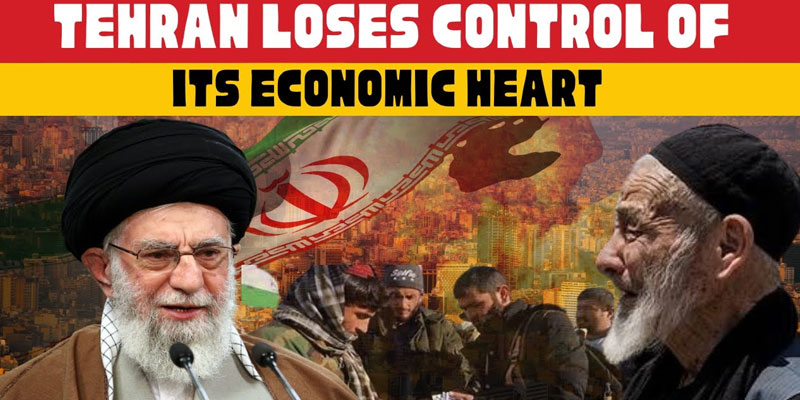
Iran’s newest surge of protests was ignited by a sharp economic shock that pushed already strained households beyond their limits. In late December 2025, the Iranian rial suffered a historic collapse, plunging to nearly 1.4 million to the US dollar, while inflation soared past 50 percent. What began as commercial strikes in Tehran’s Grand Bazaar rapidly morphed into a nationwide outcry, as soaring prices, subsidy reductions, and chronic shortages made daily survival increasingly untenable.
From Economic Anxiety to Political Revolt
While economic hardship has long been a feature of life in Iran, the current protests reflect something deeper than frustration over prices. Entering their second week in early January 2026, the demonstrations represent a convergence of financial despair, political exhaustion, and a growing belief that the Islamic Republic is incapable of reform. What distinguishes this wave is not only its geographic reach—spanning dozens of cities across nearly all provinces—but also the speed with which economic grievances evolved into overt challenges to the state’s legitimacy.
Anatomy of the Crisis: Why Anger Spread So Fast
At the heart of the unrest lies a collapsing economic model. Years of international sanctions, compounded by regional conflicts and declining oil revenues, have hollowed out Iran’s economy. Traders, workers, students, and retirees alike have seen their purchasing power evaporate. Cuts to subsidies on fuel and basic goods further inflamed tensions, particularly among the urban poor and the mercantile class that traditionally forms the backbone of Iran’s domestic economy.
Yet economics alone does not explain the intensity of the protests. Widespread perceptions of elite corruption, mismanagement, and costly foreign interventions—from Gaza to Lebanon—have deepened public resentment. Chants that initially targeted inflation quickly shifted toward denunciations of the political system itself, signaling a transition from protest to rebellion. This trajectory mirrors, but in some ways exceeds, the unrest seen during the Mahsa Amini protests of 2022–23.
Reza Pahlavi’s Intervention: Catalyst or Symbol?
A pivotal moment came on January 8, when exiled opposition figure Reza Pahlavi called for synchronized nightly demonstrations. His appeal, delivered from abroad, injected a new sense of coordination and purpose into the movement. The regime’s reaction—cutting internet access and international phone lines—underscored its concern that the protests were entering a more dangerous phase.
Pahlavi, the son of Iran’s last monarch, occupies a complex space in the opposition landscape. Publicly rejecting a return to monarchy, he presents himself as an advocate for a secular, democratic transition. For some protesters, he symbolizes a pre-revolutionary Iran remembered—rightly or wrongly—as more stable and globally integrated. For others, his Western base and perceived proximity to Israel make him a polarizing figure. Still, his ability to mobilize large numbers, even under severe repression, suggests he has become a rallying point for a fragmented opposition seeking national leadership.
State Response and Escalation Risks
The government’s heavy-handed crackdown—marked by lethal force, mass arrests, and information blackouts—has further radicalized the street. By attempting to isolate protesters, authorities have inadvertently reinforced a sense of collective defiance. As casualties mount and economic activity stalls, the risk of elite fractures, including within the security forces, cannot be dismissed.
A Tipping Point with Uncertain Outcomes
Iran now stands at a volatile crossroads. The protests have exposed the fragility of an economy under siege and a political system running out of credibility. Whether this movement culminates in meaningful change or is crushed through repression will depend on its sustainability, leadership coherence, and the state’s willingness—or inability—to adapt. What is clear is that the events unfolding are no longer just about prices or policy; they reflect a society questioning the very foundations of power in the Islamic Republic.
(With agency inputs)