India Pushes Back on Russian Oil Claims
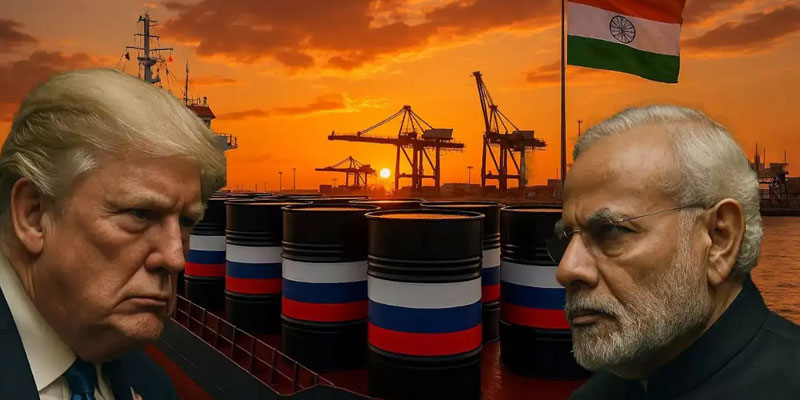
India has not formally committed to ending its purchases of Russian crude oil as part of its latest trade understanding with the United States, despite claims to the contrary from President Donald Trump. While Washington has linked the deal to a strategic shift in India’s energy sourcing, New Delhi has been careful to clarify that the agreement, as it stands, is limited to tariff relief and does not include any binding pledge on oil imports.
A Deal with Diverging Narratives
The renewed US–India trade deal, announced after a February 2, 2026 phone call between President Trump and Prime Minister Narendra Modi, was positioned by the White House as a major geopolitical and economic breakthrough. Trump publicly stated that India had agreed to halt Russian oil purchases, align more closely with US energy supplies, and open its markets widely to American goods.
Indian officials, however, have presented a narrower interpretation. According to New Delhi, the agreement primarily removes a punitive tariff imposed by the US in 2025 and restores more predictable market access for Indian exporters. The contrast between these two narratives has placed the spotlight on what the deal actually contains—and what it does not.
The Russian Oil Question: What India Has—and Hasn’t—Agreed To
President Trump has repeatedly claimed that India agreed to stop buying Russian oil as part of the trade bargain, framing the move as support for US efforts related to the Ukraine conflict. He described the tariff cut as a direct outcome of this concession during his call with Prime Minister Modi.
Indian government sources have firmly disputed this version. Officials confirm that the US has withdrawn a 25% penalty tariff that was specifically tied to India’s purchases of Russian crude, but stress that there is no obligation to end those imports. Public statements from Modi and senior ministers have focused exclusively on the tariff reduction, with no reference to changes in energy policy.
US diplomats have also stopped short of confirming an oil commitment. Ambassador Sergio Gor has deferred details to ongoing negotiations, suggesting that Washington accepted partial progress rather than a full policy reversal.
Core Economic Terms: How the Tariff Reduction Works
At the heart of the agreement is a significant easing of US trade barriers. The baseline reciprocal tariff on Indian goods has been lowered from 25% to 18%, while the additional 25% Russia-linked penalty—introduced in August 2025—has been scrapped altogether. This brings the effective duty down from as high as 50% to a single, flat rate.
The immediate beneficiaries are Indian exporters, particularly in engineering goods, gems and jewellery, textiles, leather, and seafood. Nearly $48 billion worth of exports that had become uncompetitive due to elevated tariffs now regain improved access to the US market.
Claimed Indian Commitments: Still Unsettled
According to President Trump, India has also agreed to eliminate tariffs and non-tariff barriers on US goods and to purchase more than $500 billion worth of American products over time, spanning energy, agriculture, coal, and advanced technology. Indian officials have not confirmed these figures or timelines, noting that no formal treaty or detailed framework has been signed. Any broader market-opening measures, they indicate, remain subject to further negotiation.
Progress, but with Strategic Ambiguity
The US–India trade deal delivers tangible short-term gains by easing tariff pressure and restoring confidence for exporters. At the same time, the lack of a written agreement and the divergence in public messaging—especially on Russian oil—underscore the deal’s provisional nature.
For India, maintaining flexibility on energy sourcing remains critical to price stability and energy security. For the US, the agreement marks incremental progress rather than a decisive strategic shift. The true significance of the deal will depend on how these unresolved elements are clarified as negotiations move toward a more formal framework.
(With agency inputs)