The announcement of a landmark US-Iran peace agreement was expected to mark a significant de-escalation in West Asia. The deal included provisions such as the lifting of the US naval blockade on Iran, sanctions relief and commitments aimed at reducing regional tensions. Yet, almost immediately, the agreement found itself under strain. Iranian Supreme Leader Mojtaba Khamenei reportedly suggested that US President Donald Trump had signed the accord out of strategic necessity, while fresh Israeli military strikes in southern Lebanon raised questions about whether the ceasefire framework could hold. The developments have also exposed a growing divergence between Washington’s diplomatic approach and Israel’s security priorities.
What the US-Iran Agreement Entails
The agreement, signed on June 14, 2026, was presented by the Trump administration as a breakthrough capable of reducing hostilities across the region. Its provisions included an immediate ceasefire, commitments by Iran regarding its nuclear programme, the disposal or dilution of enriched nuclear material, the reopening of the Strait of Hormuz and the gradual lifting of restrictions on Iranian oil exports and ports.
Another major component was a reconstruction package reportedly worth $300 billion, aimed at supporting Iran’s economic recovery. The agreement also envisaged a structured period of negotiations intended to address outstanding disputes and create a pathway toward longer-term stability.
For Washington, the deal represented a diplomatic achievement after years of confrontation. For Tehran, however, support for the agreement appeared more cautious and pragmatic than enthusiastic.
Khamenei’s Reservations and Iran’s Calculations
Mojtaba Khamenei’s remarks highlighted the complex calculations behind Tehran’s decision to endorse the accord. While confirming approval of the memorandum, he reportedly suggested that the agreement reflected American urgency rather than a fundamental shift in relations.
His position underscored Iran’s insistence that its strategic interests, including those linked to the so-called “Resistance Front,” remain protected. This suggests that Tehran views the agreement primarily as a tactical arrangement designed to secure economic and geopolitical benefits rather than as the beginning of a lasting reconciliation with Washington.
Israeli Strikes Cast a Shadow Over the Deal
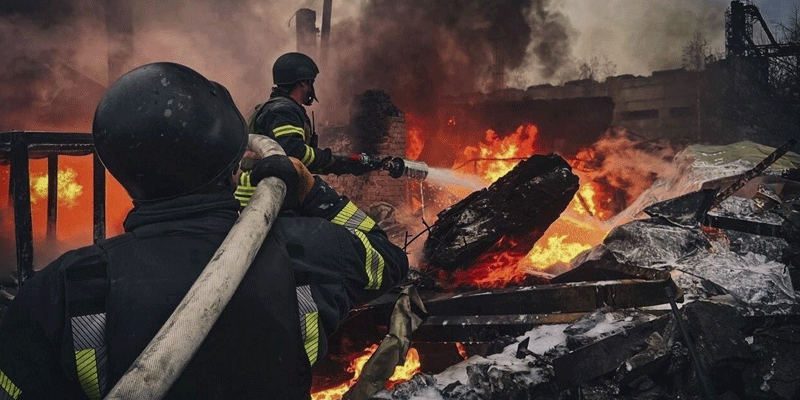
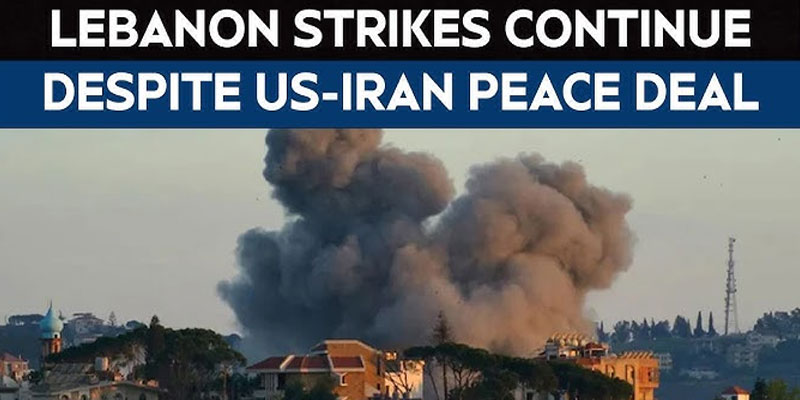
The most immediate challenge to the agreement emerged from southern Lebanon, where Israeli air strikes and artillery shelling reportedly killed at least 16 people in the Nabatieh district. The attacks damaged civilian infrastructure and left several people injured or missing.
These operations occurred despite ceasefire provisions associated with the broader peace framework. The incident has intensified concerns that key regional actors were either not fully aligned with the agreement or were unwilling to modify their security strategies in response to it.
A Growing Rift Between Washington and Tel Aviv
The violence has also highlighted a widening gap between the United States and Israel. While Washington has portrayed the agreement as a pathway to regional security, many Israeli leaders remain deeply sceptical. Concerns persist over sanctions relief, financial assistance to Iran and the possibility that Tehran could emerge economically stronger without abandoning its regional influence.
Israeli officials have also indicated a willingness to continue military operations against Hezbollah, a position that appears at odds with the ceasefire vision promoted by Washington.
Diplomacy Faces Its First Major Test
The early days of the US-Iran agreement reveal both its promise and its fragility. While the accord seeks to reduce tensions through diplomacy, economic incentives and security commitments, events in Lebanon demonstrate how quickly regional realities can undermine political breakthroughs. Unless key stakeholders align their objectives and commit to implementation, the agreement risks becoming another ambitious framework overtaken by long-standing strategic rivalries and unresolved conflicts.
(With agency inputs)