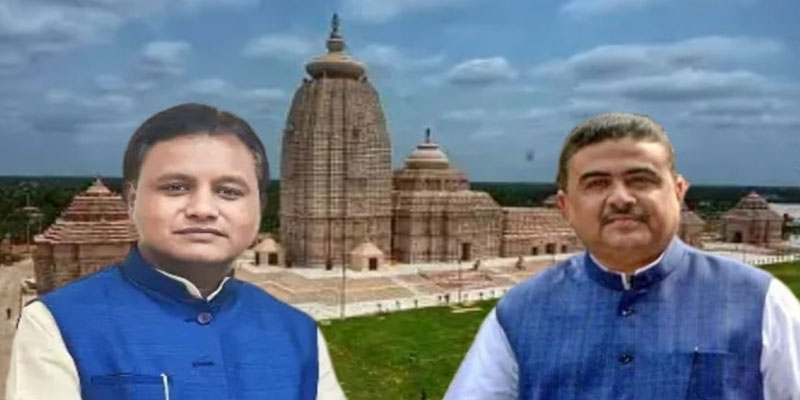
West Bengal Chief Minister Suvendu Adhikari has announced that the word “Dham” will be removed from the Digha Jagannath temple complex, bringing an end to a prolonged religious and political controversy between West Bengal and Odisha. The complex will now be renamed “Sri Sri Jagannath Cultural Centre,” while the temple itself will be known as “Sri Sri Jagannath Dev Mandir.” Odisha Chief Minister Mohan Charan Majhi welcomed the move, stating that it respects sacred traditions and strengthens ties between the two neighbouring states.
The decision marks a significant resolution to a dispute that had stirred religious sentiments, interstate political tensions and debates over cultural identity for more than a year.
How The Digha Jagannath Controversy Began
The controversy began in April 2025 when former West Bengal Chief Minister Mamata Banerjee inaugurated the “Shri Shri Jagannath Dham Cultural Center” in Digha, located in South 24 Parganas district.
The use of the word “Dham” immediately drew strong objections from religious leaders and servitors associated with the historic Jagannath Temple in Puri. According to Hindu religious tradition and scriptures, Puri is regarded as the only authentic “Jagannath Dham,” one of Hinduism’s holiest pilgrimage sites and part of the Char Dham circuit.
Odisha’s religious institutions and political leadership argued that using the same title for another temple complex diluted the sanctity and spiritual exclusivity associated with Puri.
The disagreement intensified when temple servitors accused the previous West Bengal government of politicising religious symbolism. Although the Mamata Banerjee administration later replaced “Dham” with “temple” on public signboards, official documents reportedly continued to use the original terminology, keeping the dispute alive.
BJP Governments Push Toward Resolution
The issue gained renewed political momentum after the BJP came to power in West Bengal in May 2026. Odisha Chief Minister Mohan Charan Majhi had earlier written to Mamata Banerjee requesting the removal of “Dham” from the Digha complex’s name, arguing that it hurt the religious sentiments of Odias worldwide.
Following the political transition in Bengal, the matter was reportedly pursued through discussions involving BJP leaders from both states, including Sambit Patra, who conveyed Odisha’s concerns to the new Bengal government.
On June 9, 2026, Suvendu Adhikari formally accepted Odisha’s request and announced the renaming of the complex. He also emphasized that worship at the temple would strictly follow established Sanatani traditions and rituals associated with Lord Jagannath, Lord Balabhadra and Goddess Subhadra.
Adhikari stated that consultations had also been held with ISKCON monks during his visit to Mayapur, reflecting attempts to ensure broader religious consensus.
Odisha Welcomes the Decision
Odisha Chief Minister Mohan Charan Majhi described the move as an important gesture of respect toward religious traditions and cultural sensitivities. He reiterated that Puri would always remain the eternal Jagannath Dham and a source of spiritual pride for the people of Odisha.
Temple servitors in Puri also welcomed the decision, viewing it as a restoration of religious sanctity after months of tension and protests.
Faith, Identity and Political Consensus
The resolution of the Digha Jagannath naming controversy highlights how deeply religious identity and cultural heritage influence regional politics in India. What began as a naming dispute evolved into a larger debate over tradition, symbolism and interstate sensitivities.
By removing the word “Dham,” the West Bengal government has attempted to balance religious respect with political reconciliation. The decision may also pave the way for improved Odisha-West Bengal relations after a period of friction over cultural issues.
More broadly, the episode demonstrates that in a country where faith and regional identity remain deeply interconnected, political consensus often becomes essential in resolving disputes involving religious tradition and public sentiment.
(With agency inputs)