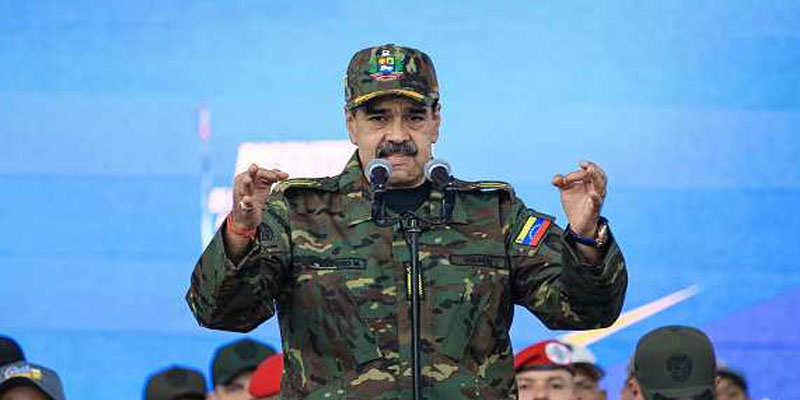
Ties between Washington and Caracas have been openly hostile for over a decade, defined by sanctions, diplomatic isolation, and competing claims of legitimacy. That friction escalated dramatically on January 3, 2026, when US special forces captured Venezuelan President Nicolás Maduro and his wife, Cilia Flores, in a covert operation in Caracas. The move has pushed bilateral tensions into uncharted territory, transforming a long-running pressure campaign into a direct and consequential intervention.
A Shock That Redefined the Crisis
The arrest of a sitting head of state by a foreign power is rare and deeply controversial. For the United States, the operation was framed as the culmination of years of legal pursuit against a leader it accuses of running a criminal enterprise. For Venezuela, it represents an unprecedented breach of sovereignty. The episode has triggered political upheaval inside Venezuela, sharp divisions within the US, and renewed debate over the boundaries between law enforcement, regime change, and international law.
Reactions in the United States: Victory Abroad, Division at Home
In Washington, President Donald Trump described the raid as a decisive assertion of American resolve, announcing that the US would temporarily oversee Venezuela “until a safe and orderly transition is secured.” Supporters within the Republican Party applauded the move as overdue accountability, pointing to Maduro’s long-standing indictment on narco-terrorism charges and the previously announced $50 million reward.
Yet domestic reaction has been far from unanimous. Critics, including most Democratic leaders and some constitutional scholars, questioned the legality of unilateral military action without prior congressional authorization. Opinion surveys suggested broad public unease about another overseas entanglement, with concerns that interim governance could evolve into prolonged involvement reminiscent of earlier US interventions.
Reactions Inside Venezuela: Regime Defiance and Opposition Momentum
Within Venezuela, the response split sharply along political lines. Senior regime figures condemned the operation as an abduction and an act of aggression. Vice President Delcy Rodríguez, widely seen as Maduro’s chosen successor, called for his immediate release and was swiftly endorsed by the Supreme Court to assume executive authority on an interim basis. Emergency measures followed, including militia mobilization, heightened military alerts, and restrictions on movement in Caracas.
By contrast, opposition leaders celebrated the development as a historic opening. María Corina Machado described Maduro’s capture as the beginning of accountability, urging national unity and a swift return to constitutional order. Other opposition figures, including Edmundo González, pressed for international recognition of a transition process, even as uncertainty over control of institutions loomed large.
Venezuelan Security Forces: Resistance, Shock, and Fractures
On the ground, Venezuelan security forces offered limited resistance during the operation. Units from the Presidential Guard, intelligence services, and the National Guard reportedly engaged briefly but were quickly overwhelmed after US forces disabled communications, air defenses, and radar systems. In the aftermath, security forces deployed widely across cities, enforcing curfews and guarding key installations.
Despite official declarations of loyalty, reports of confusion and isolated defections suggest internal fractures. The absence of a coordinated counterstrike underscores both the surprise of the raid and possible divisions within the military leadership.
The US Legal Rationale: Law Enforcement Beyond Borders
The US government grounds its action in federal criminal indictments dating back to 2020, accusing Maduro of leading a drug-trafficking network that funnelled cocaine into the United States. Officials argue that these charges, combined with longstanding arrest warrants, justify his apprehension as a law-enforcement action rather than an act of war. The administration also points to past precedents, notably the capture of Panama’s Manuel Noriega, where US courts upheld jurisdiction despite sovereignty objections.
Critics counter that the operation violates international law, particularly prohibitions on the use of force against another state, and warn that normalizing such actions could erode global legal norms.
Accountability or Instability?
Maduro’s capture marks a watershed moment in the Venezuela crisis, blending criminal accountability with geopolitical risk. While supporters see an opportunity to end years of authoritarian rule, the path ahead is fraught with dangers—ranging from internal conflict to prolonged foreign oversight. Whether this episode leads to democratic renewal or deeper instability will depend on how swiftly and credibly a Venezuelan-led transition can take shape, and how cautiously external powers manage their ambitions.
(With agency inputs)