A Shift from Protest to Possibility
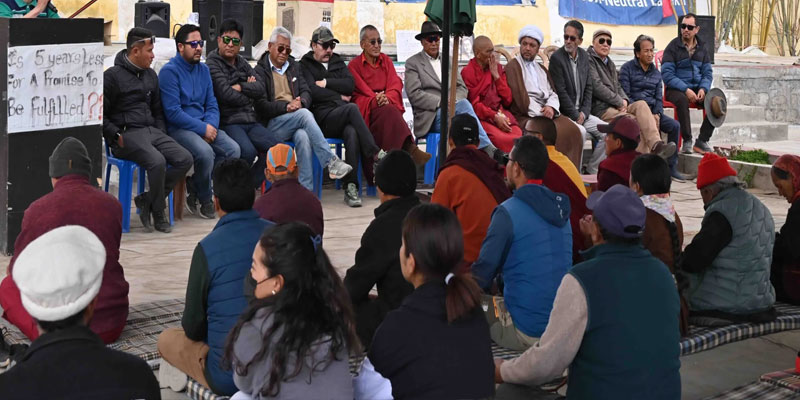
“Government ready for meaningful dialogue” — this is the cautious optimism voiced by Sonam Wangchuk as Ladakh’s long-running agitation enters a potentially decisive phase. Fresh out of detention, the climate activist has struck a conciliatory tone, urging engagement with New Delhi even as demands for constitutional safeguards remain firmly intact. His release signals a possible thaw, but the underlying tensions that sparked protests across Ladakh are far from resolved.
Who Wangchuk Represents
Wangchuk is not just a protest leader but a symbol of Ladakh’s post-2019 anxieties. Since the region was carved out as a Union Territory, concerns over land rights, ecological vulnerability, and cultural preservation have intensified. His campaigns—ranging from climate fasts to marches—have amplified fears that unchecked development could disrupt Ladakh’s fragile Himalayan ecosystem and tribal identity.
His detention under the National Security Act in 2025, following violent protests, further galvanized the movement. Now, his pivot toward dialogue reflects both strategic recalibration and an attempt to keep the movement politically viable.
Movement Dynamics and Political Stakes
The agitation is not limited to individuals but anchored in organized groups like the Leh Apex Body and the Kargil Democratic Alliance. These bodies continue to push for full statehood, Sixth Schedule status, and greater political representation.
The Centre’s approach appears calibrated—de-escalating tensions by releasing Wangchuk while avoiding immediate concessions. This creates room for negotiation but also prolongs uncertainty. For Ladakhi leaders, the challenge lies in balancing grassroots pressure with the opportunity for structured talks.
What the Sixth Schedule Means for Ladakh
At the heart of the demand lies inclusion under the Sixth Schedule of the Constitution, a framework currently active in parts of Northeast India. It provides for Autonomous District Councils (ADCs) with significant legislative, administrative, and judicial powers tailored to tribal areas.
For Ladakh, the most critical aspect is land control. Under Sixth Schedule provisions, local councils can regulate land ownership and transfer, effectively restricting external acquisition. This is seen as vital to preventing demographic shifts and safeguarding ecological balance.
The framework also grants councils authority over local governance—managing schools, healthcare facilities, markets, and infrastructure—along with the ability to levy certain taxes. This fiscal and administrative autonomy would allow Ladakh to shape development according to its unique needs.
Equally important are cultural and judicial safeguards. Councils can uphold customary laws and establish local dispute-resolution systems, preserving traditional practices that might otherwise be overridden by centralized legislation.
Why the Demand Persists
For Ladakh’s largely tribal population, the Sixth Schedule represents more than administrative reform—it is a protective shield. It promises control over natural resources, a say in development projects, and institutional recognition of cultural identity. However, extending this framework beyond the Northeast would require a constitutional amendment, making it a politically complex proposition.
Between Assurance and Action
The current moment offers a rare opening for reconciliation. Wangchuk’s call for dialogue and the Centre’s willingness to engage suggest a shift from confrontation to negotiation. Yet, the core question remains: will dialogue translate into tangible safeguards?
Ladakh’s future hinges on this answer. Without concrete measures, the cycle of protest may resume. But with thoughtful compromise, this could mark the beginning of a new governance model—one that balances national priorities with local aspirations in one of India’s most sensitive and strategic regions.
(With agency inputs)