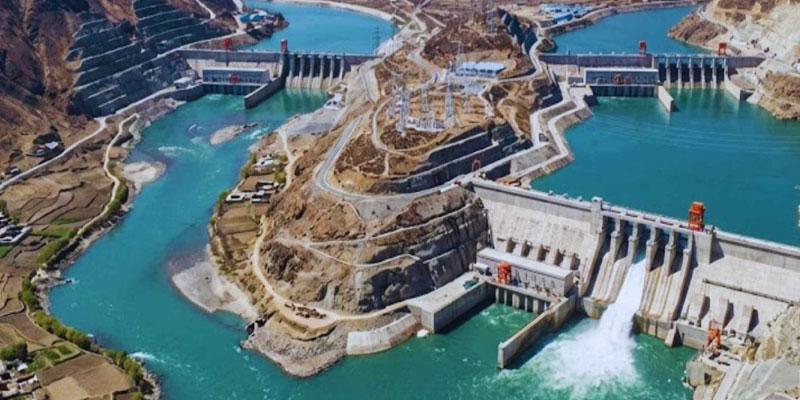
China has formally begun construction of what is expected to become the world’s largest hydropower project on the Yarlung Tsangpo River in Tibet, a development that has renewed concerns in India over water security, regional influence and strategic infrastructure competition. Located roughly 50 kilometres from the Indian border, the massive project is moving ahead rapidly, while India’s proposed counter-project—the Siang Upper Multipurpose Project (SUMP) in Arunachal Pradesh—remains at the pre-feasibility stage. The widening gap between the two initiatives has intensified debate over whether New Delhi can effectively respond to Beijing’s growing control over critical transboundary water resources.
Why the Yarlung Tsangpo Matters
The Yarlung Tsangpo River originates in Tibet before entering India as the Siang and later becoming the Brahmaputra, one of South Asia’s most important river systems. The river sustains millions of people through agriculture, drinking water supplies, fisheries and hydropower generation across northeastern India and Bangladesh.
Because it flows through multiple countries, any large-scale intervention upstream inevitably carries geopolitical implications. Control over water resources, flood management and hydropower infrastructure can influence regional economic development and, in some cases, strategic leverage.
For years, India has closely monitored Chinese dam-building activities on Tibetan rivers, fearing potential impacts on downstream water availability, sediment flows and flood patterns.
China’s Ambitious Medog Hydropower Project
China’s Medog dam project represents an unprecedented engineering undertaking. With a planned generation capacity of 60,000 megawatts, it is expected to surpass the output of the Three Gorges Dam by a significant margin and generate approximately 300 billion kilowatt-hours of electricity annually.
The project is being developed in Medog County in Tibet and is designed as a run-of-the-river system rather than a conventional storage dam. Chinese authorities argue that the project will support clean energy goals, strengthen energy security and contribute to regional development.
Approved in late 2024 and officially entering the construction phase in 2025, the project is targeted for commercial operations by 2033. Its estimated investment exceeds one trillion yuan, making it one of the largest infrastructure projects ever undertaken by China.
India’s Siang Project Remains in Early Stages
India’s response has centred on the proposed 11,000 MW Siang Upper Multipurpose Project in Arunachal Pradesh. First suggested in policy discussions years ago, the project has yet to move beyond preliminary assessments.
While policymakers view the project as essential for hydropower generation, flood control and strategic balancing, implementation challenges have slowed progress considerably.
The Emerging Strategic Imbalance
The contrast between the two projects is striking. China’s dam is already under construction, backed by enormous financial resources and a clearly defined timeline. India, by comparison, remains engaged in foundational studies and regulatory processes.
This disparity has raised concerns among strategic analysts who believe that upstream infrastructure can influence downstream river management. Questions have also emerged regarding how future changes in water flow, sediment transport and flood cycles might affect India and Bangladesh.
A Test of Infrastructure and Strategy
China’s decision to press ahead with the Medog hydropower project has transformed a long-standing water management issue into a broader strategic challenge for India. While Beijing views the dam as a landmark clean-energy initiative, New Delhi sees potential implications for water security, regional stability and infrastructure competitiveness. As China advances toward construction milestones, India faces increasing pressure to accelerate decision-making on its own projects while balancing environmental concerns, local interests and national strategic priorities.
(With agency inputs)