A Remarkable Claim from Trump’s Inner Circle
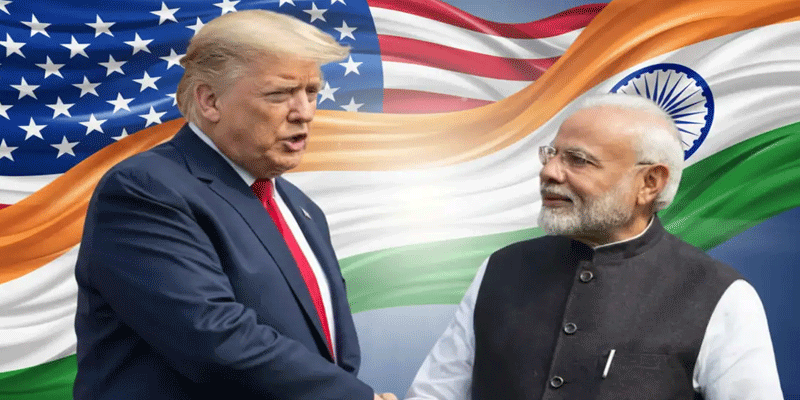
A new book examining Donald Trump’s second presidential term has sparked attention with a claim that Vice President JD Vance once suggested deploying Indian or Saudi troops as peacekeepers in Ukraine. According to the account, Trump quickly dismissed the idea, arguing that India would neither participate in nor finance such a mission. While the reported exchange offers an intriguing glimpse into internal White House discussions on ending the Ukraine war, it also highlights a larger reality: India’s approach to overseas military deployments remains firmly guided by multilateral legitimacy, strategic caution, and national interest.
The Background to the Proposal
The claim appears in ‘Regime Change’, a book that recounts discussions surrounding an “America First” blueprint for resolving the Russia-Ukraine conflict. During a White House meeting, retired Lieutenant General Keith Kellogg reportedly outlined a ceasefire framework that included foreign forces helping supervise or monitor a future settlement.
JD Vance is said to have opposed the involvement of NATO troops, arguing that Russia would likely view such a deployment as provocative and unacceptable. The discussion then reportedly shifted toward the possibility of using non-European forces, leading to the suggestion of India and Saudi Arabia as potential peacekeeping contributors.
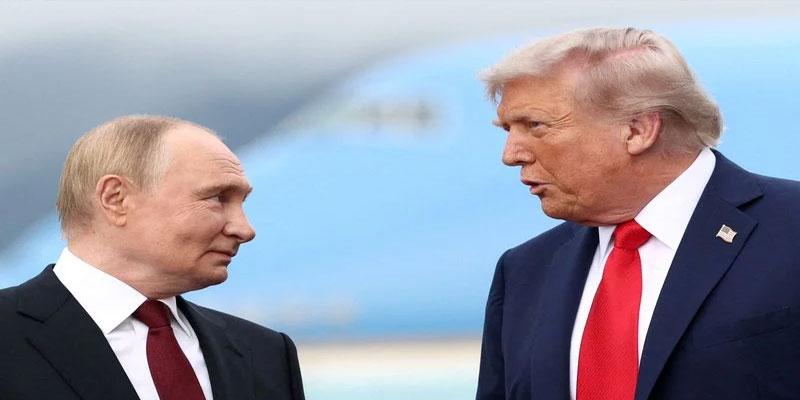
Trump’s response, as described in the book, was blunt. While reportedly acknowledging his good relationship with Prime Minister Narendra Modi, he dismissed the likelihood of India taking part, stating that Indians “won’t do that” and “won’t pay for something like that.”
India’s Established Position on Peacekeeping
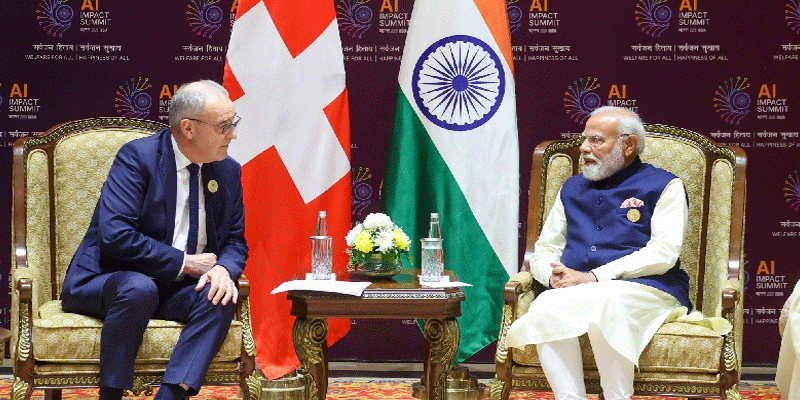
From New Delhi’s perspective, the proposal would have presented significant political and strategic complications. India has long been one of the world’s largest contributors to United Nations peacekeeping operations and takes considerable pride in that record. However, Indian participation in overseas military missions has traditionally been tied to clear international mandates, particularly those authorized by the United Nations.
Since the outbreak of the Ukraine conflict, India has maintained a carefully balanced position. It has consistently called for an immediate cessation of hostilities, dialogue, diplomacy, humanitarian assistance, and respect for sovereignty and territorial integrity. Rather than aligning itself with military blocs, New Delhi has sought to preserve channels of communication with all sides while advocating a negotiated settlement.
In that context, participation in a non-UN peacekeeping arrangement inside an active and highly contested conflict zone would sit uneasily with India’s established diplomatic and security approach.
India’s Response and Broader Significance
There has been no formal Indian government reaction to the specific claim made in the book. Nevertheless, India’s existing policy effectively provides an answer. Indian officials have repeatedly indicated that any deployment of Indian peacekeepers would require a United Nations mandate, particularly one backed by the UN Security Council.
The broader significance of the episode lies not in whether such a proposal was ever seriously considered, but in what it reveals about international expectations of India. As India’s global profile rises, major powers increasingly view it as a credible partner in addressing international crises.
A Clear Strategic Boundary
The reported discussion underscores a fundamental principle of Indian foreign policy. India is willing to contribute to global peace and stability, but it prefers to do so through internationally sanctioned, rules-based mechanisms rather than ad hoc security arrangements. The episode therefore reflects less a missed opportunity and more a clear boundary: India seeks to be a responsible peacekeeper, not a substitute force for politically sensitive missions conceived elsewhere.
(With agency inputs)